

 Chronicle Editor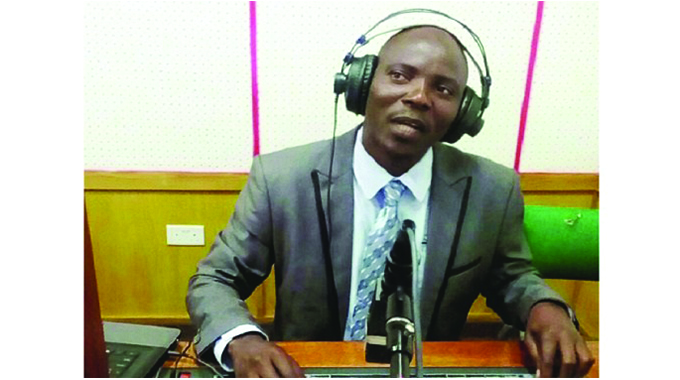
Chronicle Writers
This year’s World Press Freedom Day came at a time when the Second Republic had made major strides in promoting local languages and sustainable development through the establishment of community radio stations in formerly marginalised areas across the country.
In the Matabeleland region, the Babirwa, Tonga, Venda, Xhosa, Kalanga, Nyanja and Nambya people now have a chunk of space on the airwaves as the New Dispensation trudges on with its thrust of leaving no one and no place behind.
Through community radio stations, Zimbabwe is fulfilling its promise to broaden access to information for the benefit of citizens.
Members of the Fourth Estate yesterday joined the rest of the world in commemorating World Press Freedom Day held under the theme: “Shaping a Future of Rights: Freedom of expression as a driver for all other human rights.”
World Press Freedom Day increases awareness about the importance of press freedom, highlighting the critical role that journalists and media outlets play in promoting democracy and human rights.
It raises awareness about the importance of freedom of the press and aims to remind governments to uphold the right to freedom of expression and free press.
In 2021, the Government licensed 14 community radio stations, seven of which are in Matabeleland North and South Provinces.
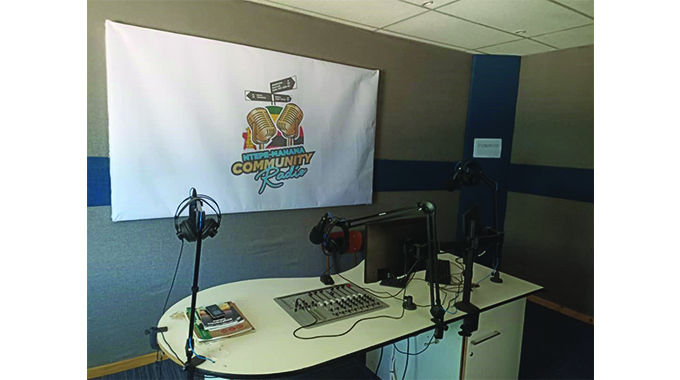
These include Twasumpuka Community Radio Station, which will cater for Binga, Lusulu, Siabuwa and Kamativi; Radio BuKalanga (Pvt) Ltd (Bulilima), Matobo Community Radio Trust (Maphisa, Mangwe and Brunapeg), Ingqanga FM (Mbembesi), Ntepe-Manama Community Radio Station (Gwanda), Lotsha FM (Beitbridge) and Lyeja-Nyati in Hwange.
The community radio licences were issued as an important development tool.
In separate interviews, players in the media industry said the opening up of the airwaves by Government had empowered formerly marginalised rural groups and triggered democratic processes and ongoing development efforts.
Ntepe-Manama FM programmes officer Ms Siphathisiwe Ncube said the station had given a voice to the voiceless.
“The opening up of the airwaves by Government has surely brought about a positive impact in communities in Gwanda. Information is now easy to access and this has brought about opportunities for youths in the community,” said Ms Ncube.
She continued: “Through our programs, we have given the elderly and other people in the rural areas a voice. The station keeps its audience abreast with critical information on health issues such as the cholera outbreak, weather alerts and political updates as we head towards the 2023 harmonised elections. We have bridged the information gap in rural communities and raised awareness on their rights.”
Fairtalk Communications chief executive officer Dr Qhubani Moyo said the Second Republic had done well in providing private players with licences for community radio and TV stations.
Fairtalk is the parent company of Bulawayo’s Skyz Metro FM, Victoria Falls’ Breeze FM and KeYona TV.
“This assists in the inclusion of communities that had been left out of the information cycle. As we celebrate World Press Freedom Day, we also need to celebrate what Government has done thus far.
However, more needs to be done in terms of accessibility to new stations. As it is, new players are relying on international satellites to transmit. Some of these satellites are also new, barely known and can’t reach many people,” said Dr Moyo, adding that Government should also invest in digital terrestrial television.
“So far, new players in the broadcasting sector have been packaged into one decoder and it’s barely known neither does it reach large numbers in communities. Government hasn’t provided enough of these. They should also be sold at a subsidised price instead of a commercial one, which will lead to low uptake. These can also be given for free to reach out to a wider audience. This can help reach communities that had been left out of the information sphere.
“Another issue is that of technology. Some of these decoders are being phased out as they’re being overtaken by new technology. It’s important for Government to find content developers as well so that there’s fresh content to look forward to all the time.”
Dr Moyo said KeYona TV is slowly finding its way to the people.
“It’s quite a positive feat as we realise that we’re an important player in information dissemination,” he said.
The Second Republic has been commended for recognising the importance of pushing development from the grassroots level while also preserving language, culture and heritage.
Lyeja-Nyati Community Radio acting chief executive officer Mr Tulani Munyandi said the station had become a participatory medium by involving the community of Hwange in its programing schedule.
“Broadcasting cultural programs on radio has indeed brought about freedom of expression as the local community has been able to present and talk about their culture and how it should be respected. The Hwange community feels Lyeja-Nyati Community Radio will resuscitate the Nambya and Dombe languages, which they feel were marginalised for a long time,” said Mr Munyandi.
Lyeja-Nyati FM broadcasts in Nambya, Dombe, isiNdebele and Nyanja. “As we celebrate World Press Freedom Day, we propose that Government channels more resources to community radio stations,” said Mr Munyandi.
The community radio stations are expected to push developmental issues from the grassroots level in line with the devolution policy and the National Development Strategy 1 (NDS1) which should be unpacked to everyone across the country in a language one understands.
Radio BuKalanga station manager Ms Yvonne Buzwane said: “The opening up of the airwaves has aligned us as a community to participate meaningfully in Vision 2030 as we develop our communities.”
She said the community now has the freedom to send and receive information that pertains to community members.
“We can now share our experiences through the radio station. As Radio BuKalanga, we appreciate the efforts by Government,” said Ms Buzwane
She said the station had not started live broadcasts, but is currently airing music and community short programmes.
Twasumpuka Community Radio Station board chairperson Mr Sam Sibanda said Zimbabwe had achieved media plurality through the licensing of 14 community radio stations.
“The community of Binga will have access to media content packaged in their local language (Tonga).
Twasumpuka envisages to cover Kamativi, Lusulu, Siabuwa and Binga. The BaTonga people will have access to information and preserve their cultural values through community radio. People in Binga, particularly the BaTonga, will be presented with media channel options where they can access national media as well as community media,” said Mr Sibanda.
In a statement, the Zimbabwe Association of Community Radio Stations (Zacras) hailed efforts made by Government in promoting freedom of the Press.
“We acknowledge the steps that our Government has taken in opening up the airwaves and spaces in ensuring the promotion of rights are upheld, in particular access to information and freedom of expression, and one of the key initiatives that has emerged in recent years is the establishment and licensing of community radio stations. “Community radio stations provide information to communities and also a platform for the voices of marginalised communities, fostering local development and amplifying the voices of those who are often marginalised in mainstream media,” reads part of the statement.

Zacras also acknowledged the important contribution of journalists and other media professionals, particularly community broadcasters who work tirelessly to keep the public and communities informed and hold those in power accountable.
In a post-Cabinet briefing on Tuesday, Information, Publicity and Broadcasting Services Minister Monica Mutsvangwa said the establishment of community radio stations had transformed, focused and united rural communities.
“The stations have become authoritative sources of accurate and reliable information on voter registration, health issues and the Second Republic’s Vision 2030,” said Minister Mutsvangwa.
She said the Mbembesi Radio Community Trust had secured a studio building and installation of equipment is ongoing.
“The Radio BuKalanga project in Plumtree District has identified the site, trained staff and procured studio equipment. The Madziwa Community Radio Trust in Mashonaland Central Province has also identified the site, trained staff and procured studio equipment; the Twasumpuka Community Radio Station in Binga District has completed studio renovations and obtained studio equipment,” said Minister Mutsvangwa.
She said the Power FM Transmission Studio Modernisation Project and the National FM Studio Modernisation Project now await shipment of equipment from Germany.
“In order to bridge the rural to urban information gap, the Ministry has re-introduced the mobile cinema, also known as the bioscope Interactive Outreach Programme. During the current cycle, the programme was rolled out to Manicaland Province at Kopa and Ngangu in Chimanimani District, and at Gaza and Madziyire in Buhera District.”



 Online Reporter