

 Online Reporter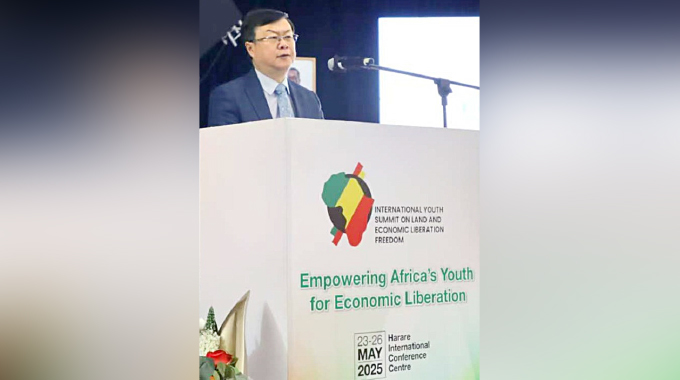
Raymond Jaravaza
CHINESE investments in Zimbabwe reached a historic peak of US$3,8 billion in bilateral trade volume in 2024, underlining the Asian giant’s growing economic footprint in the country across sectors such as energy, infrastructure, mining and agriculture.
These investments include the rehabilitation of key airports, construction of power stations feeding into the national grid, and borehole drilling programmes in rural areas — projects that have created thousands of jobs and improved access to critical services.
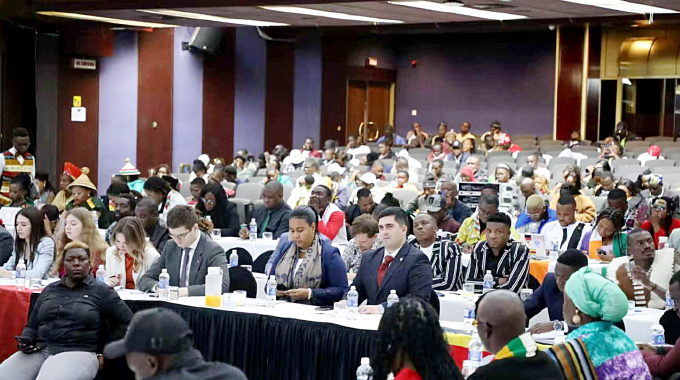
Chinese Ambassador to Zimbabwe, Zhou Ding, revealed the figures during the Africa Youth Congress, held in Harare on Africa Day, which ran under the theme: “China-Zimbabwe Co-operation on Youth and Agricultural Modernisation.”
The high-level event was attended by Minister of Information, Publicity and Broadcasting Services Dr Jenfan Muswere, ICT Minister Tatenda Mavetera and Youth Empowerment Minister, Tino Machakaire among others.
Zimbabwe and China have established strong diplomatic ties and over the past two decades, economic relations have deepened significantly, with Chinese companies playing a key role in Zimbabwe’s infrastructure, energy and mining sectors. Projects like the Dinson Steel Plant, the Titan Lithium Complex, and expansions at the Hwange and Kariba power stations have bolstered local industrial capacity and created thousands of jobs.
In 2023, China invested heavily in the re-development of Robert Gabriel Mugabe International Airport and Victoria Falls International Airport, enhancing Zimbabwe’s air travel infrastructure and positioning the country as a regional hub for tourism and trade.
Amb Zhou said with over half of Africa’s population under the age of 19, the continent’s greatest asset is its youth. He urged young people to embrace the continent’s spirit of liberation, unity and dynamism.
He said China and Africa share friendship forged over decades, rooted in mutual respect, solidarity in anti-colonial struggles and shared aspirations for development.
“Last year’s Beijing Summit of the Forum on China-Africa Co-operation elevated our relations to a new height. We are now jointly building an all-weather China-Africa community with a shared future for the new era, working together toward common development, and demonstrating the unshakable unity among the Global South,” said Amb Zhou
He said China has so far helped Africa build or upgrade nearly 100 000 kilometres of roads, over 10 000 kilometres of railways, 1 000 bridges and 100 ports, an infrastructure that is critical in connecting communities and driving economic integration.
“China-Africa partnership is founded on mutual respect, shared values and a common vision of inclusive development. This enduring friendship has grown stronger, deeper and more fruitful over time,” said Amb Zhou.
“China has sent medical teams to almost all African countries, providing around 230 million treatments in the past several decades,” he said.
The China-Zimbabwe strategic partnership is the epitome of the broad China-Africa relations that has translated into tangible progress for Zimbabwe”, he said .
“For many years China has been Zimbabwe’s largest source of foreign investment and one of its most significant trading partners. Our bilateral trade volume reached a historic peak of US$3,8 billion in 2024, a 23,9 percent year-on-year increase.
“As we celebrate Africa Day, we are reminded of Africa’s past and its bright future, a future that rests in the hands of its youth,”
Amb Zhou said China-Africa partnerships always prioritise job creation, knowledge transfer and human resources co-operation.

“Over the past three years, Chinese companies have helped create more than 1,1 million job opportunities in Africa, and our educational exchange programmes have facilitated over 12 000 African students to study in China annually,” he said.
Over 3 000 Zimbabwean students have studied in China since 2018, with 500 professionals from various sectors participating in annual training programmes. Chinese universities have also partnered with local institutions like the University of Zimbabwe and Harare Polytechnic under the Education 5.0 framework, supporting innovation, industrialisation and human capital development.
With 60 percent of its population residing in rural areas, the growth of Zimbabwe’s agricultural sector is pivotal to nation’s modernisation and China is ready to assist the country to achieve a highly productive and efficient modern agricultural system through technological innovation and institutional reforms.
“China feeds 20 percent of the global population with just seven percent of the world’s arable land, making a significant contribution to global food security,” Amb Zhou.
“Technology now accounts for over 60 percent of China’s agricultural development. Committed to sharing its agricultural technologies, expertise and experiences with African countries, China has long advocated dismantling technological monopolies to enhance food security across Africa.”
Amb Ding cited an example of an initiative known as the China-Zimbabwe Agricultural Co-operation Demonstration Village Project, a partnership that uplifts rural communities and improves rural livelihoods in Zimbabwe.
“The Chinese Agricultural Expert Group has not only installed critical infrastructures like solar-powered boreholes and irrigation systems, but has also introduced high-yield farming techniques, improved seed varieties and efficient irrigation methods,” he said.
“They have provided local communities with hands-on training in crop cultivation, vegetable farming and poultry breeding. The project is boosting farmers’ yields, incomes and hope and opportunities for youth and women, in the previously marginalised rural communities,”
Chinese companies, Amb Ding said, have invested more than US$100 million in Zimbabwe in more than 70 corporate responsibility initiatives focusing on youth empowerment, poverty reduction and technology transfer.



 Bongani Ndlovu