

 Online Reporter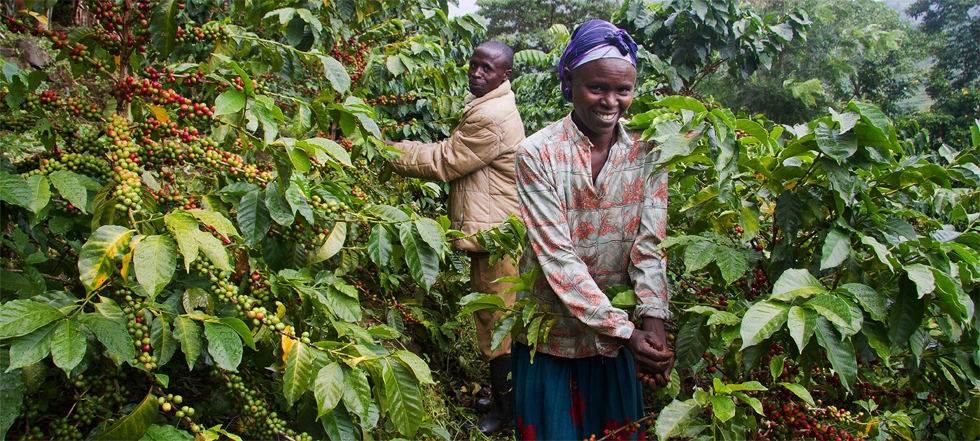
Lovemore Kadzura
Post Reporter
THE coffee sector, anchored in Manicaland, is experiencing a resurgence, driven by efforts to revitalise and modernise the industry.
After two decades of decline, which deprived farmers of income and the country of foreign currency, stakeholders recently gathered in Mutare to discuss challenges facing the sector and opportunities.
The conference highlighted the province’s potential for coffee production, and emphasised the need to support smallholder farmers, who are expected to fill the gap left by large-scale plantations.
Government agencies, including Coffee Research Institute, extension officers, and organisations like Horticultural Development Council (HDC), are providing resources, training, and technical assistance to smallholder farmers.
The support enables farmers to improve production practices, increase yields, and enhance coffee quality. The coffee trajectory is inspiring.
Introduced to smallholder farmers in 1982, coffee opened doors to the mainstream economy.
By the 1990s, the sector peaked, producing 15 000 metric tonnes, and employing over 20 000 people.
According to the Ministry of Lands, Agriculture, Water, Fisheries and Rural Development, smallholder farmers now produce 60 metric tonnes.
Although the milling infrastructure has a 50 000-metric tonnes capacity, it remains underutilised.
The sector currently supports 12 000 direct and indirect jobs.
With global coffee demand high, fetching US$7 per kilogramme, Zimbabwe’s coffee sector is poised for growth.
As stakeholders work together to revitalise the industry, smallholder farmers are expected to play a vital role in driving this resurgence.
Speaking at the recent coffee conference, Minister of State for Manicaland Provincial Affairs and Devolution, Advocate Misheck Mugadza highlighted the potential of the coffee sector to benefit local communities, improve livelihoods, and contribute to the national economy.
Minister Mugadza emphasised that with continued support and investment, the coffee industry can regain its former glory, and become a significant player in the country’s agricultural sector.
“We are not just talking about reviving a crop, we are talking about revitalising an entire community, and reclaiming our rightful place on the global coffee map. We want to acknowledge the hard work and resilience of our farmers, who despite numerous challenges have continued to nurture their coffee plants.
“Their dedication is the foundation of this revival. We are also grateful to our partners, investors, development organisations and various stakeholders, whose collaboration and support are essential to making this vision a reality.
“President Emmerson Mnangagwa has a clear and unwavering vision for the agricultural sector. His stance is rooted in the belief that agriculture is the engine of economic growth and a key pillar of our national development. This vision is captured in several key principles anchored on Cash Crops and Production, Value Addition and Beneficiation, Support to Farmers and the promotion of exports.
“In Manicaland, the number of farmers engaged in coffee production is also on the rise, with the current total of 1 500 farmers, of whom 1 000 are demonstrating commendable progress. Notably, these successful farmers predominantly consist of smallholder operators. The area dedicated to coffee cultivation has reached approximately 650 hectares in 2024, with an additional 50 hectares being incorporated into production each year. The province is setting an ambitious goal to produce an annual yield of 10 000 metric tonnes of coffee by 2030, with an anticipated revenue of US$50 million generated from this important sector each year,” he said.
He further emphasised that farmers should capitalise on the province’s distinct weather pattern, which is conducive to plantation crops, to boost production of crops like coffee.
“This initiative has the potential to significantly enhance our provincial Gross Domestic Product (GDP), and create valuable employment opportunities for the local community. To reach the target of 10 000 metric tonnes, smallholder farmers are encouraged to take an active role, with a projected 8 000 farmers participating by planting at least 0,5 hectares of coffee each.
“The province possesses distinct advantages in horticultural production, particularly in coffee, tea, macadamia, and avocado, due to its favourable climatic conditions. Zimbabwe is renowned for producing Arabica coffee celebrated for its mild and rich flavour, balanced acidity, and consistent quality. Zimbabwean coffee is considered among the finest globally, second only to that of Ethiopia,” said Minister Mugadza.
HDC business development advisor, Mr Micheal Jenrich said smallholder farmers require adequate support to increase their production levels.
“Manicaland is the hub of coffee production. Coffee and other plantation crops thrive here, and we should focus on our strengths,’ said Mr Jenrich, further stressing the need for policy reforms to create a conducive environment for coffee production.
“Coffee is a complex and expensive crop to cultivate. While it may seem straightforward to outsiders, farmers face unique challenges. We must explore ways to partner with all types of farmers to achieve our targets,” he said.
Chipinge-based farmer and Soko-Agri Global director, Mr Keegan Mushakwe, said coffee is a crucial crop for Zimbabwe, and requires comprehensive support to reclaim its former glory.
“Coffee is a complex crop that demands meticulous care and expertise to manage. From planting to harvesting, processing, and marketing, numerous processes are involved,” he explained.
Mr Mushakwe welcomed the commitment from banks to partner with farmers in reviving the coffee sector. He also commended the HDC efforts to unite farmers and explore strategies for revitalising horticulture sub-sectors.
“Farmers must share knowledge and ideas. As a pivotal crop for economic growth and foreign currency generation, the coffee sector deserves comprehensive support. We can restore the sector to its former glory, changing local and global perceptions. Zimbabwean coffee should be synonymous with quality,” asserted Mr Mushakwe.




Coffee is the future