Business Reporter
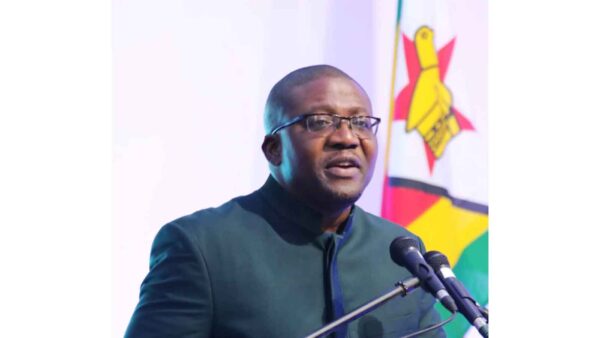
Zimbabwe has completed all prerequisite protocols to join the New Development Bank in 2026, including Parliamentary approval of its accession, opening a new financing window for infrastructure and strategic projects under its Vision 2030 agenda, Finance Minister Professor Mthuli Ncube has said.
Under the accession terms, Zimbabwe opted for a 200 percent subscription totalling US$63 million, split into US$12,6 million in paid-in capital and US$50,4 million in callable capital, Minister Ncube said in the 2027 National Budget Statement.
Membership gives the country access to long-term infrastructure and sustainable development funding through loans, guarantees, and equity participation, alongside potential local-currency lending to reduce foreign-exchange risk where project revenues are earned in local currency.
The New Development Bank, formerly referred to as the BRICS Development Bank, is a multilateral development bank established by the BRICS states (Brazil, Russia, India, China and South Africa) to mobilise resources for infrastructure and sustainable development projects in emerging markets and developing countries.
BRICS is an intergovernmental organisation of major emerging economies established to amplify the geopolitical sway of the Global South (developing nations) and challenge Western dominance in global financial and political institutions.
With China, the United Arab Emirates (UAE) and South Africa ranking among the country’s primary export destinations and import hubs, NDB offers Zimbabwe economic dependencies within a multilateral economic architecture.
The three BRICS member states already dominate Zimbabwe’s external trade, together accounting for nearly 90 percent of the country’s total export earnings and a large share of its imports.
Unlike traditional Western lenders like the IMF or World Bank, BRICS financing does not carry stringent political or economic conditionalities.
The new capital is earmarked for vital national infrastructure projects, including energy generation and power transmission grid upgrades, modernisation of roads, rail networks and border posts to lower regional transport costs and value-addition plants for the mining and agriculture sectors, such as local lithium processing.
Analysts said that while full membership in the bloc carries significant political weight, the primary economic benefit lies in becoming a member of the NDB.
Admission to the NDB as a borrowing member will unlock essential long-term capital for crucial infrastructure projects and industrial retooling.
Economic analysts noted that the BRICS-backed multilateral lender offers critical financing without the political hurdles and strict conditionalities historically attached to Western multilateral institutions.
The move is expected to open up crucial non-Western credit lines, which will become fully operational once Parliament ratifies the agreement and the Government fulfills its capital subscription requirements.
Economist Prof Gift Mugano highlighted the strategic significance of the move, noting that the NDB serves as a crucial alternative to Bretton Woods institutions such as the International Monetary Fund (IMF) and the World Bank.
Zimbabwe is currently unable to access long-term concessional funding from key multilateral lenders due to outstanding debt.
Under the strict rules of global financial institutions, a country cannot access new concessional financing or loans if it has outstanding, unresolved arrears with its lenders.
Beyond the mathematical default, geopolitical restrictions further complicate the borrowing landscape.
He underscored the paradox facing Zimbabwe, which cleared its financial arrears with the IMF but remains locked out of new concessional funding due to rules requiring countries to clear all multilateral debt simultaneously — a total currently standing at about US$10 billion.
“How do you expect a country to clear about US$10 billion before they can get fresh capital?” he asked.
“If you are given fresh capital, it will raise production, finance infrastructure, increase export capacity, substitute imports and expand fiscal space to generate revenue to clear those debts.”
Prof Mugano observed that while Zimbabwe has implemented macroeconomic blueprints — including the Transitional Stabilisation Programme and National Development Strategy 1 — and earned seals of approval under IMF Staff-Monitored Programmes, progress within the traditional debt resolution framework has moved at a “snail’s pace.”
As such, full membership of BRICS and the NDB places Zimbabwe as an equal alongside non-Western partners, mirroring the concessionary credit lines the country currently accesses from international African lenders and bilateral partners in China and the Middle East.
Development economist Mr Enock Musara expressed optimism that the NDB will provide direct impetus for Zimbabwe to secure patient capital tailored towards South-South cooperation, focusing on industrial retooling, water infrastructure, and green industrialisation.
He noted that accessing alternative funding sources will build the national economic capacity required to settle outstanding external obligations, while urging the country to maintain its economic and ease-of-doing-business reforms.
In addition, membership places Zimbabwe in a governance structure where no single country holds a unilateral veto and allows greater use of domestic procurement, environmental, and social systems to strengthen country ownership.
It also creates opportunities for technology transfer across member states, access to alternative payment and settlement arrangements including local-currency options, and broader engagement with the BRICS market.
This scenario provides an alternative framework to circumvent long-standing Western-backed credit constraints and directly monetise its heavy trade ties with the Global South, with the UAE, South Africa and China already key trading partners.