Online Reporter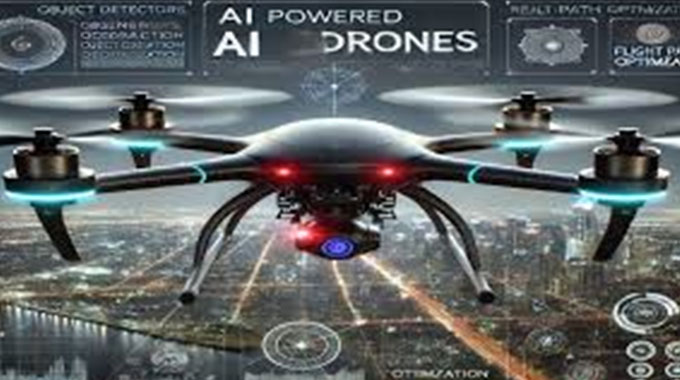
Faith Ndlovu
FACED with annual losses of millions of US dollars across Southern Africa due to the devastating impact of quelea birds on harvests, Zimbabwe has deployed a new artificial intelligence (AI)-powered drone system.
Developed with PEGARA Japan and other stakeholders, the technology targets the swarms, also known as “feathered locusts,” that have historically obliterated fields of staple crops.
The project is being implemented in collaboration with the UNDP Accelerator Labs, the Embassy of Japan, and the Zimbabwe Parks and Wildlife Management Authority (ZimParks).
Speaking on the initiative, PEGARA Japan’s Assistant Operations Manager, Mr Tafadzwa Masumbuko, said the AI-driven solution is proving to be significantly more effective than traditional bird-scaring methods.
“Previously, farmers relied on manual methods such as shouting or banging tins, which often failed to prevent crop losses of up to 50 percent. In contrast, our technology leverages AI and automation, significantly reducing such losses,” he said.
The system uses cameras installed in fields to monitor bird activity beyond the reach of human surveillance.
These cameras stream real-time footage to an AI model powered by a Jetson device, a specialised chip for edge computing.
“The AI model identifies the birds, calculates their speed and direction, and sends a signal to our custom drone application. The drones are then automatically deployed to scare away the birds by emitting targeted sounds that can repel them from a distance of 200 to 300 metres,” Mr Masumbuko said.
The system also relies on Starlink internet connectivity, making it functional even in remote areas with limited infrastructure. In locations without access to electricity, solar power is used to operate the entire setup.
Mr Masumbuko said the solution had already been deployed in Hippo Valley, Hwange, Darwendale, and Mwenezi District (Turf Village) during a two-week pilot period.
“This consistent intervention led to a noticeable decrease in the frequency of bird visits in those areas,” he said.
Quelea birds, often referred to as the “feathered locust”, are considered the most destructive grain-eating birds in the world.
Native to sub-Saharan Africa, these birds move in massive flocks and can destroy entire fields of sorghum, millet, and wheat within hours.
According to the Food and Agriculture Organisation (FAO), damage caused by quelea birds can result in annual crop losses worth millions of US dollars across Southern Africa.
The Ministry of Lands, Agriculture, Fisheries, Water and Rural Development has frequently issued warnings and coordinated emergency response measures during quelea outbreaks.
Traditional control methods, including the use of chemicals, loud noises, and co-ordinated burning of nesting sites, are labour-intensive, environmentally harmful, and often ineffective. This has prompted growing interest in more sustainable and innovative approaches to agricultural pest control.
While full-season data is still pending, the team is optimistic that the AI-powered bird control system will be a game-changer.
“Although we cannot yet give a definitive percentage of crop loss prevented, initial trials and simulations suggest a major reduction in losses compared to traditional techniques. Farmers who used to lose up to 50 per cent of their yield can now expect significantly better outcomes,” said Mr Masumbuko.
Beyond protecting crops, the innovation is expected to contribute to improved food security and income stability for rural farmers.
“By retaining a larger portion of their harvest, farmers can increase their revenues. We expect the economic benefits to become even clearer once the system is deployed across an entire farming season,” Mr Masumbuko said.