Online Reporter
Golden Sibanda
While Zimbabwe has designated mining as a key driver of economic expansion, the Government is seeking to balance this development with long-term environmental sustainability, a senior official says.
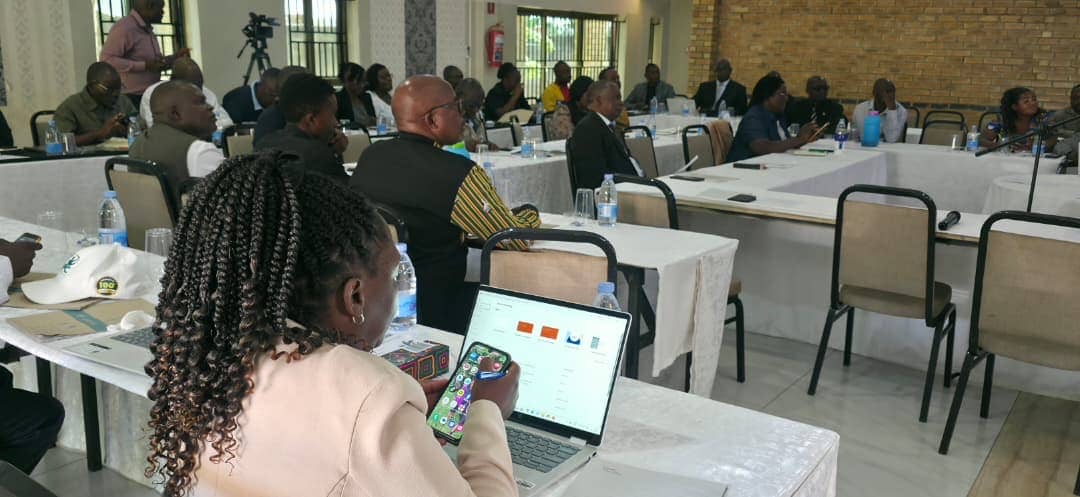
Permanent Secretary for Mines and Mining Development Dr Thomas Utete Wushe said this at a national stakeholder engagement meeting organised by the World Wide Fund for Nature (WWF) Zimbabwe in Harare recently.
The event marked the start of the implementation of the conservation project: Fostering Environmentally and Socially Responsible, Decarbonised, Inclusive and Transformative Value Chains for Energy Transition Minerals in the SADC Region.
Senior officials and representatives from WWF Zimbabwe, the Zimbabwe Environmental Law Organisation, the United Nations Economic Commission for Africa and the German Government attended the occasion.
Although mining is a vital economic pillar in Zimbabwe, it drives severe environmental degradation. Artisanal operations and large-scale extraction at times cause massive deforestation, open-pit scarring and the release of toxic heavy chemicals into water systems, threatening food security and agricultural livelihoods.
Zimbabwe is endowed with more than 60 mineral occurrences, positioning mining as a strategically key pillar of the economy.
Already, mining contributes about 12 percent to the gross domestic product (GDP) through minerals such as gold, platinum, lithium, chrome, diamonds and coal.
The sector generates more than 75 percent of Zimbabwe’s foreign currency and employs tens of thousands across the country.
These contributions to the economy make sustainable mining an inalienable part of Zimbabwe’s economic growth and development.
“Your collaboration reflects a growing global recognition that Africa-and Zimbabwe in particular—must not only participate in the global energy transition but also help shape it on our own terms.
“Zimbabwe is not a peripheral player in the global transition to a low-carbon economy. We are a country endowed with the very minerals that will power that transition—lithium, platinum group metals, nickel and others,” Dr Wushe said.
He said that such a scenario placed Zimbabwe in a position of strategic relevance and strategic responsibility.
“We are moving decisively away from a model that exports raw commodities towards one that drives industrialisation, value addition, beneficiation and inclusive economic growth, in line with Vision 2030 and the National Development Strategy 2.
“Zimbabwe will not pursue growth at any cost. Our mineral wealth must translate into tangible national development, community benefit and long-term environmental sustainability.
“Mining creates opportunity-but it also creates pressure on land, water, biodiversity and communities. These trade-offs are real and they must be confronted, not ignored,” he said
The Government is therefore strengthening enforcement across the mining sector, including through Environmental Impact Assessments, which Dr Wushe stressed are no longer just a formality but a requirement
It is also enforcing the implementation of Environmental Management Plans and ensuring strict compliance with regulations on mine rehabilitation and closure.
“We are enhancing monitoring capacity, strengthening coordination across institutions and increasing transparency in compliance.
“Those who invest responsibly in Zimbabwe will find a stable and predictable environment.
“Those who do not comply will face the full consequences of the law,” Dr Wushe said. Dr Wushe said communities must see mining not as a disruption imposed upon them, but as a driver of opportunity and improved livelihoods.
“We are determined to ensure that Zimbabwe captures more value from its mineral resources. This requires more than policy statements.
“It requires investment in infrastructure, skills development, strategic partnerships, policy consistency and regulatory certainty.
“The Government is actively working to create these conditions,” he said.
The export of raw minerals without value addition, Dr Wushe noted, was not a sustainable pathway for national development.
Where necessary, he said, the Government will make difficult decisions to ensure that national interests, including conservation and sustainability, are protected.
Speaking at the same event, the permanent secretary in the Ministry of Environment, Climate and Wildlife Mr Simon Masanga, said sustainable development was not about avoiding difficult choices, but about managing them in the national interest, transparently and responsibly.
“Our natural resources-forests, water, biodiversity and wildlife-are not peripheral; they are strategic national assets that underpin economic growth, food security, tourism and livelihoods.
“Indeed, nature-based tourism contributes approximately 4 percent of GDP and over 5 percent of national employment, demonstrating clearly that environmental sustainability is already an economic pillar.
“The task before us, therefore, is to ensure that as we expand sectors such as mining, agriculture and infrastructure, we do so in a manner that safeguards these foundational assets,” he said.
Zimbabwe continues to experience the impacts of climate change—through recurrent droughts, floods, land degradation and biodiversity loss.
“These are no longer future risks; they are present realities affecting communities across the country. “The Government has put in place robust policy frameworks,” he said.
The challenge Zimbabwe faces in its quest to promote sustainability includes prioritisation, resourcing and implementation of interventions at scale, Mr Masanga said.
“Our focus going forward is clear: Scaling landscape restoration in critical ecosystems, strengthening water security for both communities and productive sectors and expanding practical climate adaptation measures, particularly in rural economies,” he said.
Mr Masanga commended WWF Zimbabwe and its partners for developing a forward-looking strategy that reflects the urgency of the environmental challenges the country must confront and the scale of the opportunity before it.
WWF Zimbabwe country coordinator Mr Itai Chibaya noted several reasons for which Zimbabwe should promote sustainable environmental protection.
He said Zimbabwe was strategically positioned in the global energy transition, while the mining sector contributed significantly to exports, Government revenue and the economy, presenting a real opportunity for economic growth.
“But these gains must be balanced with responsibility. Because too often, mining has come with costs–degraded land, polluted water and communities that do not fully benefit from the resources beneath them.
“In this regard, it is important to commend the Government of Zimbabwe for the decisive steps it has taken to promote responsible mining,” Mr Chibaya said.