Online Reporter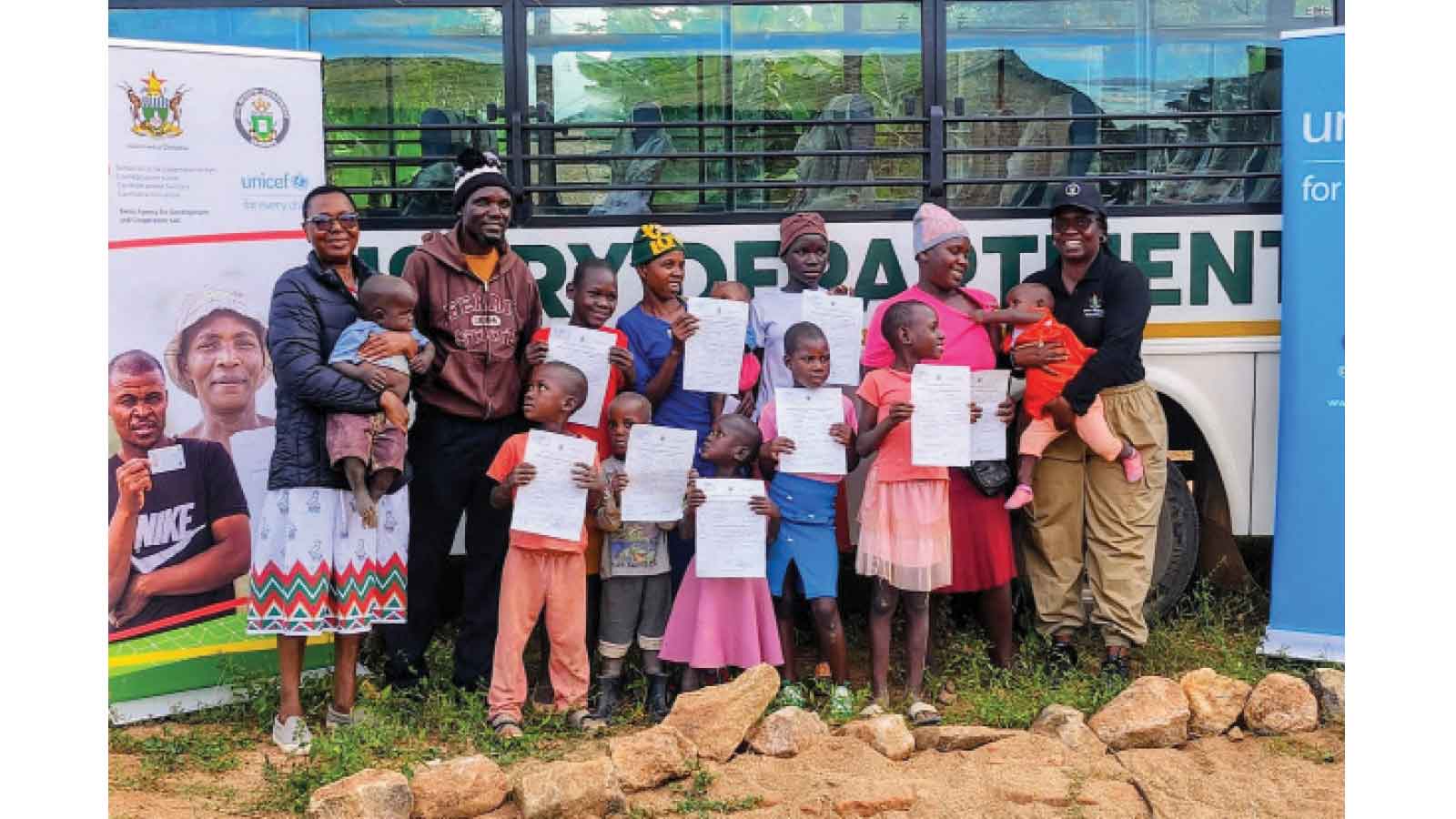
Shingirai Michelle Nyandoro
BEYOND the mist-covered mountains, tea estates and banana plantations that define Honde Valley lies another story — one about identity, inclusion and the ongoing effort to ensure that every Zimbabwean is recognised in law and able to access essential services.
For many families living in the remote communities scattered across the valley, obtaining a birth certificate, national identity document or death certificate has long required navigating difficult terrain, travelling long distances and overcoming a range of social and administrative barriers.
It is these realities that recently brought officials from the Civil Registry Department and the Department of Social Development to Mutasa District.
Supported by UNICEF, the teams travelled across Honde Valley ahead of the recently concluded Mobile Registration Exercise to engage communities, understand the challenges affecting civil registration and prepare families for the outreach programme.
The journey into Honde Valley itself tells part of the story.
From Mutare, the road winds north-east through Mutasa District before descending into Hauna and the fertile valley below, where mountain slopes disappear beneath drifting mist and vast tea estates stretch across the landscape.
The scenery is striking.
Yet behind its beauty lies a challenge that many residents know all too well — distance.
While access to civil registration services has improved significantly in recent years, many communities remain separated from service centres by mountains, valleys and roads that become increasingly difficult to navigate during the rainy season.
At the centre of Government’s efforts to improve access is the Hauna Sub-Office, strategically located to serve communities in Honde Valley.
The office was computerised in 2025 with support from UNICEF and now issues computerised birth certificates, replacing the manual system that residents relied on for years.
For local communities, the development represents more than technological advancement.
It reflects broader efforts by Government to modernise and decentralise civil registration services, ensuring that essential documents are accessible closer to where people live.
However, for residents in more remote areas such as Sagambe, Domborutinhira, Chisuko, Makwara, Zindi and Makwasa, access remains a challenge.
It is this gap between communities and services that continues to make mobile registration exercises an important part of Zimbabwe’s civil registration strategy.
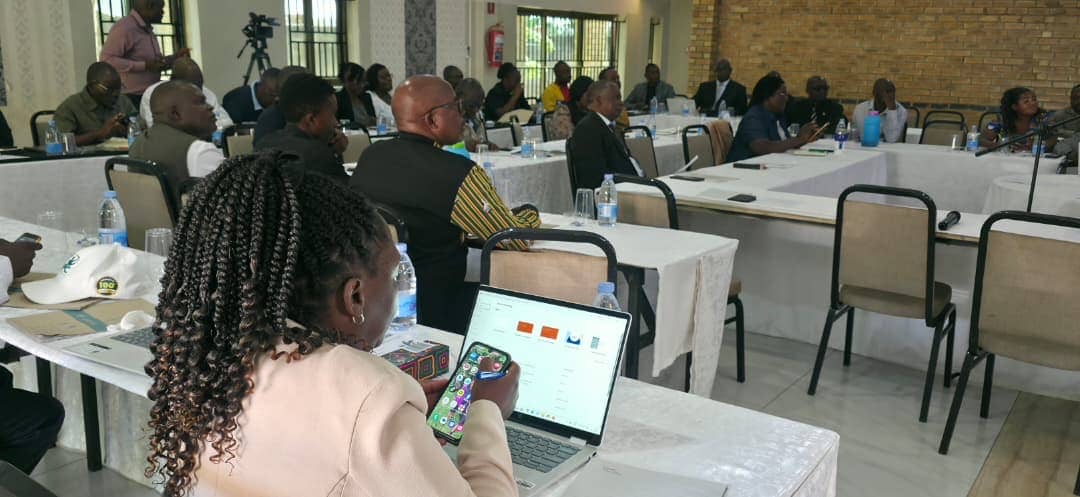
During community engagements held ahead of the outreach programme, traditional leaders, caregivers, religious leaders, women, young people and persons with disabilities openly discussed the obstacles they face in obtaining civil registration documents.
Some spoke about transport costs.
Others described the difficulties caused by missing documents, absent parents and limited awareness of registration requirements.
At Domborutinhira Primary School, where one of the engagement sessions was held, community members highlighted the practical challenges that continue to delay registration for some families.
Headman Sahumani said while communities understand the importance of birth registration, accessing services remains difficult for households living in remote areas.
“These programmes are important because they bring services closer to the people. Some families live very far from registry offices and travelling becomes difficult and costly,” he said.
The discussions also revealed challenges linked to Honde Valley’s proximity to the Mozambican border.
Cross-border marriages are common in the area, reflecting longstanding social and economic ties between communities on both sides of the border.
However, these relationships can sometimes create complications when families lack documentation relating to nationality, immigration status or legal entry into the country.
One young mother who attended a community engagement session in Sagambe said awareness programmes were helping families better understand how such cases could be resolved.
“Here, many people marry across the border because Mozambique is close and people move between the two countries regularly. Sometimes one parent is Zimbabwean and the other is Mozambican. Problems can arise when a parent does not have papers showing how they entered the country or their immigration status,” she said.
“In such cases, families may struggle to register their children. These outreach programmes help us understand the process and where to seek assistance so that children can be registered.”
Beyond geographical and administrative barriers, the engagements also highlighted social factors that sometimes delay registration.
In some households, decisions regarding the registration of children remain largely dependent on fathers or male relatives, leaving women unable to initiate the process independently.
One adolescent mother said this often results in delays.
“In some homes, a woman waits for the father to say it is time to go and register the child. If he is absent or delays, the child also remains unregistered,” she said.
The challenge is particularly visible in some Apostolic faith communities, where delayed registration can result in several children reaching school-going age without documentation.
The impact of bringing services closer to communities became evident during the mobile registration exercise itself.
One Apostolic faith family from Mutasa District successfully registered nine children on the same day, illustrating both the scale of the challenge and the effectiveness of outreach programmes in addressing long-standing registration backlogs.
Persons with disabilities also highlighted the importance of mobile registration services. One participant said outreach programmes help ensure vulnerable groups are not excluded.
“Persons living with disabilities need assistance to travel or access services. Mobile outreach programmes help ensure that people like me who may otherwise be left behind are also able to register and obtain documentation,” she said.
The mobile registration exercise, conducted across Mutasa District from May 17 to 24, translated many of the concerns raised during the community engagements into practical action.
Mobile teams issued birth certificates, death certificates and national identity documents within communities, sparing residents the cost and difficulty of travelling to registry offices.
For many families, the documents represented much more than administrative paperwork.
They represented recognition, belonging and access to opportunity.
A birth certificate is often the first gateway to education, healthcare, social protection and citizenship documentation.
Without it, exclusion can begin quietly and persist for years.
Recognising the importance of legal identity, Government has, over the years, invested significantly in expanding access to civil registration services through the Civil Registry Department.
These efforts have resulted in the full computerisation of all provincial offices, 63 district offices and 206 sub-offices nationwide, making it easier for citizens to access services regardless of where they live.
Complementing this decentralisation programme are mobile registration exercises supported by UNICEF and funded by the Embassy of Sweden, which continue to extend services into some of Zimbabwe’s most remote communities.
In 2025, the exercises were conducted in Binga, Mangwe, Chiredzi and Makonde districts. This year, the programme began in Buhera before extending to Mutasa, reinforcing Government’s commitment to reaching underserved populations.
Support from the Swiss Agency for Development and Cooperation has also strengthened the Department’s computerisation programme, with more than 20 remote sub-offices computerised in 2025 alone.
Through its Social and Behavioural Change and Child Protection programmes, UNICEF has further supported community mobilisation, awareness campaigns and dialogue sessions that help families understand the importance of civil registration and prepare for outreach activities.
As Zimbabwe advances towards Vision 2030, civil registration remains more than an administrative exercise.
It is about ensuring that every citizen is recognised, protected and included.
And in the mountains and mist of Honde Valley, that message is increasingly finding expression through a simple but powerful document — proof that every citizen counts and every citizen deserves recognition from birth.