Golden Sibanda in Maputo, Mozambique
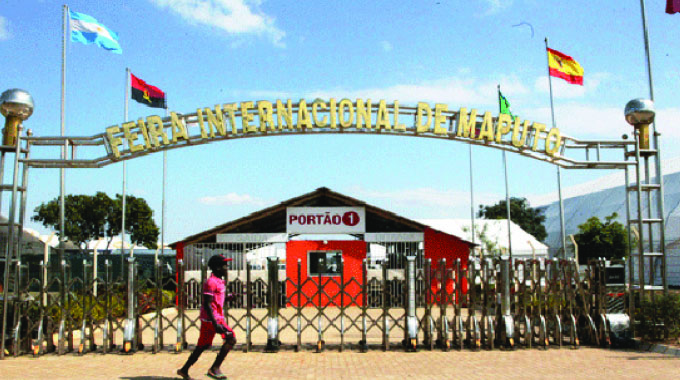
Zimbabwe is making huge strides in its quest to grow exports to Mozambique, judging by the significant traffic of prospective buyers who visited local firms’ exhibition stands to explore potential deals and trade partnerships during the Mozambique Agriculture, Commercial and Industrial Fair (FACIM) in Maputo.
The national trade promotion body,, facilitated the participation of more than 14 companies, both large and small-scale, from across key sectors at this year’s edition of FACIM. The sectors included manufacturing, agro-processing, agriculture, leather and footwear, engineering, health and wellness, insurance, and industrial gases.
Among the companies showcasing their wares were car battery maker Chloride Exide, the National Railways of Zimbabwe (NRZ), piping systems producer Proplastics, handcrafted products manufacturer Golden Hands Leather Products, medical gases manufacturer Verify Engineering, leather safety footwear and safety garments maker Triple Tee, and handicrafts supplier Tsisam Trading.
Life assurance solutions provider Nyaradzo Zimbabwe, engineering components distributor PowerDrive, agricultural enterprise Avomac Farm Abattoir and Butchery, agro-processing firm Niallah Foods, health and wellness brand House of Moringa, and leather products maker Samuneti Leathers also participated in the fair.
The fair, which began on 25 August and ran until today, is one of the largest multi-sectoral exhibitions in Southern Africa. It presents a significant opportunity for local firms to deepen their presence in Mozambique, which is emerging as one of Zimbabwe’s most important trade partners.
The 2025 exhibition builds on other trade facilitation programmes that ZimTrade has organised in Mozambique this year, such as the Beira Outward Mission, which provided an opportunity for Zimbabwean firms to engage directly with Mozambican distributors and wholesalers.
Several prospective buyers were seen making spirited inquiries about the Zimbabwean products, which already command significant respect in the Mozambican market for their high quality and reasonable prices. The exhibitors expressed hope that the interest will translate into deals and partnerships.
NRZ spokesperson, Mr Andrew Kunambura, said in an interview that the State rail operator was at FACIM to look for more business, prospect for opportunities, and further scout the Mozambican market for ways to improve its services.
“We are here to engage various stakeholders. As you are aware, NRZ is trying to recapitalise; we are looking for capacity and we are also looking for investors,” he said.
NRZ requires fresh capital for its recapitalisation and modernisation, as a previous US$400 million deal failed in 2018.
Fresh capital is needed to address ageing infrastructure, including locomotives and wagons, and to fund refurbishment and the purchase of new equipment to improve the company’s operational capacity and services.
“So far, we have met stakeholders from the engineering sector, companies that are coming and enquiring about the NRZ business and wanting to seek supply arrangements. We have met people in IT (information technology) who want to contribute to the resuscitation of the railways business.
We met customers who are interested in moving their cargo by rail, and we believe the inquiries that have come through are serious, as people have been taking our business cards and have also promised to follow up; they have also been signing our register, which we will use to follow up on those customers. We believe that the trip to FACIM is adding value to our operations.
We are hoping that when we get back home and follow up on these inquiries, we are going to have a breakthrough,” he said.
Mr Kunambura noted that NRZ had come up with an initiative for private players to participate under what the company calls strategic partnerships.
“So, this platform, we believe, has those players that can come in and assist; customers that have the financial muscle can hire wagons and locomotives and bring them to NRZ so that we can operate them to their advantage. We are also thinking that those that have the financial muscle and cannot go in the direction of hiring from companies with equipment can also come up with financing and enter into Public-Private Partnerships (PPP).
They can refurbish our wagons and locomotives. We have several locomotives that are stable but require repairs, and we also have infrastructure that requires rehabilitation. We believe this platform is a good one for NRZ to get those kinds of services from the players,” Mr Kunambura said.
In another interview, Mr Hilary Hilman of Legacy Logistics, which represents Triple Tee Safety in Mozambique, said the Zimbabwean companies’ products had made a huge impression in Mozambique because of their high quality and reasonable prices, with many companies eager to buy them.
“We are having a good interaction and good results from other companies. There are a lot of companies that want to work with us and are liking the products of Triple Tee Safety,” Mr Hilman said, as he was constantly interrupted by customers who wanted to make enquiries about the Zimbabwean firms’ in-demand products.
Mr Lloyd Machinga, the country manager for Exide Express in Mozambique, a subsidiary of ART Corporation and a sister company of Chloride Zimbabwe, which was participating at FACIM for the third time with the facilitation of ZimTrade, said their experience at this year’s event had been exciting.
“We have been able to meet a lot of exciting opportunities that we will be able to explore and manage to get more dealers. We also managed to interact with our existing customers here in Mozambique. As Exide Express, we also have branches here in Maputo and Beira. ZimTrade has helped us to come through to this exhibition.
The exhibition has enabled us to realise other opportunities like solar, which we have not been able to service before; there are a lot of opportunities in that area,” Mr Machinga said.
House of Moringa founder Tarie Chirewa said the response from potential clients in Mozambique during the exhibition had been encouraging.
“We are very happy to be here. The response to our products has been amazing. At the end of the day, we are here to get more business, more distributors and we seek more partnerships so that our brand can grow and we thank ZimTrade for ushering us into the Mozambican market,” she said.
ZimTrade Export Promotion Manager, Mrs Vuyiswa Mafu, said FACIM was a good trade show for Zimbabwean companies to participate in, noting that the local companies had been able to get many leads and inquiries about their products and services.
“Definitely, potential business will come out of that for them. We are yet to assess the level of orders and business that they have generated, but judging by looking around at other pavilions, this show is definitely a place for Zimbabwean companies to be going forward, as we grow our export markets in the regions.
In the spirit of the African Continental Free Trade Area (AfCFTA), Mozambique is definitely a market that we should be focusing on as ZimTrade, as Zimbabwe, not just here in Maputo, but also in other provinces that are closer to Zimbabwe,” she said.
ZimTrade’s external trade promotion efforts align with the objectives of the Zimbabwe National Export Strategy, which aims to increase national exports by at least 10 percent annually, from US$4,5 billion in 2018 to US$14 billion by 2030, helping the country to achieve its vision of an upper-middle-income status.
Under the Second Republic, which assumed power in 2017, Zimbabwe has an explicit policy objective to achieve export-led growth as outlined in Zimbabwe Vision 2030, through fostering a conducive business environment to attract foreign investment and value addition.
Furthermore, Zimbabwe’s Heritage-Based Education 5.0 philosophy integrates heritage with innovation and industrialisation to produce for local and global markets while also training graduates who are job creators rather than job seekers by leveraging traditional knowledge and contemporary technologies like artificial intelligence.
Apart from their growing trade relations, Zimbabwe and Mozambique enjoy cordial relations dating back to their pre-independence era, while President Mnangagwa’s economic diplomacy policy thrust seeks to grow and solidify economic relations with new and old global partners.