Chronicle Editor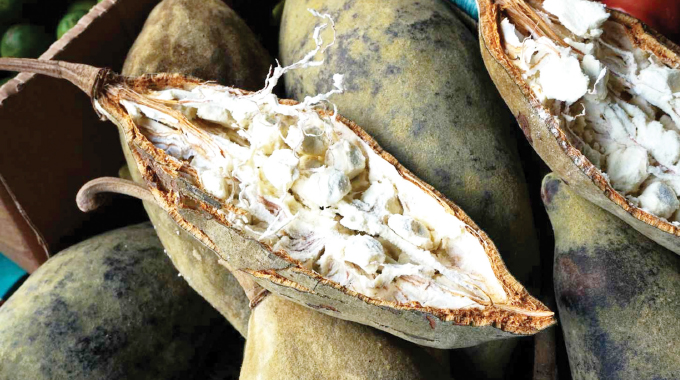
Judith Phiri, Business Reporter
THE national trade development and promotion body, ZimTrade has said some of the country’s wild fruits and herbs present export potentials that could pave the way for economic empowerment and international market access.
The trade body has noted that by harnessing wild fruits and herbs that are already found in abundance across all provinces, the country can integrate rural communities into international trade and economic development. In its latest newsletter, ZimTrade said wild fruits like baobab presented export opportunities, which can be used as a springboard to penetrate international markets due to fewer manufacturing processes required in preserving and packaging the final products.
ZimTrade said for thousands of people in the dry lands of Zimbabwe, especially groups of women and youths, the wild fruits were an avenue for making an income, through harvesting and selling.“Zimbabwe has an estimated five million baobab trees, with four million of the trees situated on communal lands. The fruit is seasonally available for harvest from April to September and this signals the peak season for baobab fruit,” it said.
The national trade development and promotion body said with training and capacity interventions, the baobab fruit and its by-products, have presented huge potential for commercialisation. It said it has developed several products for small businesses and rural communities, where innovation has resulted in the creation of export-competitive products such as essential oils and animal feed.
“In Mudzi, ZimTrade is working with Camfed and Harare Institute of Technology to develop a processing plant that will allow a group of ten young women to process baobab into high-end products.“The group has already participated at international trade fairs such as the Intra Africa Trade Fair, held in Egypt last year, where they engaged with leading buyers in the market who expressed to source from Zimbabwe,” it said.
ZimTrade said the group has sent sample orders to Egypt and once approved, the market will absorb much of the production coming from Mudzi, which will put the community on the national export map. Some of the current products from baobab fruit that have been developed for export include baobab powder and baobab oil, while baobab powder is highly versatile and finds applications in various sectors, including food and beverages, nutraceuticals and cosmetics, amongst other uses.
“Research by ZimTrade has shown that one kilogramme of baobab powder sells between US$20-US$40 in international markets, with the oil price much higher at between US$80 to over US$100 per litre. Without processing, the 20-litre tin of cracked baobab is being sold for US$1 in some parts of Zimbabwe.”
In terms of markets, the national trade development and promotion body said Europe was a key importer of baobab powder due to its growing demand for natural health products. According to Tridge, the United States ranks first in baobab powder imports, with an import value of US$90,65 million in 2023. China ranks second, with an import value of US$38,31 million.
ZimTrade said the demand for baobab powder has surged in China, driven by its nutritional content and taste. Germany is the third-largest importer, with an import value of US$28,87 million, France ranks fourth, with an import value of US$18,41 million and Canada is the fifth-largest importer, with an import value of US$18,02 million.



 Online Reporter