Online Reporter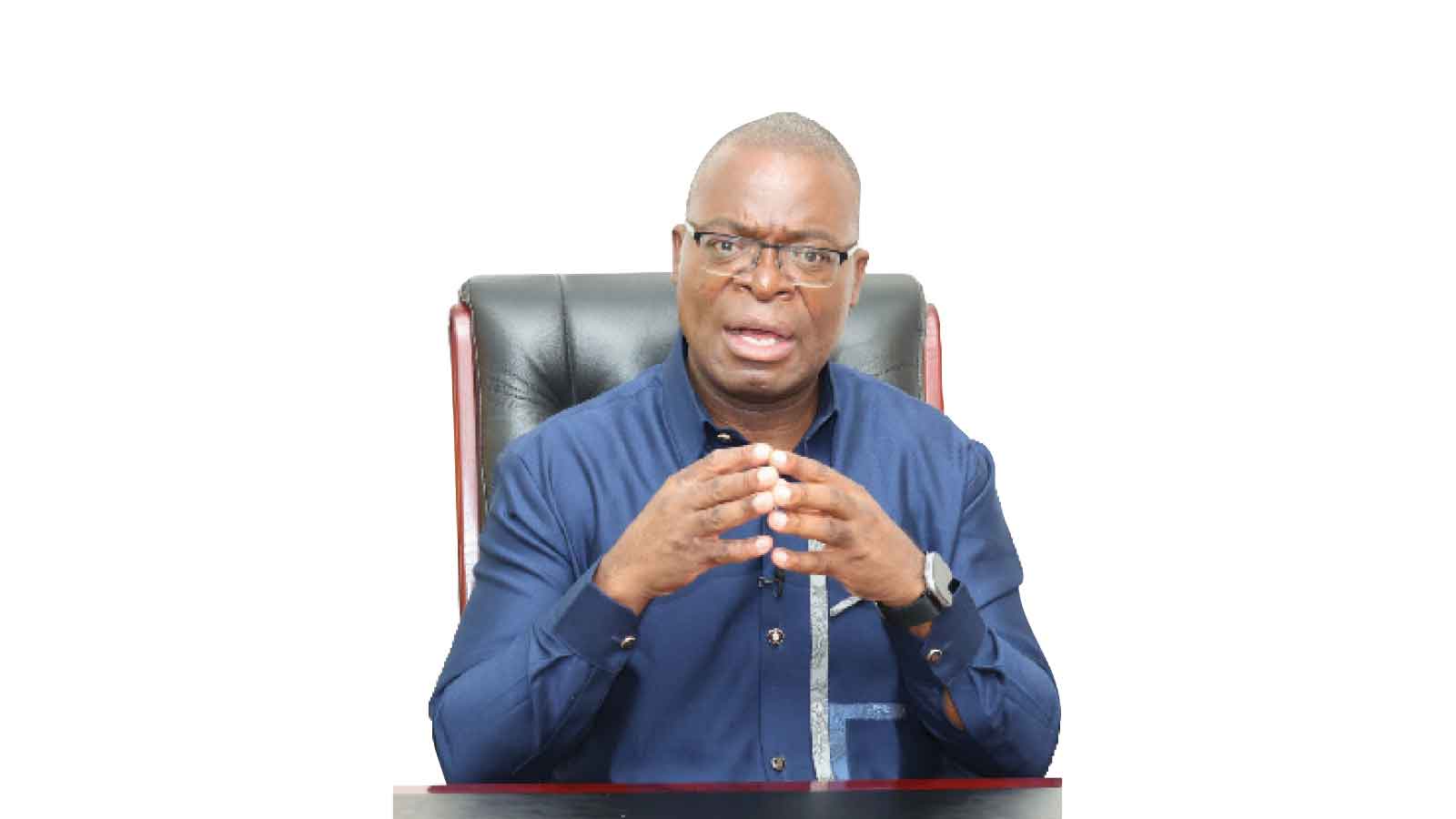
Zimbabwe is stepping up its diplomatic offensive to secure support for Harare’s bid to secure a seat on the United Nations Security Council as non-permanent member ahead of the June 3 elections. In a wide-ranging interview with Zimpapers reporter DEBRA MATABVU, Foreign Affairs and International Trade Minister PROFESSOR AMON MURWIRA outlined the country’s global outreach strategy, growing international support and readiness to contribute to global peace and security.
****************
Q: We have less than two months before the elections for the United Nations Security Council non-permanent seat on June 3. How prepared is Zimbabwe?
A: Zimbabwe is well prepared for the elections.
His Excellency, President Dr Emmerson Mnangagwa, officially launched the country’s bid in August 2025 at State House, followed by a global launch at the United Nations headquarters in New York, where I had the privilege of representing him.
Even before these launches, Zimbabwe had already secured endorsement from both SADC (Southern African Development Community) and the African union (AU).
In fact, Zimbabwe is the sole candidate representing the African union in the June 3, 2026 elections.
In terms of preparedness, we have effectively cleared the continental stage.
Africa has fully endorsed us and SADC has strongly supported our candidature.
So, we have a clean slate with the African Union.
Beyond Africa, the President, working through our Ministry of Foreign Affairs and our embassy in New York, has been engaging world leaders to rally support for Zimbabwe’s bid.
To date, we have received over 120 written endorsements from countries outside Africa, in addition to the 54 African countries that have already backed us.
This demonstrates strong and growing international support for Zimbabwe’s candidature.
Q: What additional diplomatic outreach has the ministry undertaken to secure support?
A: Our outreach has been extensive and guided by Zimbabwe’s foreign policy principle of being “a friend to all and an enemy to none”, as well as the philosophy of leaving no one and no place behind.
We believe there are no big or small states — only 193 equal members of the United Nations.
Guided by this principle, we deliberately engaged regions that are often overlooked, particularly small island developing states.
Earlier this year, we reaffirmed African union support during the AU Summit.
From there, we expanded our outreach globally. We undertook a historic visit to the Pacific region — the first at that level since independence — where we engaged countries such as Tonga, Solomon Islands and Fiji, as well as the Pacific Islands Forum Secretariat.
On Solomon Islands, we formalised diplomatic relations, further strengthening our engagement with the region.
From the Pacific, we moved to the Caribbean Community (CARICOM), which is recognised as the sixth region of the African Union.
We visited St Lucia, Jamaica, Guyana, St Kitts and Nevis, the Dominican Republic and Barbados, where we received strong support.
This outreach culminated in the Organisation of African, Caribbean and Pacific States (OACPS) Summit held in Malabo, Equatorial Guinea, from March 27 to 29.
At that summit, Zimbabwe was given a special platform to present and consolidate its bid before representatives from all three regions — Africa, the Pacific and the Caribbean.
In Malabo, we concretised our message with a special slot; it was only Zimbabwe that was given that slot in order to wrap up.
In addition to these physical visits, diplomatic engagement has continued through letters and bilateral outreach across regions such as Central Asia, South America and beyond, where we have also received encouraging support.
Looking ahead, I will be undertaking further engagements in Eastern Europe and other parts of Europe as a special envoy of the President to continue mobilising support for Zimbabwe going to the UN Security Council as a contributor to world peace.
Zimbabwe’s candidature is anchored in its historical and ongoing contribution to global peace.
You would know that between 1983 and 1984, we were a member of the UN Security Council when we were three years old, which means we, from being a toddler as a country, were always interested, as a people, in contributing to the global peace architecture. We were also in the council between 1991 and 1992, which is about 34 to 35 years ago.
And we believe now, after 45 years of independence, we are ready to contribute more, given the experience we have gained as a country.
Since then, we have gained extensive experience, including participation in peacekeeping missions in Somalia, Liberia, South Sudan and Sudan.
More recently, Zimbabwe, under the leadership of His Excellency, the President, played a key role in facilitating peace efforts in the eastern Democratic Republic of Congo by helping bring together SADC and the East African Community, with the process feeding into the African union and the United Nations.
All this demonstrates that Zimbabwe is mature, experienced and ready to contribute meaningfully to global peace and security.
So, this is the preparedness that we have.
So . . . I can say it’s going extremely well. We are receiving overwhelming support.
Q: An eight-member delegation of UN Permanent Representatives is currently in Zimbabwe. What is the purpose of their visit?
A: As part of our campaign, we invited UN Permanent Representatives from different regions — including the Pacific, Caribbean, Africa, Asia and Europe — to visit Zimbabwe and experience the country first-hand.
The delegation arrived on April 10 and will be here until April 15 (Wednesday last week).
The objective is to give them a practical appreciation of Zimbabwe’s peace architecture, development trajectory and commitment to principles of the United Nations Charter.
We designed a comprehensive programme to showcase this. Their visit began at the National Heroes Acre, which symbolises Zimbabwe’s struggle for self-determination — a core principle of the UN Charter.
Self-determination and dignity are sacrosanct within the United Nations Charter.
So, we went to the Heroes Acre to show them the sacrifices that Zimbabwe has made for peace and security, tranquillity and development that we are experiencing.
Zimbabwe became a member of the United Nations in 1980 after having shaken off the yoke of colonialism and attaining self-determination.
They were then taken to the Zimbabwe National Defence University to demonstrate how the country trains its personnel in peace and security for development.
This was followed by a visit to the SADC Regional Peacekeeping Training Centre, highlighting Zimbabwe’s role in regional and international peacekeeping.
We also took the delegation to the Tongogara Refugee Camp to show how Zimbabwe supports displaced populations, upholding human dignity and providing opportunities for integration and livelihoods.
There are several projects that are taking place there that are for the upkeep and integration of the refugee community into the Zimbabwean society.
These projects help to respect their dignity and help them live happy and fulfilling lives, in spite of being displaced from their countries.
To highlight our heritage and identity, the delegation visited Great Zimbabwe, a UNESCO World Heritage Site, which reflects the country’s history, ingenuity and longstanding culture of peace. That visit was to showcase to them the basis and origins of this country.
It is also the place where this country gets its name from.
Great Zimbabwe showcases our great ingenuity and heritage as a people.
Our heritage being our source of pride and power.
There is no place like Great Zimbabwe.
Today (Monday last week), they are visiting Victoria Falls, one of the Seven Natural Wonders of the World and another UNESCO World Heritage Site.
Through this programme, we are demonstrating that Zimbabwe is a peaceful, responsible and capable member of the international community, ready to contribute meaningfully to global peace and development.
Q: May you please highlight the next steps until the elections in June?
A: In the lead-up to the June 3 elections, we are intensifying our diplomatic engagements.
We will continue reaching out to several countries through both high-level visits and written communication to consolidate support for Zimbabwe’s bid.
As part of our Independence Day commemorations at embassies across the world, we will also amplify the message that Zimbabwe is ready to contribute meaningfully to global peace and security.
In addition, the Minister of Foreign Affairs and International Trade, acting on behalf of His Excellency, President Dr Emmerson Mnangagwa, will engage diplomats based in South Africa to further promote Zimbabwe’s candidature ahead of the vote.
Thereafter, we will return to New York to conclude our campaign activities alongside other countries contesting seats from different regions.
For Africa, Zimbabwe remains the sole candidate, while other regions, such as the Caribbean, have their own representative Trinidad and Tobago, which we will be working together with to spread our message. Zimbabwe will also host a dedicated event to showcase its candidature and reinforce its message to the international community as we approach the election date.
Overall, we are confident of a strong outcome and are looking forward to overwhelming endorsement.
We have already secured significant support from across the globe, including from members of the United Nations Security Council.
At a time when the global geopolitical landscape is shifting and conflicts persist, Zimbabwe believes its candidature is both timely and relevant.
We are offering ourselves as part of the global peace architecture, contributing to efforts to promote stability and cooperation.
Our foreign policy is anchored in several key pillars, with peace and security at the centre.
A peaceful global environment is essential for advancing trade, promoting tourism, fostering cultural cooperation, and supporting collaboration in science, technology, education and innovation.
We also have a constitutional obligation to safeguard the welfare of Zimbabweans in the diaspora, which further underscores the importance of being actively involved in global peace and governance systems such as the UN Security Council.
Ultimately, our participation in the Security Council is part of building an effective diplomatic presence and contributing to a progressive international order.
Q: Are there areas that still need improvement?
A: One key area is continuous and effective messaging.
Our engagement must remain consistent and far-reaching to ensure that Zimbabwe’s position is clearly understood.
We are making steady progress in this regard through various platforms, including media engagements such as this one.
While the process requires significant effort and resources, we are confident that we are moving in the right direction.
Recent engagements by His Excellency, the President, including his State visit to Ghana, have also strengthened support for Zimbabwe’s bid.
He also mentioned our bid, and Ghana is fully behind us.
It is a continuous process that demands commitment, but we are encouraged by the positive response we are receiving. But where there is no sweat, there is no sweet. Sweet and sweat go hand in hand.
Q: What measures are in place to protect Zimbabwean citizens abroad, especially amid rising geopolitical tensions?
A: The Government remains committed to safeguarding Zimbabweans both at home and abroad.
Through the Ministry of Foreign Affairs and International Trade, we provide consular services in line with Section 35 of the Constitution, which obliges us to protect and assist our citizens wherever they are.
Our embassies and consulates are actively engaged in supporting Zimbabweans, whether they are abroad legally or otherwise.
In times of crisis, we facilitate evacuations and provide the necessary assistance.
For example, during past emergencies, including situations in Sudan, we successfully evacuated Zimbabweans to Saudi Arabia and eventually brought them home.
We also respond to individual incidents, such as accidents, ensuring that affected citizens receive support.
We encourage Zimbabweans travelling or living abroad to do so legally and to register with our embassies and consulates.
This enables us to locate and assist them quickly in case of emergencies.
The establishment of a diaspora division within the ministry further strengthens our capacity to engage and support Zimbabweans globally.
Our overarching objective is to ensure that Zimbabweans, wherever they are, enjoy safety, dignity and the opportunity to lead prosperous and fulfilling lives.