admin
admin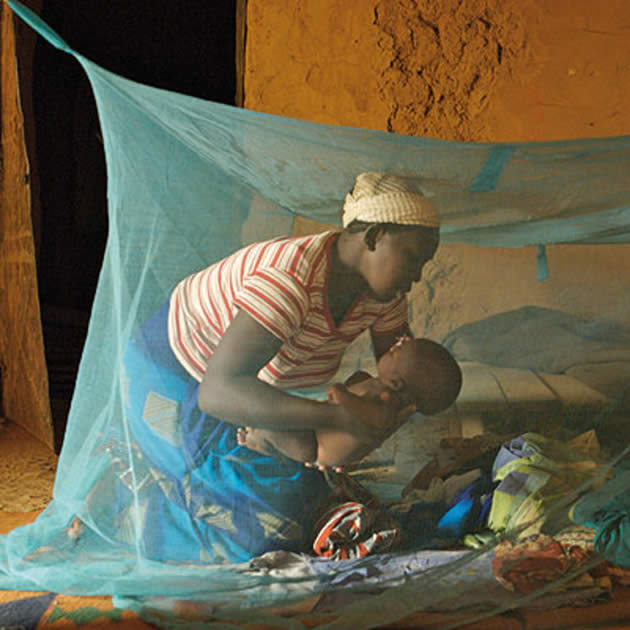

Lungelo Ndhlovu
ZIMBABWE is on course to totally eliminating malaria in all malaria-prone zones. The country has become the first in the Southern Africa Development Community in achieving the targeted goal of eliminating malaria by the year 2015. However, malaria continues to be a challenge especially at the country’s borders.
Transmission of the malaria parasite remains high at transit points as travellers import malaria from other countries.
According to Dr Joseph Mberikunashe, the National Malaria Programme Control manager in Zimbabwe, the country has surpassed the 2015 Abuja Malaria target of totally eliminating malaria in major malaria prone districts.
But malaria campaigns still need to be done so that people make informed decisions when travelling to malaria infested areas in the Sadc region.
A convoy of various health ministers in the Sadc region drove through Malawi, Zimbabwe and Zambia up to Angola in a race against malaria last week.
Dr Mberikunashe said Bulawayo has been always malaria free. “Bulawayo has been malaria free for your information. When we say it is free, we mean, if you don’t travel out of the city for a period going up to six weeks outside, there is no way you will get a malaria parasite in your blood, unless somebody puts it in there physically, in your system, which is not possible.
“We know that people travel a lot, to places such as Binga, Mudzi and so on. If you go today and comeback tomorrow and then you fall sick whilst you are in Bulawayo and get treated at Mpilo Hospital, that’s not called local transmission.
“You got it where you visited. Sometimes people mistake that and say how come we are getting malaria cases at Mpilo. It’s because people are accessing the nearest health facility but the important thing is where did they travel in the past two weeks and that is where they got the parasite,” said Dr Mberi.
In the past, Matabeleland South has recorded high malaria cases with Beitbridge being the highest followed by Gwanda while Plumtree had a few cases.
“Mat South has made tremendous progress and that is why we are going for pre-elimination. There are districts in Mat South where you don’t have a single case per year.
“Some are getting five cases per year and in other words malaria is becoming almost extinct in those areas. Then there are others which are still a problem, like Beitbridge, they still record about 400 cases per year. Compared to the rest of the country that’s very low but for Mat South that’s high because that’s the highest district followed by Gwanda.
“In Plumtree there are a few cases but otherwise Mat South we are winning. We believe that the issue that is remaining in the Beitbridge area, it could be related to high mobility, movement of people who are migrating and so on. We need to address that and identify and classify how many have travelled out or coming in our way.
“What it means in Mat South is that every case that we see is now notifiable by law. Every health worker who sees one case should report to the health district or the province head office so that person is also followed up to their homestead and their family members are tested for the parasite,” said Dr Mberikunashe.
Binga is the only district in Matabeleland North with high malaria cases, ranking ninth nationally.
“The rest out of the country, if we take let’s say at the top twenty, you will find out that in Matabeleland, the two Matabeleland combined there are only three districts, Binga, Hwange and Lupane. The rest don’t feature in the top twenty. But this was not the case in the early 2000, Binga was number one followed by Hwange. We seem to have won,” said Dr Mberikunashe.
Malaria transition in Zimbabwe starts from late November till the end of May the following year. The month of April is the peak period when large numbers or cases of malaria incidents are recorded each year.
During these months, malaria transmission is very high because people travel a lot especially to malaria prone disease zones such as Binga, Victoria Falls, Mudzi, Mozambique and other areas.
Travellers from various countries, therefore, need to take serious precautions when visiting such areas, such as wearing protective long-sleeved clothing and using bed nets, mosquito repellent lotions and other materials used to protect one from getting bitten by mosquitoes which transmit malaria.
Malaria is transmitted into the human body when a person gets bitten by an anopheles female mosquito.
The Chief Health Officer in charge of the health ministry in Botswana, Setshwano Mokgweetsinyana said that malaria was a serious issue in Botswana as it affected a large population.
“In our country malaria poses a serious threat because it affects a large population. So far we have done a lot to control the disease because if you look at our figures from 2000 up to now, we have made a remarkable difference in terms of the incidence of the disease. Although it is a problem we are reducing it as we go towards elimination,” said Mokgweetsinyana.
Zimbabwe Health Coordinator for International Organisation for Migration, Tendai Gunda said the fight against malaria should be a collective one in the Sadc region, so that this disease is eliminated completely.
“On issues regarding malaria, this disease knows no borders. Because it knows no borders, all countries involved, especially those in elimination of Aids, need to come together in trying to eliminate malaria and we won’t win without our neighbours, we need each other to actually win. We are here in this convoy as IOM supporting our member states to try and eliminate this disease,” said Gunda.



 Online Reporter