Online Reporter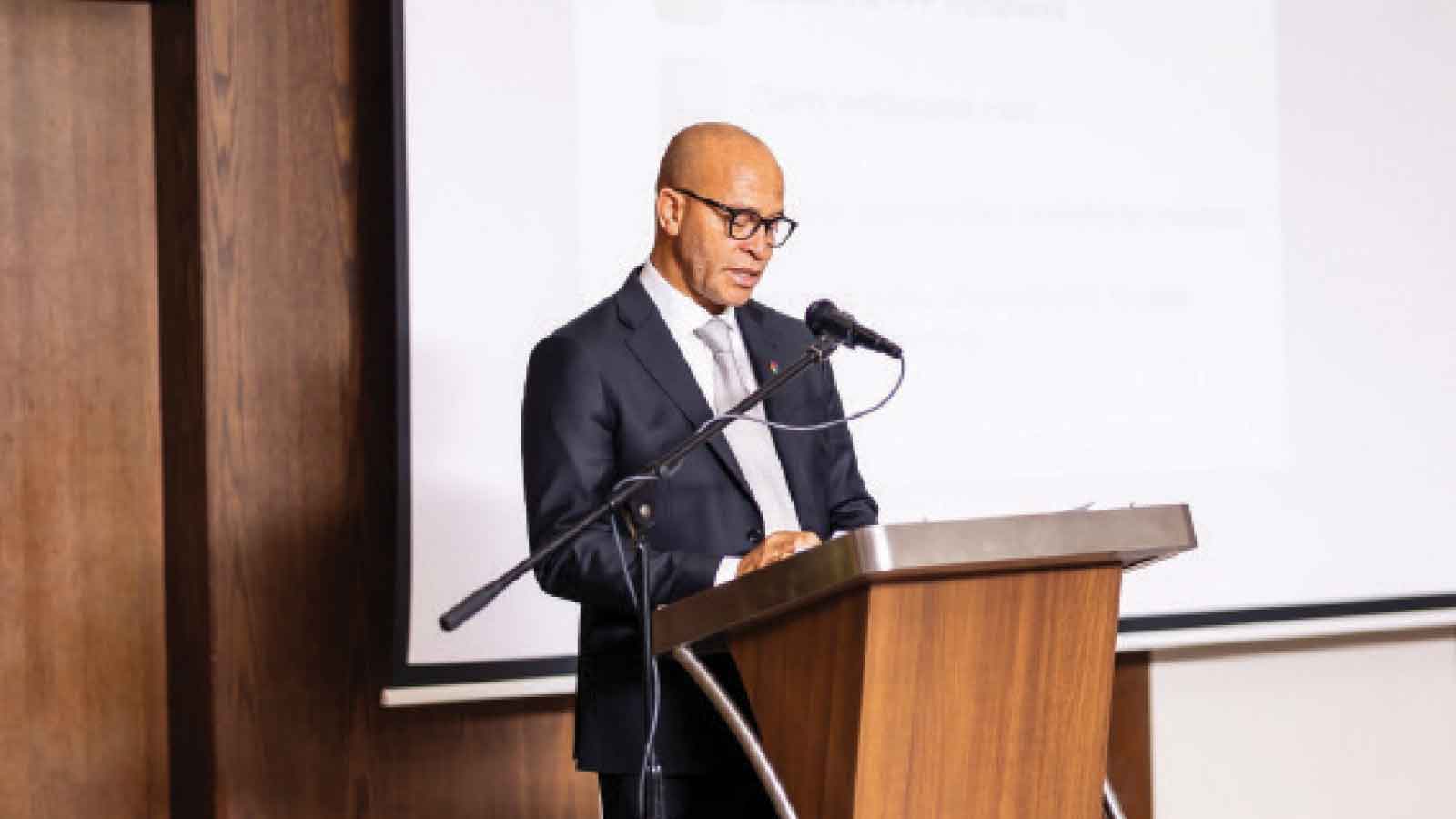
Tapiwanashe Mangwiro
Senior Business Reporter
Zimbabwe should urgently strengthen the preparation and packaging of investment projects to unlock large pools of domestic and international capital seeking productive opportunities, the Zimbabwe Investment and Development Agency has said.
ZIDA chief executive officer Tafadzwa Chinamo has said the country could not rely solely on investor interest to drive economic development, arguing that projects must be properly prepared, transparent and commercially structured before inviting financiers to commit capital.
Addressing the 6th ZimReal Property Investment Forum, Mr Chinamo said Zimbabwe has an opportunity to mobilise private capital into infrastructure, industry, property and other productive sectors, but this required a pipeline of credible and bankable projects.
“Zimbabwe needs to develop a stronger pipeline of investment-ready and bankable projects,” he said.
This highlights a key challenge confronting investment mobilisation in Zimbabwe: the gap between promising ideas and projects developed to secure financing.
Mr Chinamo said project sponsors often face financial constraints at the earliest stages of development, when they need resources for feasibility studies, environmental assessments, technical investigations, financial modelling and legal structuring.
“At the concept stage, many projects lack resources for further preparation. At the feasibility stage, sponsors face the cost of technical studies, environmental assessments, financial modelling and legal structure,” he said.
The preparation gap can prevent potentially viable projects from getting financiers, particularly where sponsors lack the resources required to demonstrate commercial viability.
He said the problem does not end once a project reaches financial close, as projects also require financing structures that match their construction and operating cycles.
“At financial close, these perceptions in inappropriate financing structures can delay or prevent capital commitment. During implementation, projects require suitable financing that matches their construction and operating cycle,” he said.
According to Mr Chinamo, Zimbabwe should change the way it approaches investment development by paying greater attention to project preparation and the different forms of capital required at each stage.
“The objective must therefore be to connect the right project with the right capital at the right stage of development,” Mr Chinamo said.
He argued that not every project can be financed through conventional commercial lending.
Infrastructure projects, for example, may require long-term funding, while industrial projects may need a combination of equity, debt, working capital and equipment finance.
Strategic projects could also need development finance and risk mitigation instruments before commercial financiers were willing to participate at scale.
This opens room for blended finance, which Mr Chinamo said could combine development finance, government support, commercial capital and institutional capital while ensuring risks were allocated appropriately.
“There’s obviously a case for blended finance here, which provides a practical mechanism for addressing some of these constraints,” he said.
The approach can prove particularly important for infrastructure and other strategic projects that require significant upfront investment but generate broader economic and social benefits over a longer period.
Mr Chinamo said public-private partnerships (PPPs) can also become an important mechanism for mobilising private capital, provided projects were structured properly.
“Public-private partnerships can play an important role in mobilising private capital for infrastructure and other strategic projects,” he said.
However, he warned that PPPs should balance public interest with commercial viability and must be supported by transparent processes, credible revenue arrangements and appropriate risk allocation.
“PPP projects must be structured to achieve both public value and commercial productivity,” Mr Chinamo said.
He pointed to ZIDA’s involvement in the latest approved PPP project as an example of the type of collaboration that could unlock investment in infrastructure.
The project involves a partnership between the Government and a local property developer to develop a new city in the Masvingo area where a cricket stadium is being built.
Beyond individual projects, Mr Chinamo said Zimbabwe needed to create systems that would continuously develop and improve the country’s investment pipeline.
He identified four practical areas where collaboration can make a difference: project pipeline development, project preparation financing, investment data and transparency and investable PPP structures.
The first, he said, is ensuring that the country has a steady flow of opportunities that could ultimately become investment-ready projects.
Promising projects should move systematically from concept and visibility to investment readiness, financial close and implementation.
Mr Chinamo said many projects fail to progress because they do not receive adequate preparation support at the earliest stages.
“The thing that we’re always asked time and again is: what can I invest in? I’ve got money, I’m in the Middle East, we have got so much money, what do we need?” he said.
This demand, he suggested, demonstrated the importance of ensuring Zimbabwe’s projects were properly prepared before being presented to investors.
The second priority is project development and preparation financing.
Mr Chinamo said there is a significant funding gap before projects become ready to approach investors, proposing greater consideration of project preparation facilities or development funds supported by Government, development finance institutions, banks, corporates and other development partners.
He also placed investment data and transparency at the centre of the process.
“Capital follows credible information,” Mr Chinamo said.
Investors, he said, need reliable pipeline information, consistent reporting, transparent project structures and credible data before committing capital.
Better project tracking can also allow Government and other institutions to identify bottlenecks early and intervene before delays result in projects losing momentum.
The fourth priority is the development of investable PPP structures.