


 admin
admin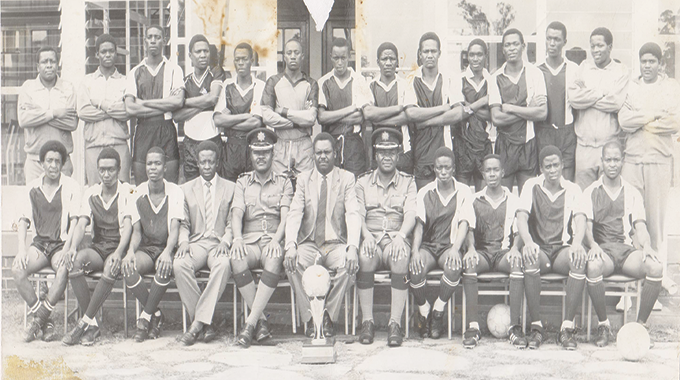
Lovemore Dube
ZIMBABWE football needs to invest in the future of footballers so that they may get a head start to life after the game.
This is the belief held by Black Mambas legend Wilfred Mahaja.
The future has been bleak for a majority of the retiring players. For many it has never been a prepared journey as even injury forces many at their peak to quit.
Mahaja who has spent the last 23 of the last 25 years in Botswana, says reality sinks in when a player’s last earning dries up.
“Our football deserves to look at the future of the players. There is a need to create a provident fund for the boys and coaches while they are still active. Medical care is one of the challenges they face as many have broken limbs without anyone coming forward seeking to restore them to their former selves,” said Mahaja.
Mahaja’s career began at St Columbu’s Primary School where as a Makokoba boy he was already top of his grade. He played at most of the open patches in Makokoba and Mzilikazi through even in his secondary school days at Sobukhazi.
“Growing up then had football as the priority for youths. There were talented footballers like Tito Paketh we grew up with. We saw young boys like Boy Ndlovu come up and we played a lot of club football among ourselves,” said Mahaja. After completing his O-levels in 1977, Mahaja joined the Police Force in 1978. He was a star of the West Commonage, side helping them to dominate police games.
He was to star for a number of seasons and when the late Herbert Ushewokunze became Home Affairs Minister, he went around the country identifying players for Black Mambas and he was among those selected.
“We went to Harare and played about one season in Division Two and two in Division One before we were promoted to play in the Super League in 1986.
“Later to be my head coach at Mambas, Max Moyo better known as Malume and Moses Phiri were the players identified from Bulawayo.
“I will never forget the competition for promotion we were engaged with when Rhinos were promoted in 1984. They had managed to lure the best players from the Super League, and there we were as Mambas, a bunch on novices giving it our all,” said Mahaja.
David Mwanza and his uncle on the maternal side Moses Chunga were his most difficult opponents.
“Moses was very skilful, he was unpredictable while David had the bustle to add to his skill and workmanship on the field. He was a hard running forward who coming from deep in midfield, would give you a torrid time,” said Mahaja.
The highlight of his career was earning promotion and retaining the Super League (Premier League) status. He praises Daniel Chikanda for turning him into one of the best central defenders in the league.
“He was a great coach, he moulded me to a player of repute that to this day my name rings to most of the people who followed Black Mambas,” said Mahaja.
He was a hard to beat central defender who was unlucky not to be capped. In 1990 at the age of 29 he was called up to the national team by the late Peter Nyama. An injury picked up a week before forced him not to go to camp.
The injury cut short his career and now he realises that players need to be insured.
“I got a torn ligament on my knee the week I was called up. That was the end of my playing days and I ventured into coaching. Players need insurance to get proper treatment and have something to push them going soon after retirement,” said Mahaja.
When Daniel Chikanda left in 1991, “Malume” Moyo took over the reigns and Mahaja was made assistant coach,
“It was great moulding players like Joseph Dube. But I was there for just two years and I left to join Gaborone United in Botswana in 1993,” said Mahaja.
It is in Botswana that his career blossomed, winning all what domestic football had to offer there.
He worked with Boy Ndlovu, Mandla Balanda and Marko Tshuma, younger brother to former Zimbabwe international goalkeeper Johannes. After over a decade and getting Sharps FC from social league to the promotional division, Mahaja was forced to come back home to do a Caf C licence.
“Two years on I am yet to attend class because no course has been run by Caf and Zifa. I will wait but have lost out on opportunities there because of this. My fellow countrymen here have suffered too.
“Now I am thinking of starting my own football school and give back to the community. We were identified from the streets and turned into stars at a time when we played for passion and the love of the game,” said Mahaja.
He contends that coaching as foreigners with the likes of Fred Mwila, Ken Mwape, Barry Daka and Paul Moyo helped develop football in Botswana.
“Their football has improved tremendously. It is us foreigners who brought a workmanlike approach to a relaxed people. They never took football seriously before but now they have tasted success.
“Look at one of my former players Dipsy Selolwane, his name is known all over the world after he played in Europe, America and Africa,” said Mahaja.
He called on the country to take note and respect former players.



 Online Reporter
 Bongani Ndlovu