Online Reporter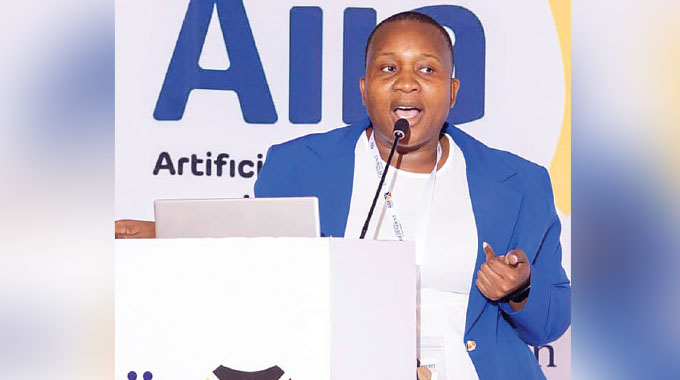
Rutendo Nyeve, Victoria Falls Reporter
ZIMBABWE is on the cusp of a digital transformation, with technology experts saying the country possesses immense potential and a solid foundation for harnessing Artificial Intelligence (AI) to drive transformative development across sectors.
Given the country’s robust education base, widening internet penetration, growing telecoms infrastructure investments, and a young population dividend with thousands of Stem graduates produced annually from universities and colleges, experts say Zimbabwe is firmly anchored to lead the digital innovation drive in the region.
The Government under its “Smart Zimbabwe 2030” vision, has already provided policy direction to ensure the successful adoption of digital technologies across the key economic sectors.
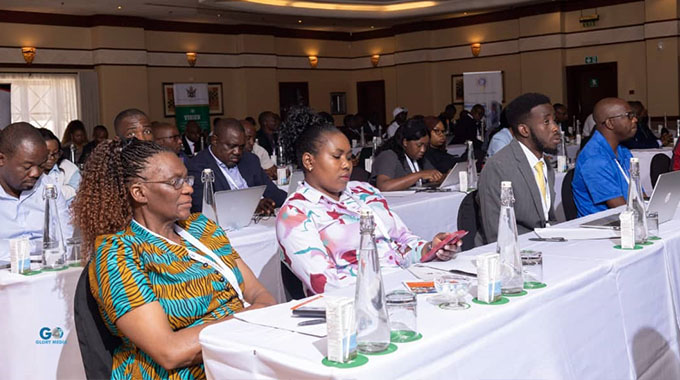
These came under the spotlight during experts’ discussion on Tuesday at the Artificial Intelligence for Africa Summit in Victoria Falls, where participants highlighted both the immense opportunities and critical challenges the country must navigate to secure its place in the rapidly evolving digital economy.
The transformative power of AI was a central theme of the summit. Vice President of the World Federation of Engineering Organisations (WFEO) for Africa and Council Chairperson at Chinhoyi University of Technology, Dr Eng Martin Manuhwa, said AI is a cornerstone for inclusive growth.
“AI offers transformative potential across critical sectors vital for national development in Zimbabwe and across Africa,” he said.
“Its applications can enhance efficiency, improve service delivery, and foster inclusive growth,” said Dr Manuhwa.
He elaborated on sector-specific applications, painting a picture of a future where AI is deeply integrated into the fabric of Zimbabwe’s key industries.
In agriculture, which sustains a vast portion of the population, AI can revolutionise practices through crop yield prediction using satellite data, drought forecasting, and automated pest detection.
He said local agritech startups like eMkambo are potential vehicles for integrating advanced market analytics and input forecasting, thereby optimising the entire agricultural value chain and bolstering national food security. The potential in healthcare is equally overwhelming.
“AI chatbots could provide crucial initial diagnoses in remote, underserved rural areas, following models already successful in Rwanda and India. Furthermore, AI-enhanced medical imaging could drastically improve the detection rates of diseases like tuberculosis and cervical cancer, while intelligent systems could optimise drug supply chains, ensuring life-saving medicines are available where and when they are needed most,” said Dr Manuhwa.
In education, the personalisation offered by AI could help bridge longstanding knowledge gaps.
Dr Manuhwa highlighted home-grown innovation, such as the student-developed “Chikoro AI”, a tutoring bot that offers homework assistance in Shona and English, as a powerful example of localised solutions.
“Such adaptive learning platforms could redefine educational delivery, making quality support accessible to millions,” he said.
The fintech sector, a relative bright spot in Zimbabwe’s economy, was identified as another prime candidate for AI disruption.
AI can enable sophisticated credit-scoring based on alternative data from mobile usage, a boon for the unbanked.
It can also enhance security through advanced fraud detection and improve risk modelling for SME loans.
Existing robust platforms like EcoCash and local banks are seen as ideal foundations for integrating these AI-driven models, extending financial inclusion and driving efficiency.
This sentiment was echoed by another expert, Ms Ruth Gorerokufa, an operations supervisor at ZB Bank.
She framed AI not as a distant possibility but as an immediate imperative, declaring that “AI-driven disruption is not optional, but an existential necessity.”
Ms Gorerokufa outlined a future where AI is at the very core of banking, enabling intelligent automation and hyper-personalisation at scale.
She detailed how AI can autonomously analyse data to score a customer’s credit, slashing approval times from days to minutes while reducing costs by over fifty percent.
“AI turns every piece of data, whether numbers in your account or messages and calls, into instant decisions,” said Ms Gorerokufa.
She said this has seen a shift from a product-centric to a customer-centric model where metrics focus on lifetime value created rather than units sold.
Beyond banking, Ms Gorerokufa highlighted the role of emerging technologies like RegTech and SupTech in automating compliance and enhancing supervisory effectiveness for central banks.
She also pointed to Open Banking and Central Bank Digital Currencies (CBDCs) as transformative trends, alongside the potential for AI to ensure fairer, faster, and more transparent allocation of foreign currency and funds to critical sectors like SMEs and exporters.
However, this potential is constrained by significant gaps.
A major challenge is the disconnect between the country’s raw talent and its specialised AI capabilities.
While Stem graduation rates are high, there is limited AI-specific training, a scarcity of PhD-level AI researchers, and a continuous brain drain that siphons off top talent.
This points to a vast pool of untapped potential that requires urgent nurturing through targeted policies, specialised education, and incentives to retain expertise.
Other critical gaps include insufficient funding and venture capital specifically for AI startups, nascent data governance frameworks, and a regulatory environment that is still adapting to the pace of technological change.
While the raw ingredients for success are present, a concerted effort is needed to combine them effectively.