admin
admin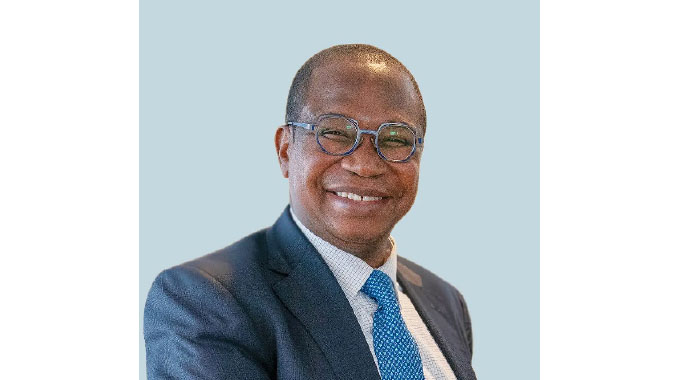
Wallace Ruzvidzo, Herald Reporter
Zimbabwe is poised to play a pivotal role in the global shift towards a green economy, leveraging its rich deposits of critical minerals such as lithium and graphite needed to drive the transition.
Finance, Economic Development and Investment Promotion Minister Professor Mthuli Ncube stressed this crucial economic resource after attending the World Economic Forum Annual Meeting 2025, held in Davos, Switzerland, last week.
The annual meeting brought together global leaders to address key global and regional challenges including responding to geopolitical shocks, stimulating growth to improve living standards, and stewarding a just and inclusive energy transition.
President Mnangagwa is on record stating that mineral-rich countries like Zimbabwe must not remain poor, but should take advantage of the enormous opportunities afforded by the shift to a green economy, to diversify and champion economic growth.
Prof Ncube said Zimbabwe was looking to play a critical role in the global transition, with policies already in place to ensure beneficiation as enunciated by President Mnangagwa.
“The World Economic Forum annual meeting for 2025 has come to an end. We have had a very productive week under the theme ‘Collaboration in An Intelligent World’.
“Investors are thinking of new opportunities, especially in the future energy and minerals sectors and we as Zimbabwe need to position ourselves appropriately in terms of our lithium, graphite and whatever else we have to manufacture batteries to drive a green transition or electric vehicles, for example.
“So, our policies around beneficiation are on the right path as a way to harness as many opportunities as possible,” he said.
The Finance Minister said many issues were discussed at the four-day event, with the agenda focusing on five key areas: reimagining growth, industries in the intelligent age, investing in people, safeguarding the planet and rebuilding trust.
“We also discussed issues around how to protect ourselves against climate shocks in terms of sovereign insurance, how to harness the air quality as an asset for example even just a mere conversion of fumes from a coal power station. Sulphur dioxide is produced and this can be converted to sulphuric acid, which we currently import, for example.
“So suddenly you turn something harmful, that goes into the atmosphere, into a product you need,” he said.
President Mnangagwa continues to assert that Zimbabwe is moving from being a mere supplier of raw materials to a critical player in the renewable energy technology value chain.
“A situation where mineral-rich countries remain in perpetual poverty and mere suppliers of raw materials and net importers of the value-added, expensive technologies and goods, is no longer acceptable.
“As one of those countries, Zimbabwe is blessed with abundant reserves of critical minerals such as lithium, platinum group of minerals, graphite and copper. There is also a broad array of rare earth minerals which are vital for renewable energy technologies and energy storage.
“My country recognises, therefore, the enormous possibilities and responsibilities this entails,” said the President during a high-level meeting on resourcing the energy transition with justice and equity in Baku, Azerbaijan, last November.
The World Economic Forum engages political, business, academic, civil society and other leaders of society to shape global, regional and industry agendas.


 Online Reporter