Chronicle Editor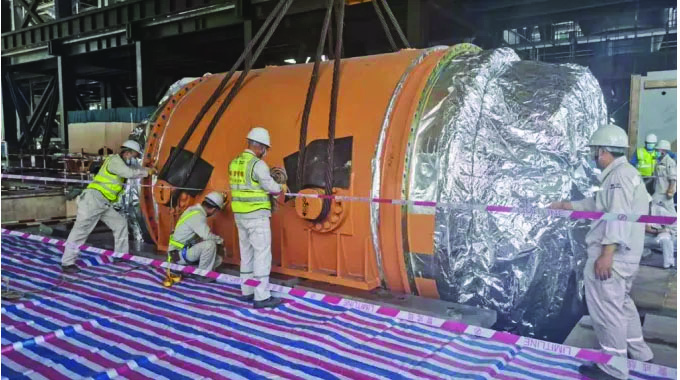
Business Reporter
ZIMBABWE’S power generation profile is set to significantly improve in the region owing to several ongoing power projects across the country that are expected to increase power generation.
The Zimbabwe Coalition on Debt and Development (ZIMCODD), said in its latest monthly economic review for May that domestic power generation was expected to increase in the last quarter of this year with the anticipated commissioning of the first unit of the Hwange Thermal Station unit 7 and 8 expansion project, which is nearing completion.
Sinohydro is undertaking the expansion project in conjunction with the Zimbabwe Power Company (ZPC) and upon its completion, it is expected to inject an additional 600MW.
The project has already created employment for locals in line with the Second Republic’s Vision 2030, which aims to transform Zimbabwe into an upper-middle-class economy.
“Domestic electrical energy production is expected to jump significantly in the last quarter of the year as one of the major ongoing national projects is nearing completion,” Zimcodd said in its report.
“The Government received a US$1,5 billion loan facility from China to expand the Hwange Thermal Power.
The latest updates indicate that the project is now over 84 percent complete with the first unit, Unit 7, expected to be commissioned in November 2022 while the second unit, Unit 8, is scheduled for February 2023.
“These units are 300MW apiece. This, coupled with other small solar power projects across the country will significantly improve Zimbabwe’s energy profile in the region.”
Recently, Cabinet exempted Hwange Electricity Supply Company (HESCO) from entering into long-term coal supply agreements under the Hwange Expansion Power Project.
HESCO is a US$1,5 billion project funded by China Exim Bank, Sinohydro and the Government through ZPC.
The power expansion project is a landmark energy infrastructure development to add 600MW, which will significantly contribute towards the growth of the agricultural, industrial, manufacturing and mining sectors.
However, ZIMCODD said the electricity situation remains precarious at the moment as some of the nation’s thermal stations have outlived their lifespans while Kariba Dam’s water levels are dwindling significantly. To that end, it called for more investment in power generation.
“It is, therefore, our view that authorities should attract more investment in the renewable energy sector, which is less costly to produce and plays a crucial role in the fight against climate change,” said the organization.
On the gold sector, ZIMCODD noted the jump in commodity prices on the international market, and projected that gold output is set to continue to rise in 2022 buoyed by these high global prices.
“However, Fidelity Gold Refiners (FGR) should offer competitive prices to ensure increased gold deliveries to official points, thus reducing side marketing and smuggling,” it said.
With increasing Government support to artisanal and small-scale mining (ASM), the sector is expected to significantly boost gold output.



 Online Reporter