Online Reporter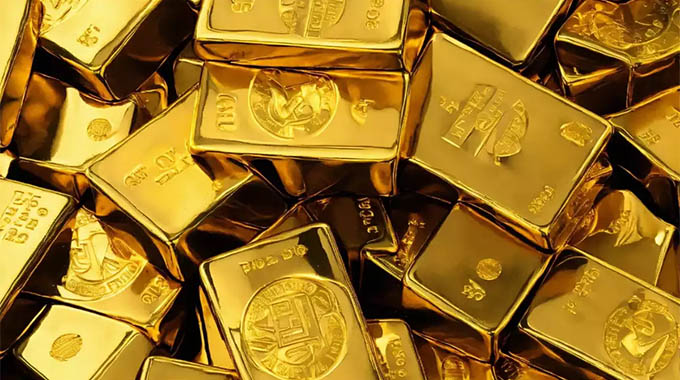
Zimpapers Business Hub
ZIMBABWE’S gold exports increased 24 percent during the first five months of the year to US$748 million from US$599,2 million in the same period last year, figures from the Reserve Bank of Zimbabwe (RBZ) show.
The monthly breakdown for 2025 shows strong performance, with January at US$123,1 million against US$112 million recorded during the same period last year. February saw US$117 million in exports versus US$109 million in the same prior year period. March figures soared to US$155,6 million, up from US$82,2 million in 2024.
The exports reached US$183,3 million in April, an increase from US$102,6 million in the corresponding period of 2024. May, however, recorded US$168,7 million, from US$193,5 million for the prior year comparative.
The US$148,8 million increase year-on-year underscores the growing contribution of the gold sector to Zimbabwe’s economy.
Gold is the country’s largest export commodity and last year, bullion worth US$1,52 billion was exported.
Small-scale or “secondary” gold producers continue to be the backbone of Zimbabwe’s gold output, significantly outpacing the contributions of larger, established “primary” mining companies.

Primary producers, typically characterised by substantial capital investment and formalised operations, still contribute significantly to the overall gold deliveries to Fidelity Gold Refinery (FGR), the country’s sole legal gold buyer.
However, their output is consistently lower than that of the small-scale miners.
Secondary producers, who often operate with less capital and more rudimentary methods, have become the principal drivers of Zimbabwe’s gold production.
Their sustained high contribution can be attributed to several factors: an increase in the number of small-scale miners actively involved, improved organisation within the artisanal and small-scale mining (ASM) sector, and concerted Government initiatives aimed at formalising and supporting their operations.
The prevailing strong global gold prices, which have significantly surged in the first half of 2025, are also a major incentive, making gold mining more attractive and profitable for these smaller players.
Further, strategic investments have facilitated the reopening of closed mines and boosted production at existing larger operations.
Policies focused on providing better payments to small-scale miners and encouraging them to sell their gold through official channels have also supported growth.
Zimbabwe’s gold sector is currently experiencing a significant boon from the ongoing surge in global gold prices. This comes as the precious metal has climbed nearly 25 percent in the first-half of 2025, building on a record-setting rally from the previous year.
The robust global performance of gold is largely attributed to a potent combination of heightened policy uncertainty and intensifying geopolitical tensions worldwide, according to World Bank bloggers Jeetendra Khadan and Kaltrina Temaj.
These factors have solidified gold’s traditional role as a “safe-haven asset, driving increased investment demand.
Notably, the first quarter of 2025 saw the highest inflows into gold exchange-traded funds (ETFs) since 2022, signalling renewed investor confidence and a flight to safety.
Furthermore, continued strong purchases by central banks are providing additional support to gold’s upward trajectory, reflecting ongoing reserve-management strategies by nations seeking to diversify their assets and hedge against economic instability.
Analysts widely anticipate this strong demand to persist in the near term, with global uncertainty and geopolitical risks remaining key drivers.
Projections indicate that gold prices are set to rise by approximately 35 percent year-on-year in 2025.
While a modest easing is expected in 2026 as some uncertainties potentially recede, prices are nonetheless forecast to remain significantly elevated, around 150 percent higher than their 2015–19 average, throughout 2025 and 2026.
For Zimbabwe, this sustained high price environment is a critical advantage.
Gold is the country’s single largest export commodity and a vital source of foreign currency.
The increased revenue generated from gold exports directly benefits the national economy, supporting efforts to stabilise the exchange rate and improve overall economic stability.
Risks to this bullish outlook are predominantly on the upside. Any further intensification of geopolitical developments could provide additional impetus for gold prices.