Online Reporter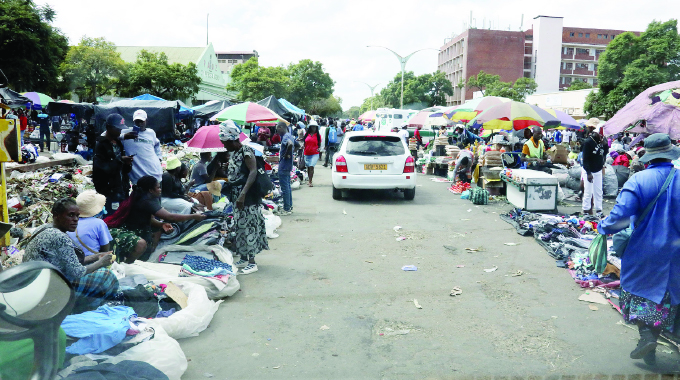
Michael Tome, Zimpapers Business Hub
ZIMBABWE is losing approximately $7,5 billion to $8 billion in tax revenue annually due to its burgeoning informal sector, the African Development Bank (AfDB) estimates.
As a result, the institution is urging the Government to expedite formalisation or implement effective revenue collection measures targeting this segment of the economy.
According to the AfDB, addressing this issue is vital for strengthening Zimbabwe’s domestic capital mobilisation efforts. The country’s business landscape is largely dominated by micro, small, and medium-sized enterprises (MSMEs), which constitute about 90 percent of all businesses.
These MSMEs are particularly prominent in agriculture, mining, wholesale, and retail, employing around 56 percent of the workforce and contributing roughly 30 percent to the country’s GDP as of 2022.
In stark contrast, large-scale enterprises are few, employing an estimated 12 percent of the workforce.
The AfDB highlighted that fierce competition from the large informal sector, coupled with high business costs, continues to negatively impact the formal wholesale, retail, and manufacturing sectors. However, the bank acknowledged the Government’s ongoing efforts to broaden the tax base and formalise the informal economy.
Cumbersome regulations, licensing delays, and complex permitting processes have been identified as key factors driving the expansion of the informal sector and complicating tax broadening initiatives.
Speaking at the launch of Zimbabwe’s Country Focus Report 2025 in Harare mid-week, AfDB Principal Country Economist Mr Kelvin Banda stated that “a narrow tax base, a large informal sector, and limited tax administration capacity continue to hinder domestic resource mobilisation.” He further emphasised, “Zimbabwe has the potential to generate about $7,5 to $8 billion annually if the informal sector is formalised or resources are mobilised from it. That amount is significant relative to the country’s GDP.
“This represents a strategic opportunity for Zimbabwe to leverage by transforming or investing in the business sector.”
Dr Sehliselo Mpofu, Director for the Macroeconomic Management Programme at the Macroeconomic and Financial Management Institute of Eastern and Southern Africa (MEFMI), underscored the need for authorities to diligently address informalisation to expand the tax base.
“The informal sector is expanding while the formal sector is shrinking, and it’s difficult to generate revenue from the informal sector. Authorities need to work hard on this,” said Dr Mpofu.
She added, “Many see formalisation as a threat, equating it with increased taxation and charges on their small earnings. So, education is critical so that these individuals understand the benefits of formalising, because, at present, they believe formalisation means paying daily taxes and fees, which can wipe out their small profits.”
According to the AfDB, Zimbabwe’s tax revenues have shown steady growth since recovering from the impact of the Covid-19 pandemic. In 2024, total revenue was estimated at 17 percent of GDP, amounting to $6,58 billion, up from 14,6 percent of GDP in 2023.
This increase is attributed to enhanced domestic revenue mobilisation efforts. Furthermore, tax revenues are projected to rise to 19,7 per cent of GDP in 2025.



 Online Reporter