Online Reporter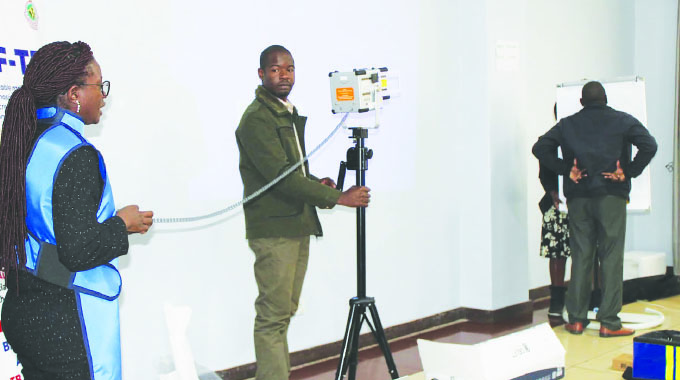
Robin Muchetu, Health and Gender Editor
ZIMBABWE has taken a significant step forward in the fight against tuberculosis (TB) and other lung disorders by introducing a new technology aimed at early detection in high-burden communities.
The initiative targets screening over 12 000 individuals within the first 100 days of rollout, with a total investment of US$550 000.
This project exemplifies a low-cost, high-impact model designed to deliver innovative, community-based solutions that maximise value for money while reaching under-served populations with life-saving care.
TB remains one of the leading causes of illness, especially among people living with HIV in Zimbabwe, despite being treatable.
The Ministry of Health and Child Care, in partnership with The Union Zimbabwe Trust (UZT), is rolling out the CAD-AI, Ultra-portable Radiology, and Field-Based Diagnosis (CUFF-TB) programme in Zvishavane and Mberengwa districts in the Midlands Province.
UZT executive director Dr Ronald Ncube said the intervention will prioritise mining communities due to the multiple risk factors associated with their working and living conditions.
“In Zimbabwe, UZT is implementing CUFF TB as an innovative initiative, CAD-AI, Ultra-portable radiology, and Field-based diagnosis for integrated community-level screening and care for TB, silicosis, malnutrition, and alcohol use disorder.
“This aims to integrate TB, lung health services and related systemic risk factors such as silicosis, alcohol use disorder and malnutrition at the primary and community healthcare level,” said Dr Ncube.
He said the primary goal of the CUFF-TB project is to reduce morbidity and mortality associated with TB, other lung health conditions and related co-morbidities through early detection and timely linkage to care.
“The project targets screening over 12 000 individuals from high-risk populations for TB and silicosis. By integrating screening for malnutrition and alcohol use disorders, the project aims to identify affected individuals and ensure they are connected to appropriate treatment and support services.
“This pilot will generate critical evidence to inform the integration of community-based and primary healthcare approaches into routine national programming, paving the way for more holistic, people-centred health systems,” he added.
He said the project utilises ultra-portable X-ray technology enhanced with artificial intelligence (AI) for computer-aided detection, alongside rapid molecular diagnostics using the Truenat platform, all delivered through mobile field laboratories. This integrated, technology-driven approach is designed to bring essential screening and healthcare services directly to under-served populations reaching them where they live and work.
Dr Ncube said the project is being implemented in the Midlands, where there are increasing cases of TB and other diseases.
“The project is being implemented in two districts of Mberengwa and Zvishavane, which were selected due to their high tuberculosis burden and significant artisanal and small-scale mining (ASM) activity. Interventions will be carried out in community settings, at ASM worksites and surrounding communities, night-time hotspots, and primary healthcare facilities where access to X-ray services is currently limited,” he said.
Screening is conducted using innovative strategies, including targeted outreach at informal mining sites and social drinking hotspots during evening hours, an approach known as “moonlight screening”.
The initiative also employs small, efficient screening teams and field-based testing using rapid molecular diagnostic tools such as the Truenat platform.
“What sets this model apart is its integration of TB screening with services for silicosis, malnutrition, and alcohol use disorders, offering comprehensive care closer to where people live and work. By shifting from a passive, facility-based and disease-specific model to a proactive, integrated and community-focused approach, the project is designed to catch more cases earlier and improve linkage to timely, appropriate care,” he said.
The executive director highlighted that the project’s operational capacity has been significantly enhanced enabling more effective deployment of resources and broader reach in targeted communities.
“Four provincial project officers and key field staff, including a radiographer, laboratory technician, and data clerk, were recruited in May 2025, and an office was established at Zvishavane District Hospital. Critical equipment such as the ultra-portable digital X-ray and Truenat machines has been procured and installed, with training completed in mid-May.
“Lastly, 270 community health workers and health care workers were oriented and trained across five clusters, equipping them to support moonlight screenings and community outreach,” added Dr Ncube.
Dr Ncube further stated that stakeholder engagement has been robust, with sensitisation meetings held with provincial and district managers to secure buy-in and identify priority areas within the targeted districts.
Community dialogues were also conducted with influential leaders in Zvishavane and Mberengwa to foster local ownership and generate demand for integrated service delivery.
A major technical milestone was achieved in March 2025 with the revision of the TB diagnostic protocol to incorporate screening for silicosis, malnutrition and alcohol use disorders, paving the way for a more comprehensive and integrated screening model. — @NyembeziMu


 Bongani Ndlovu