Chronicle Editor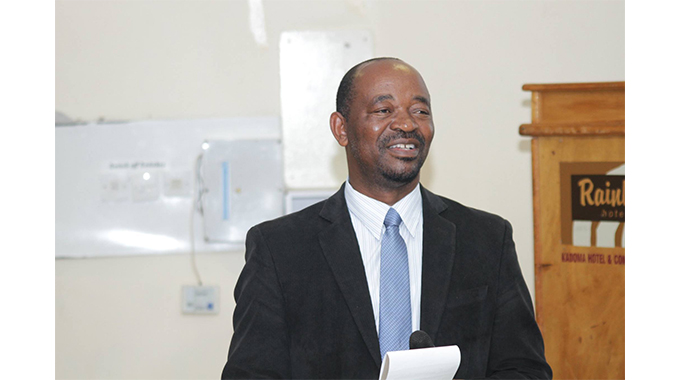
Leonard Ncube, [email protected]
ZIMBABWE is on the right track to suppress the double scourge of HIV Aids and TB through a cocktail of measures that include preventive therapy and decentralised services, a Government official has said.
Speaking at the 10th edition of the Uniformed Forces Health Services Conference that ended in Victoria Falls on Wednesday, Health and Child Care Ministry’s director for HIV and Aids and TB Unit, Dr Owen Mugurungi, said the country’s goal is to reduce incidents of all forms of TB by 80 percent to less than 48 cases per 100 000 by 2026.
He said Zimbabwe used to be one of the countries with tripple burden TB, HIV and multi-drug resistant TB cases but as of 2021, it was removed from the list of 30 high-burdened countries due to efforts being implemented by the Government.
Dr Mugurungi said HIV is one of the longest-standing epidemics the country has faced and remains a socio-political and security issue.
“We want to reduce the burden of TB around people living with HIV and Aids through continuous testing. HIV and TB co-infection is quite high, it started around 62 percent in 2018 and has gone down to 51 percent but that remains high,” he said.
“We are doing well in that front, especially with TB preventive therapy. We are one of the countries that started this programme late but we are happy that over the years the number of facilities implementing TB preventive therapy has gone up and also candidates being put on treatment has also improved,” said Dr Mugurungi.
He said TB/HIV co-infection is high around 50 percent.
Before the advent of HIV, TB was under control with about 4 000 cases per annum up to the 1980s when it started going up and reached its peak in the mid-1990s.
Dr Mugurungi said the country now recognises that there is an emerging issue between HIV and co-morbidities, that is, non-communicable diseases like cancer, TB, and substance abuse.
He said efforts to deal with TB, especially on treatment coverage were going on until the advert of Covid-19 but the country was back on track. During Covid-19, Dr Mugurungi said, around 16,000 cases of TB were lost.
Dr Mugurungi thanked the private sector for partnering with the Government in addressing pandemics and epidemics, adding that the uniformed forces sector is a critical sector in making sure that Zimbabwe ends TB by 2026.
He said the uptake of TB preventive therapy among people living with HIV and Aids has remained slightly high around 72 percent nationally and the target is to get to 90 percent.
“We have seen slight improvement over the years in terms of TB HIV and Aids collaborative activities in terms of them being housed in one department.
“Now we have rolled out new TB diagnostic treatment, we have decentralised treatment,” said Dr Mugurungi.
“We now have mobile HIV and TB trucks in areas where there are lots of artisanal miners and we also have new tracking methods of indicators for us to track progress.
“As a country we continue to face challenges as some centres are not meeting their TB preventive therapy and monitoring and evaluation is not working all the time but we will continue with efforts to end Aids by 2030 and make sure we contain and manage the co-morbidity,” he added.
Dr Mugurungi said preventing TB means searching and finding it so that all patients are treated. The conference ended on Wednesday and was held under the theme: “HIV and Aids and substance abuse: A threat to national security.”
The HIV population in Zimbabwe is around 1.3 million and prevalence is 11 percent while incidents have gone down to 1.7 percent nationally.-@ncubeleon


 Online Reporter