Online Reporter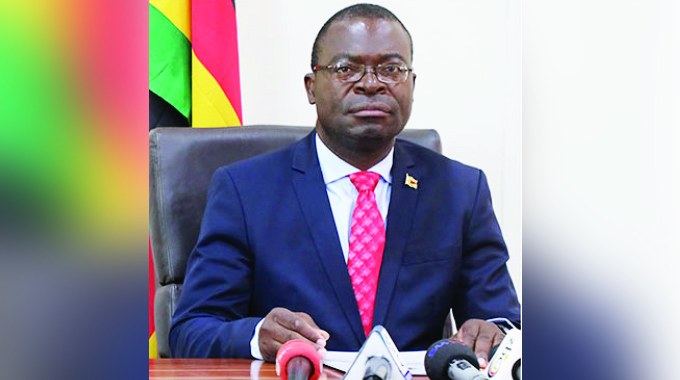
Harare Bureau
ZIMBABWE has secured the backing of 134 countries in its campaign for a non-permanent seat on the United Nations Security Council (UNSC), comfortably surpassing the minimum threshold of 128 votes required to clinch the post.
Our Harare Bureau has established that Harare has the backing of all 54 African union (AU) member states, alongside 80 other countries through reciprocal support arrangements.
These arrangements involve countries pledging to back each other’s bids for positions in international organisations, effectively trading votes to strengthen their chances of success.
Last month, President Mnangagwa officially launched Zimbabwe’s campaign in Harare, with Foreign Affairs and International Trade Minister Professor Amon Murwira following up with a global launch on the President’s behalf on the sidelines of the United Nations General Assembly (UNGA) in New York.
Prof Murwira said the endorsements signalled confidence in the country’s candidature.
“Just to do the math, we know that in Africa we are already supported through the African Union, and the African union has 54 countries,” he said.
“We are continuously working on what we call reciprocal support arrangements with countries, and we have so far signed reciprocal support arrangements with 80 countries outside of Africa.
“So, if you do your simple math, it shows you that at this early stage of the campaign, we already have 54 African countries plus 80, which gives us 134.
“The minimum threshold that we need is 128, so it means we are already over that threshold.”
The decisive vote will be held in June 2026 in New York.
All 193 UN member states will cast ballots, with candidates required to obtain a two-thirds majority of votes cast — at least 128 — in a secret ballot, even if they are running unopposed.
If successful, Zimbabwe will serve on the UNSC from 2027 to 2028, marking its third tenure on the powerful organ, which is responsible for maintaining international peace and security.
The country previously held non-permanent seats in 1983-1984 and in 1991-1992.
During the UNGA, Prof Murwira engaged counterparts from across the globe, including officials from Venezuela, the Philippines, Nicaragua, the United Arab Emirates and Qatar, who all pledged support for Harare’s campaign.
Zimbabwe has also strengthened ties with Russia and China as part of its diplomatic outreach.
“We met the Philippines, which is from the Pacific side of the world. We were also able to meet with Nicaragua and Venezuela from the South American side of the world.
“We also met with Qatar’s Foreign Minister, as well as the UAE from the Middle East side of the world,” added Minister Murwira.
“We were able to do a lot of things as you know, we went to the Russian Federation at some point and we also went to the People’s Republic of China.
“So, we are really enjoying at this moment it’s looking good, but we keep on working hard because we really want to make sure that Zimbabwe participates in the Security Council.”
Zimbabwe’s candidacy, he said, carried not only national but also continental significance, given the unified backing of Africa and the endorsement of the Southern African Development Community.
“Zimbabwe is a Pan-African country and we believe that we will advance Pan-African values in the Security Council, as well as champion the reform of the United Nations system, including reform of the Security Council. Our key focus will be on peace and security, greater involvement of women and youth in peace-making, as well as promoting economic development and human rights.”
Zimbabwe’s campaign theme is “Advancing 21st Century Solutions for Global Peace and Security through Multilateralism”.
On the diplomatic charm offensive in New York, Prof Murwira said: “I want to say that the reception was fantastic. We had planned for about 200 delegates, but we ended up with well over 200 delegates supporting us at the event.”
The UNSC is composed of 15 members: five permanent members — China, France, Russia, the United Kingdom and the United States who wield veto powers — and 10 non-permanent members elected on a rotational basis.
Non-permanent members serve two-year terms, shaping global decision-making on issues such as conflict resolution, sanctions and peacekeeping missions.
Zimbabwe’s previous terms on the UNSC were marked by strong advocacy for self-determination, democracy and anti-apartheid efforts, as well as calls for greater representation of Africa in the UN system.
Officials believe another term would provide Harare with renewed influence to push for reforms and advance Africa’s collective interests in global governance.