Rutendo Nyeve [email protected]
THE Government has stepped up efforts in the fight against the rising threat of deepfakes and synthetic media, using the 2026 ITU Inter-Regional CyberDrill platform to galvanise regional action.
The country is not only building a digital economy but is equally committed to defending its citizens and institutions from the weaponisation of artificial intelligence.

Speaking at the official opening of the CyberDrill held in Victoria Falls recently, the Minister of ICT, Postal and Courier Services, Tatenda Mavetera, warned about the destructive potential of deepfakes.
She described them as a threat that doesn’t just steal data, but steals reality itself, highlighting the risk of fabricated videos and audio clips being used to trigger financial panic or political instability.
Minister Mavetera emphasised that while Zimbabwe is pursuing an ambitious digital transformation agenda through the Smart Zimbabwe 2030 Master Plan and the National AI Strategy, security must be the bedrock on which it all rests.

“We are building a Government, an economy and a society that run on trusted digital rails.
“But none of these ‘Smart’ pillars can stand without one foundation beneath them: cybersecurity,” she said.
The Minister drew attention to the existential risk posed by deepfakes, especially within the context of African and Arab societies built on oral tradition and trust in community leadership.
She warned that a synthetic voice or a fake video could erode social bonds and dissolve trust.
In response, she announced a series of concrete, actionable measures.
Key among these is the establishment of a National Deepfake Detection and Public Media Literacy Taskforce, aimed at combining forensic technology with public education to combat disinformation.
Furthermore, the Minister committed to fast-tracking the ratification of the African Union’s Malabo Convention to explicitly criminalise the malicious creation of deepfakes.
“This is our pact with our brothers and sisters across the African and Arab regions,” she said.
She underscored the need for interoperable laws.
Minister Mavetera also announced the launch of a programme to certify thousands of cybersecurity professionals, which will now include specialised modules on AI forensics and synthetic media detection.
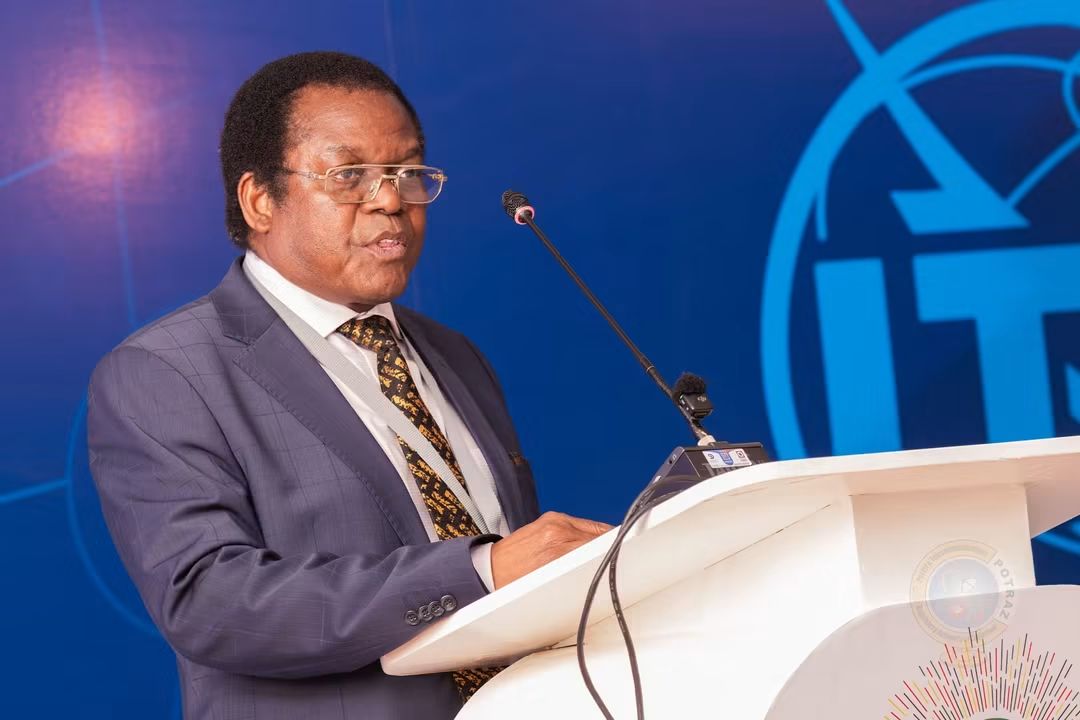
The urgency of this national stance was echoed by the Director-General of the Postal and Telecommunications Regulatory Authority of Zimbabwe (POTRAZ), Dr Gift Callisto Machengete.
Dr Machengete reinforced the significance of the drill as a test of collective readiness against threats that know no borders.
He illustrated the severe impact of deepfakes by painting a vivid picture of a fabricated video of a central bank governor or a cloned executive’s voice authorising fraudulent transactions.
“These developments remind us that cybersecurity is no longer simply about protecting systems; it is about safeguarding economies, preserving public trust and ensuring national resilience,” he said.
Dr Machengete also praised the Minister for the development of Zimbabwe’s Child Online Protection Policy, a crucial initiative in an age where AI can be used to manipulate and exploit children’s images.
He reiterated that no single nation can confront today’s evolving threats alone and that the CyberDrill is a testament to the shared commitment to global cyber resilience.
Zimbabwe is stepping up as a regional leader in cybersecurity, moving from a defensive posture to an active offensive against those who would use technology to undermine truth and stability, ensuring that the digital revolution is both prosperous and secure.
Zimbabwe steps up fight against deepfakes, synthetic media