Online Reporter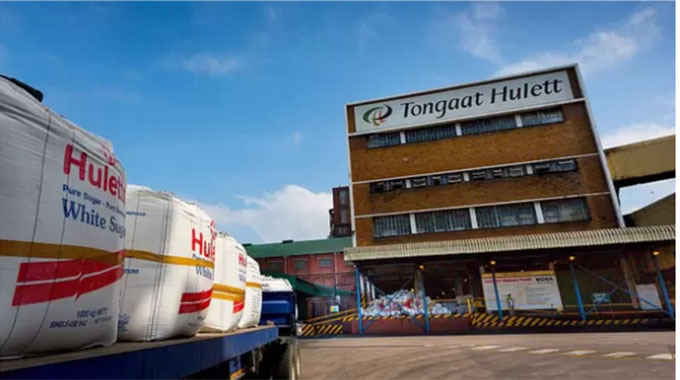
Blessing Zvikomborero Mahwerera
TO households, it is table sugar – used daily in tea, cooking, and food preservation. To industry, it is a critical raw material for food processing, beverages, confectionery, pharmaceuticals, and ethanol. To surrounding rural areas in Chiredzi, Hippo Valley, Triangle, Mkwasine and neighbouring communities, sugarcane farming underpins livelihoods, employment, and local economic activity.
Yet despite this importance, Zimbabwe’s sugar industry is increasingly defined by disputes, often framed as disagreements over prices or contracts. In reality, the core issue runs deeper. At the heart of today’s tensions lies a funding dispute over industry institutions, and the absence of a modern, transparent framework to sustain them.
As growers’ and millers’ negotiators prepare for the 2026 sugarcane milling season beginning in April, this unresolved funding dispute once again threatens to destabilise an industry that is too important to be governed through ad hoc compromises.
Sugar’s place in the economy
According to the Zimbabwe Sugar Industry Development Strategy, sugar is among the most economically significant agricultural industries in the Lowveld. It contributes substantially to agricultural gross domestic product, generates hundreds of millions of US dollars annually through sugar and related products, and supports thousands of direct and indirect jobs. The structure of the industry highlights why collective institutions matter. As at December 2024, about 57 percent of Zimbabwe’s sugarcane crop is produced by Triangle and Hippo Valley Estates on 25 704 hectares, while out-grower farmers – large-scale commercial, medium-scale and small-scale – produce roughly 43 percent on 20 964 hectares.
This makes sugar a shared production system. No single group can sustainably carry the industry alone, and no group can thrive without effective coordination, research, and market organisation.
A warning from South Africa
Recent developments in South Africa provide an important lesson. A court ruling confirmed that Tongaat Hulett entered business rescue owing R10.4 billion, far more than previously disclosed.
Crucially, the court ruled that statutory industry payments could not be suspended, even under business rescue. South Africa’s Sugar Industry Agreement, which has the force of subordinate legislation, was upheld as binding on all participants.
This matters for Zimbabwe because Tongaat operates Triangle and Hippo Valley Estates locally. The ruling demonstrates that sugar industries are system-critical and tightly regulated, and that weak governance and underfunded institutions eventually expose growers, workers, and rural economies to risk. Annual negotiations, recurring conflict
In Zimbabwe, sugarcane supply agreements — the Sugarcane Milling Agreement, also known as the Cane Milling Agreement, and the Sugarcane Purchase Agreement — are negotiated every year.
Annual negotiation is not inherently flawed. The problem arises when fundamental questions about institutional funding and cost allocation are renegotiated repeatedly, instead of being settled by law or clear policy.
This cycle has bred mistrust and fatigue. Each season becomes a contest over who should pay for what, rather than a shared effort to strengthen the industry.
How the CPA changed the landscape
The Sugarcane Purchase Agreement (CPA) was introduced in 2023, not through deliberate policy reform, but as part of an arbitration award following a stalemate in Cane Milling Agreement negotiations between growers and millers.
The arbitration itself was funded as an industry cost, underscoring that the dispute was systemic rather than private.
The CPA allowed growers to sell cane at the weighbridge based on weight, with ownership transferring immediately to the miller. For many farmers, this brought price certainty and improved cash flow.
Unsurprisingly, more than 75 percent of growers migrated to the CPA within a short period.
However, while the CPA resolved a transactional problem, it unintentionally disrupted the traditional model through which industry institutions were funded.
Industry costs and institutional strain
Industry costs fund three core functions:
Zimbabwe Sugar Sales (ZSS), which markets and sells sugar;
Zimbabwe Sugar Association (ZSA), which coordinates industry affairs; and
Zimbabwe Sugar Association Experiment Station (ZSAES), the industry’s research and development arm.
Historically, these costs were pooled and recovered collectively, largely without controversy. The CPA altered ownership and pricing mechanics but left the funding model unchanged. Costs that were once implicit became visible, contested, and politicised.
The consequences are no longer abstract. During the past 2025 milling season, ZSAES was severely underfunded. Research trials were reduced, capital investment was constrained, and long-term scientific work suffered. These are not optional activities. Research underpins varietal improvement, productivity, and resilience to climate stress.
Some argue that growers already “pay indirectly” through lower cane prices. In practice, however, cane prices are benchmarked against the Mill Door Price (MDP) – a reference price derived from expected industry-wide sugar revenues after deducting certain costs.
Because the MDP reflects aggregate market conditions rather than explicit institutional budgets, using it as a proxy for funding industry bodies blurs accountability. Market-driven price movements are not the same as transparent, agreed contributions to institutions such as ZSA and ZSAES.
A more sustainable approach is to separate institutional funding from pricing metrics. Budget-driven, public-good institutions, such as ZSA and ZSAES, require explicit, transparent, contract-neutral funding mechanisms, rather than being buried within price calculations where costs become opaque and contested.
An outdated legal framework
Zimbabwe’s Sugar Production Control Act of 1964 remains the only statute governing this strategic sector. Farmers’ associations petitioned Parliament on 1 August 2019 for its amendment. To date, no substantive reform has materialised.
This stands in contrast to South Africa and to other regulated sectors in Zimbabwe, such as energy or tobacco, where statutory instruments are routinely used to modernise governance and address evolving realities.
A role for policy leadership
Importantly, reform does not require waiting years for a new Act of Parliament.
The Minister of Industry and Commerce has already delegated authority to issue Statutory Instruments to supplement the existing law. Such instruments could clarify funding arrangements, harmonise obligations across different supply agreements, and stabilise critical institutions.
This is not about assigning blame. It is about recognising that an industry of this scale and importance cannot rely indefinitely on annual negotiations and goodwill.
Political economy perspective
As documented in Zimbabwean scholarship (see A.S. Mlambo & S.M. Pangeti, The Political Economy of the Sugar Industry in Zimbabwe, 1920-1990), sugar has never been a neutral, purely market-driven sector.
It has always been shaped by power relations between the state, millers, and growers, with regulation and institutions playing a central role in maintaining stability.
When law and policy lag behind structural change, conflict becomes inevitable.
Choice before the industry
As the April 2026 milling season approaches, Zimbabwe faces a choice. We can continue managing symptoms, arguing over prices and costs each year, or we can address the root cause: the absence of a modern, transparent framework to fund and protect industry institutions.
Sugar matters too much to households, industry, and surrounding rural areas to be governed by silence and improvisation. The tools to act already exist. What remains is the will to use them.
Blessing Zvikomborero Mahwerera is a sugarcane grower and development practitioner, who writes in his personal capacity.