Online Reporter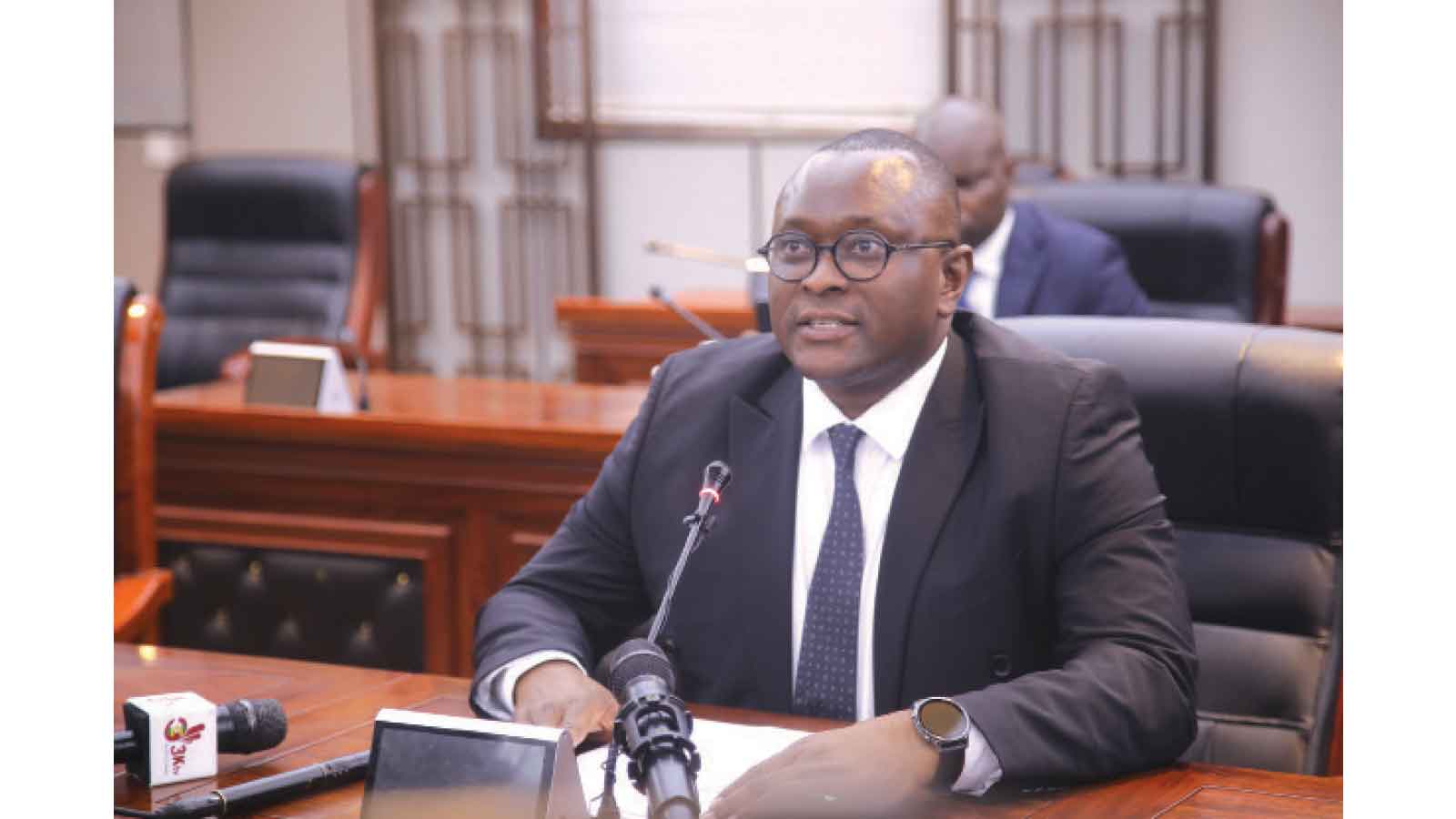
We publish here the 24th post-Cabinet media briefing presented by Information, Publicity and Broadcasting Services Minister, Dr Jenfan Muswere, in Harare yesterday.
***
Cabinet was updated on the 2024/2025 Summer Crop Marketing, 2025 Winter Season Crops Production and 2025/2026 Summer Season Production Plan.
The Second Round of Crop, Livestock and Fisheries Assessment of April 12,2024, indicated that there was adequate grain at national level. The grain stock at the Grain Marketing Board as at November 17, 2025 stood at 178 316 tonnes constituting less than 10 percent of national intake. The Agricultural and Rural Development Authority has contributed 91 792 tonnes to the grain stocks at GMB.
Regarding wheat production, a total of 640 195 tonnes has been harvested from 122 146 hectares, at an average yield of 5,2 tonnes per hectare. A total of 47 709 tonnes of barley have been harvested from the 6 156 hectares planted.
The distribution of inputs is continuing.
As of November 12, 2025, a total of 35 929 hectares had been planted to tobacco across the provinces, reflecting a 6 percent increase from the 33 970 hectares planted at the same time in 2024.
On a related note, 190 million kilogrammes of tobacco valued at US$1,06 billion had been exported as at November 13, 2025, compared to the 192,2 million kilogrammes worth US$1,03 billion exported in 2024.
THE AGRICULTURE, FOOD SYSTEMS AND RURAL TRANSFORMATION STRATEGY 2: 2026-2030
The Agriculture, Food Systems and Rural Transformation Strategy 2: 2026-2030 is the country’s new agriculture roadmap, building on the success of the Agriculture, Food Systems and Rural Transformation Strategy 1: 2020-2025.
It is the sector implementation plan of the National Development Strategy 2 (NDS2) intended to accelerate the attainment of Vision 2030.
The Agriculture, Food Systems and Rural Transformation Strategy 2 has adopted “a food systems approach” – a value stream and value creation continuum, emphasising a holistic approach to development.
Using the food systems approach and value chain perspective, the Agriculture, Food Systems and Rural Transformation Strategy 2 is designed around five strategic impact areas in line with National Development Strategy 2.
These are: Food Security and Food Sovereignty; Nutrition Security; Improved Livelihoods; Agriculture-based and Led Economic Growth and; Land and Tenure Security.
To achieve the envisioned National Development Strategy 2 targets and ensure wider socio-economic impact, the Agriculture, Food Systems and Rural Transformation Strategy 2 is structured around ten Pillars, namely: enabling policy, regulatory and coordination environment; sustainable production and productivity; research, innovation, technology and modernisation; climate adaptation, mitigation and resilience building; rural industrialisation and rural development; investment and finance; markets and trade development; enabling infrastructure development, rehabilitation and management; land and tenure security; and building internal capacity to deliver transformation.
Each pillar comprises one anchor broad strategic objective and several specific objectives.
Zimbabwe seeks to be a “food-, feed-, bio-oils- and bio-fuels secure” agro-industrial hub by 2030, away from the “food basket status” mindset of the past.
REVIEW OF LICENCES, PERMITS, LEVIES AND FEES IN THE ENERGY SECTOR
Cabinet considered and approved the review of licences, permits, levies and fees in the energy sector, in line with the Cabinet decision of July 29, 2025, which approved the implementation of a raft of business reforms in twelve sectors of the economy.
The review process is aimed at reducing the cost of doing business, increasing competitiveness and enhancing the growth of the Zimbabwean economy.
The review of licences, permits, levies and fees in the energy sector followed extensive whole-of-Government and societal approach consultations which were attended by ministries, departments and agencies, and the energy sector players. The energy sub-sectors licences, permits, levies and fees which have been reviewed are as follows:
• Electricity generation, transmission, distribution and secondary distribution;
• Petroleum importation, wholesale and retail;
• Liquefied Petroleum Gas importation, wholesale and retail.
Among the reviewed levies, licences, fees and permits, the Zimbabwe Energy Regulatory Authority (ZERA) Licence Application fee has been reduced from US$2 500 to US$2 000 while the ZERA Solar Generation Licence of US$2 875 has been removed completely. The ZERA Petroleum Import (Procurement) Licence of US$30 000 has been reduced by 50 percent.
The fuel retailing licence in rural areas has been reduced from US$200 to US$150 while the LPG retail licence will be reduced by 50 percent from the US$230 that is currently being charged.
Furthermore, it is noted that investment in the energy sector has largely been driven by Government, and this model has become unsustainable, given the limited fiscal space and lack of access to external sources.
The reviewed licences, permits, levies and fees will be subjected to further refinements, and the appropriate schedule shall be duly gazetted after ministries have effected the necessary legislative and administrative changes.
NATIONAL DEVELOPMENT STRATEGY 2 (NDS 2): 2026 – 2030
Cabinet approved the National Development Strategy 2: 2026-2030 which is intended to guide the national development trajectory of Zimbabwe towards the attainment of Vision 2030.
Zimbabwe’s second five-year development plan, the National Development Strategy 2 (NDS 2): 2026-2030 seeks to consolidate the achievements recorded under NDS1 and accelerate the transformational process for attaining Vision 2030 of a prosperous and empowered upper middle-income Society.
Under NDS 1 (2021-2025), Zimbabwe achieved substantial progress across the 14 thematic areas.
A strong average real Gross Domestic Product (GDP) growth was achieved from the start of NDS 1, while annual inflation declined.
The economy demonstrated remarkable resilience despite global shocks that included the Covid-19 pandemic, tightening of international financial conditions, geopolitical tensions and climate-related shocks.
The economy is projected to grow by 6,6 percent in 2025, up from 1,7 percent recorded in 2024.
This growth is anchored on the recovery in agriculture, strong mining output and renewed investment in the manufacturing sector.
The introduction of the local ZiG currency operating alongside other multi-currencies stabilised the exchange rate and restored confidence in the local currency.
Foreign reserves rose from about US$276 million in April 2024 to over US$900 million by October 2025, prompting the World Bank to rank Zimbabwe first among the top 10 countries in the world that made significant progress in foreign currency reserves accumulation.
The country registered significant successes on most projects during NDS 1, leveraging on domestic resources.
Notable infrastructure projects completed under NDS 1 include the Trabablas Interchange, the Robert Gabriel Mugabe International Airport Expansion, the Hwange Units 7 & 8 which added 700 megawatts to the national grid as well as extensive road rehabilitation under the Emergency Road Rehabilitation Programme I and II, covering both urban and rural areas.
Capacity utilisation in the manufacturing sector increased, and agriculture productivity recorded phenomenal increase over the period.
Maize output and wheat production reached national self-sufficiency of 375 000 tonnes in 2022 and exceeded the 600 000 tonnes achieved in 2025, while tobacco output rose to a record 355 million kilogrammes.
The objectives of NDS 2 will be realised through 10 identified National Priority Areas transcending across all sectors of the economy, namely: macro-economic stability and financial sector deepening; inclusive economic growth and structural transformation; infrastructural development and housing; food security, climate and environment; science, technology, innovation, digital and human capital development; job creation, youth development, sport, creative industry and culture; regional development and industry through devolution and decentralisation; social development, gender and social protection; image building, international relations and trade; and governance, institution building, peace and security.
The priority areas are premised on the whole-of-Government and society approach and shall be coordinated through thematic working groups encompassing ministries, departments, agencies, local authorities and the private sector.
REPORT ON HONOURABLE VICE PRESIDENT DR CHIWENGA’s TOUR OF PROJECTS IN MATABELELAND SOUTH PROVINCE
Cabinet was briefed on the tour of projects undertaken by Honourable Vice President Dr Chiwenga in Matabeleland South Province from October 22 to 24, 2025.
The eight major projects spread across agriculture, mining, agro- processing and energy sectors toured by the Vice President were as follows:
• Makorokoro Village Business Unit in Mangwe District;
• Antelope ARDA Maphisa Irrigation Scheme in Matobo District;
• Orange Ville Juicing Plant, Nottingham Estates and Palm River Special Economic Zone in Beitbridge District; and
• Gwanda Lithium Mine, Tuli-Manyange Dam and Garanyemba Drought Mitigation Centre in Gwanda District.
The projects collectively signify the emergence of a strong rural industrialisation ecosystem.
Over 5 000 jobs were created, and the projects also support thousands of livelihoods through supply chains in transport, retail and services.
Some of the projects are earning the country foreign currency through export of their products, while value addition and beneficiation is being promoted.
The Vice President also officiated at the 75th Anniversary of St Luke’s Mission Hospital in Lupane, Matabeleland North Province.
UPDATE ON THE YOUTH SERVICE IN ZIMBABWE TRAINING PROGRAMME
Cabinet received and noted an Update on the Youth Service in Zimbabwe Training Programme.
The Youth Service in Zimbabwe Training Programme aims at developing patriotic, disciplined, responsible and resilient youths equipped with skills, values and attributes that enable them to meaningfully participate in nation building.
A total of 2 184 youths have so far been trained at various centres in the country. The training was conducted in partnership with the security services including the Zimbabwe National Army, the Air Force of Zimbabwe, the Zimbabwe Republic Police, the Zimbabwe Prisons and Correctional Service, and the President’s Department.
A total of 174 youths who underwent rehabilitation at the Angel of Hope Drug Rehabilitation Centre in Mbare were also trained under the programme at Dadaya Youth Training Centre.
Plans are in place to register a security company and operationalise it in January 2026 to provide employment to some of the graduates of the programme. EmpowerBank will also absorb some of the youths at its various construction projects. Meanwhile, the recruitment target for the programme will be increased to 10 000 for the January 2026 intake.
Two Vocational Training Centres, namely Emmerson Dambudzo Mnangagwa Centre; and Joshua Mqabuko Nyongolo Nkomo Centre will be constructed and commissioned in 2026.
PRINCIPLES OF THE FOREIGN AFFAIRS AND INTERNATIONAL TRADE BILL, 2025
Cabinet considered and approved the Principles of the Foreign Affairs and International Trade Bill, 2025. The Principles seek to codify foreign policy procedures and processes.
REPORT ON HIS EXCELLENCY THE PRESIDENT’S ATTENDANCE AT THE SECOND WORLD SUMMIT ON SOCIAL DEVELOPMENT: DOHA, QATAR: NOVEMBER 4 – 6, 2025
His Excellency, President Mnangagwa attended the 2nd United Nations World Summit for Social Development (WSSDII) from November 4 to 6, 2025 in Doha, Qatar.
The Summit was attended by 164 Member States, with 29 represented at Heads of State and Government level.
His Excellency the President delivered Zimbabwe’s national statement in which he highlighted Zimbabwe’s achievements on advancing social development.
He cited progress on poverty eradication, promotion of decent work, social protection, inclusion and advocated for the reform of the global financial system and the total removal of Unilateral Coercive Measures.
His Excellency the President held a bilateral meeting with the Prime Minister and the Minister of Foreign Affairs of Qatar.
REPORT ON THE VIRTUAL EXTRAORDINARY SUMMIT OF SADC HEADS OF STATE AND GOVERNMENT
Cabinet received and noted the Report on His Excellency President Mnangagwa’s attendance of the Virtual Extraordinary Summit of Heads of State and Government held on November 7, 2025.
The objective of the Summit was to consider the leadership situation of the Southern African Development Community (Sadc) following political developments in Madagascar.
The meeting was attended by 15 member states, with six being represented by Heads of State and Government.
The President of the Refoundation of Madagascar, Colonel Michael Randrianirina briefed the Summit on political developments in the country.
The withdrawal of the Madagascar’s Chairmanship was out of respect for the region and was intended to place focus on resolving national challenges.
His Excellency Cyril Matamela Ramaposa, the President of South Africa and incoming chair, was appointed the interim chairman of SADC.
His excellency President Mnangagwa undertook to assist the interim chairman by hosting some SADC meetings in Zimbabwe, as the outgoing chair.
Zimbabwe will therefore continue in the role of outgoing chair up to August 2027.
The SADC secretariat was tasked to identify a new incoming chairperson by November 30, 2025, in line with the principle of rotation for the SADC chairmanship.
REPORT ON HIS EXCELLENCY THE PRESIDENT’S ATTENDANCE AT ANGOLA’S 50TH INDEPENDENCE ANNIVERSARY CELEBRATIONS: LUANDA, ANGOLA: NOVEMBER 11, 2025
His Excellency President Mnangagwa visited Angola for the country’s 50th Independence anniversary celebrations, which were held in Luanda on November 11th, 2025.
In his keynote address, His Excellency Joao Lourenco, President of the Republic of Angola, emphasised Angola’s journey from colonial subjugation to sovereignty, highlighting the sacrifices made during the liberation struggle and the country’s commitment to peace, unity and sustainable development.
Zimbabwe’s presence at the Golden Jubilee reaffirmed the strong historical and diplomatic ties between Zimbabwe and Angola, rooted in shared liberation values and mutual respect.
REPORT ON VICE PRESIDENT HONOURABLE GEN. (RTD) DR CHIWENGA’S ATTENDANCE AT THE INAUGURATION CEREMONY OF HER EXCELLENCY PRESIDENT SAMIA SULUHU HASSAN IN DODOMA, TANZANIA
Cabinet received and noted the report on the attendance by Honourable Vice President Chiwenga on behalf of His Excellency at the inauguration ceremony of Her Excellency Samia Suluhu Hassan in Dodoma, Tanzania.
Honourable Vice President, Gen. (Rtd) Dr Chiwenga attended the inauguration ceremony of Her Excellency President Samia Suluhu Hassan on November 3, 2025.
The ceremony was attended by Presidents of the Republics of Burundi, Mozambique, Somalia and Zambia as well as by Vice Presidents, foreign ministers and diplomats accredited to the United Republic of Tanzania.
On his part, Vice President Chiwenga congratulated President Samia Suluhu Hassan on her election and inauguration, and reaffirmed the deep historical and cultural ties that exist between Zimbabwe and Tanzania.
In her address, President Hassan urged the people of Tanzania to remain united and focus on development.