Online Reporter
Judith Phiri, [email protected]
AGRICULTURE, Mechanisation and Water Resources Development Deputy Minister Davis Marapira has said Zimbabwe is targeting to reduce pre- and post-harvest losses from 16.5 percent to 6 percent by 2030, a development key to enhancing food security.
This comes at a time when Zimbabwe, through the Agriculture Food Systems and Rural Transformation Strategy 2 (AFSRTS 2), has set a target to grow the agricultural economy from US$10.3 billion to US$15.8 billion by 2030.
In his keynote address while officially opening the 2026 Regional Circular Food Systems Policy Dialogue in Bulawayo, the Deputy Minister said reducing both pre- and post-harvest losses was a core circular economy priority that all countries share.
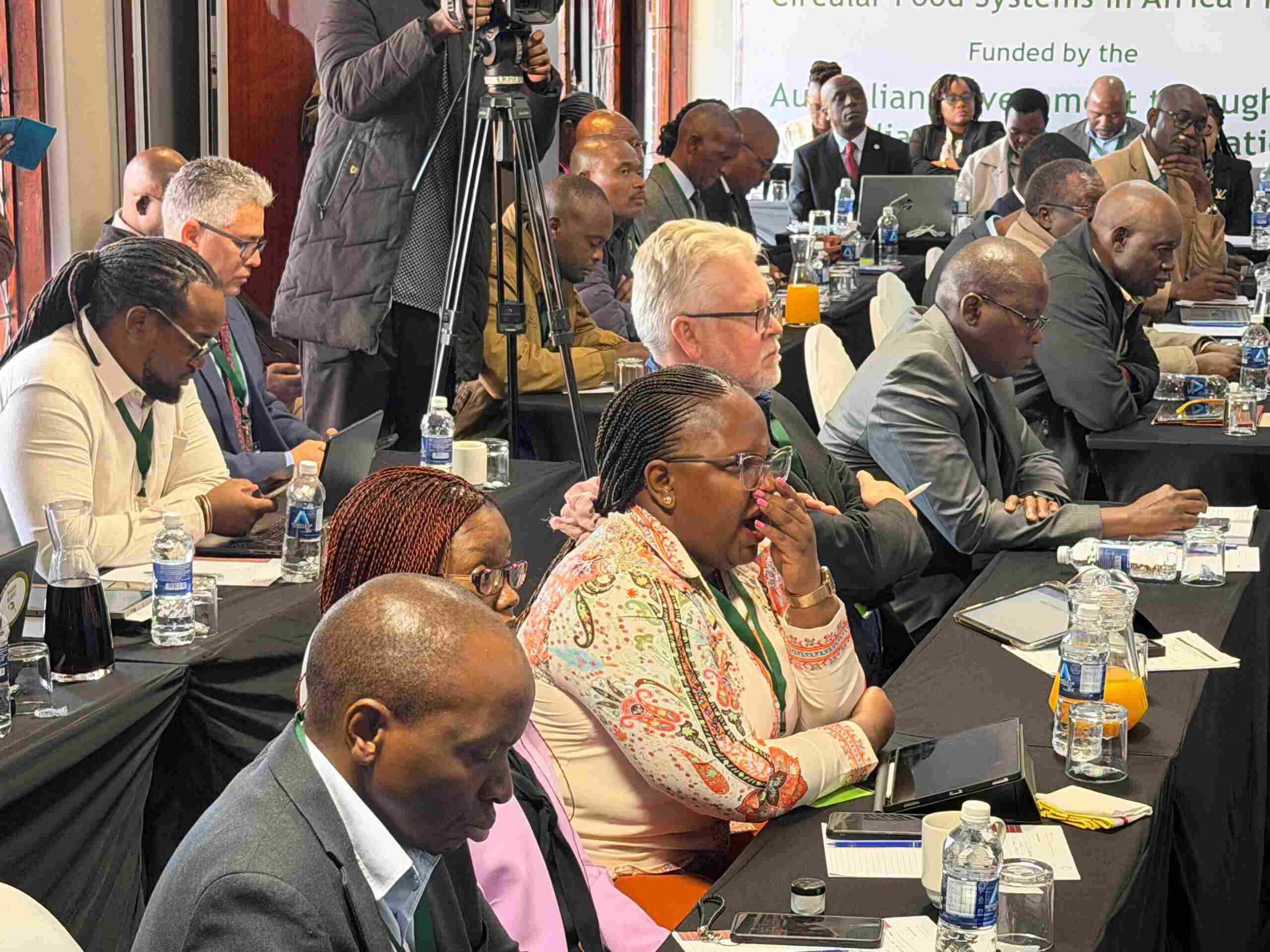
“Zimbabwe’s own experience offers practical lessons that this dialogue can help scale across the region. On food loss and waste, we have a target to reduce pre- and post-harvest losses from 16.5 percent to 6 percent by 2030 through cold chains, agro-processing hubs, and better storage,” he said.
He said on nutrition, the country aims to reduce stunting from 24 percent to 20 percent, wasting from 4 percent to 3 percent, and increase the proportion of children receiving a minimum acceptable diet from 12 percent to 25 percent by 2030.
The Deputy Minister said circular food systems with diverse crops and integrated livestock are essential to achieving these goals.
“Delegates can explore how similar nutrition targets could be integrated into the region’s circular strategies.
“On climate resilience, we are developing 496 000 hectares of irrigation by 2030, aiming for 100 percent adoption of the sustainable intensive conservation agriculture model by 2028, completing nine major dams under the Infrastructure 6.0 model, strengthening early warning systems and exploring carbon credits and climate risk insurance. These are not just Zimbabwean targets, but they are potential blueprints for regional action,” he added.
He called on investors, development partners and financiers to align their capital and expertise with priority areas that will have the greatest impact, generating both sustainable returns and lasting developmental outcomes for the people of Eastern and Southern Africa through circular food systems.
The four-day event that kicked off on Tuesday seeks to advance climate-resilient, resource-efficient farming systems in Eastern and Southern Africa.
The policy dialogue brings together representatives of regional economic communities (RECs), international and regional organisations, national and sub-national governments, farmer organisations, private sector actors (including youth- and women-led micro and small enterprises), civil society and community-based organisations, development partners, academic and research institutions, and the media.
Particular emphasis will be placed on participation from stakeholders working on irrigation, water resources management, climate resilience, agribusiness development, and circular food systems in Eastern and Southern Africa.
The dialogue will be convened by the Circular Food Systems (CFS) in Africa consortium, namely the Food, Agriculture and Natural Resources Policy Analysis Network (FANRPAN), Agriculture Research Council Zimbabwe, Australian National University and Universidade Eduardo Mondlane (UEM).
As well as the Instituto Nacional de Irrigação (INIR), Ardhi University, Tanzania, Australian Centre for International Agricultural Research (ACIAR) and the International Crop Research Institute for the Semi-Arid Tropics (ICRISAT), Zimbabwe.