admin
admin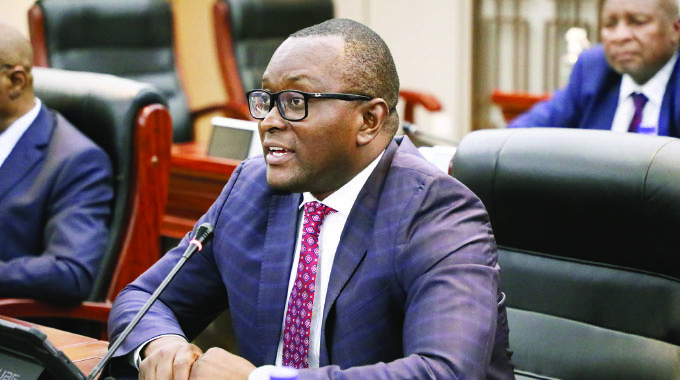
Zvamaida Murwira, Senior Reporter
GOVERNMENT will soon launch Zim Digital Project Phase Two which will ensure total media coverage across the whole country in line with the Second Republic’s policy of leaving no place and no one behind, Information, Publicity and Broadcasting Services Minister, Dr Jenfan Muswere has said.
Dr Muswere said Zim Digital Phase Two will ensure that broadcasting services get to all the 10 provinces within the next two years.
The Minister said this in Senate on Thursday during the question and answer session.
Matabeleland South legislator, Ms Nonhlahla Mlotshwa (CCC) wanted to know when broadcasting services would reach some parts of her province.
“The whole idea around broadcasting services that will be put across the country is being supported through the implementation of what we term the Zim-Digital Phase Two Project.
“A project which will ensure that we put in place the necessary energy transmission and communication infrastructure to support information ubiquity to support and ensure that we leave no one and no place behind.
“Matabeleland is also one of the priorities because the priority is to ensure that we have total coverage of our country in order to guarantee broadcasting and media sovereignty across all 10 provinces,” said Dr Muswere.
“So, the Zim-Digital Phase Two project will run for the next two years and this implementation has been followed up by an analysis which we had conducted, it is a science-based analysis and technical analysis which has given us an opportunity to analyse all the areas that have been covered; number one, by the first phase of the Zim-Digital Project as we transition from analogue to digital.”
He said the whole digital infrastructure master plan has been put in place and what was left is the relaunch and the procurement of the necessary energy transmission and communication infrastructural equipment.
“So, I believe within the next two years, we will have covered the whole country.
“For us to be able to achieve this, at some point, the International Telecommunications Union made a decision that each and every country should transition from analogue to digital but given the licensing framework that we currently have, we have started issuing licences to other commercial players and other community radio stations and which operational community radio stations now number up to around 14.
“We have issued up to 16 community radio stations across the country including Matabeleland North, NUST campus radio station and Matabeleland South province.”
He said already, they had reached convergence with ICT broadcasting and many other new technologies and they had since synchronised the relevant equipment.
“All this speaks to how we seek to achieve information ubiquity in our country in order to support that in terms of the telecommunication sector because most of the services can now be accessed through our phones.
“We have now reached 95 percent in terms of mobile penetration and at the same time we have a steady growth in terms of internet penetration in our country.
“Community information centres have also been put in place in order to support and ensure that we leave no one and no place behind in order to ensure that we do not leave anyone behind, including Matabeleland province,” he said.
“The reasons why we have licenced community radio stations is also to support our cultural heritage, our values and our dignity in that these community radio stations should be able to generate content within the particular communities and the particular geography. All these measures have been put in place, including the tower relocation master plan which is taking place in order to ensure that we cover as much as possible.”
Dr Muswere said the recent licencing of Star Link was also one of the initiatives to cover the entirety of our country.
He said the second phase would also put in place content creation hubs across the country in order to support the country’s heritage, languages and identity.
“So, we have already identified places where content will be produced across the country including all provinces, Matabeleland North and South.
“The reason why we are doing this is because we want to achieve in terms of national strategic direction, media sovereignty and also technological sovereignty.”


 Online Reporter