Rutendo Nyeve, Victoria Falls Reporter
THE Government is working to establish a loss and damage fund aimed at helping communities recover from the devastating impacts of climate change. The initiative will be financed through proceeds from carbon credit trading.
Spearheaded by the Ministry of Environment, Climate and Wildlife, the fund will target both rural and urban communities whose infrastructure, livelihoods, and essential services have been destroyed by extreme weather events such as floods, droughts, and violent storms.
To ensure a smooth rollout, the Ministry will this week convene all 92 local authorities for a high-level workshop focused on capacity building, raising awareness, and equipping them to negotiate effectively with carbon project developers.
Under the new framework, the Government will receive 30 percent of all proceeds from carbon credits generated by development projects, with the remainder directed towards community development. Officials say this approach will ensure that those most affected by climate change receive direct financial support for rehabilitation and resilience-building.
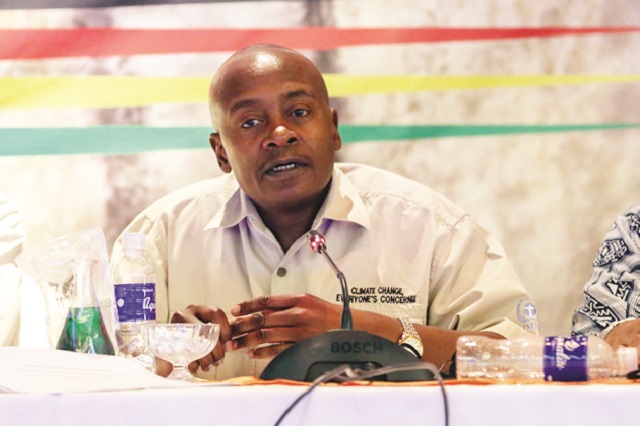
In an interview, the Ministry’s Chief Director, Dr Washington Zhakata, described the fund as a critical resource for disaster-hit communities.
“It would be the rural or urban authorities whose infrastructure has been damaged, livelihoods destroyed, and bridges washed away due to extreme weather events. They can apply to access resources to complement what they already have as they restore, reconstruct, and rehabilitate their communities. The loss and damage fund is a very critical fund which, once established, we can utilise,” he said.
Dr Zhakata said the proposed programme will not only strengthen the country’s climate resilience but also accelerate community-driven development and environmental stewardship.
He emphasised the importance of local authorities being well-equipped to engage with carbon trading operators.
“Registered carbon trading operators will be working with local authorities and industry, but what is especially critical at this stage is ensuring that all local authorities are empowered and capacitated to manage and understand carbon trading and its potential. It will be about attracting investment from various financiers who can fund carbon credits, as well as engaging buyers who are interested in purchasing them,” he said.
The concept of a loss and damage fund gained global prominence at the 2022 United Nations Climate Change Conference (COP27) in Egypt, where nations agreed to create a financial mechanism to assist vulnerable countries facing the irreversible impacts of climate change. While operational details are still being negotiated globally, Zimbabwe’s proactive move to establish its own fund could position it among Africa’s early adopters of domestic climate financing structures.
Globally, carbon credit trading has become a multi-billion-dollar market, allowing companies and countries to offset greenhouse gas emissions by investing in projects that reduce or capture carbon. For Zimbabwe—with its vast forests, renewable energy potential, and expanding conservation projects—this presents a unique opportunity to monetise environmental stewardship while improving local livelihoods.
Carbon trading, where companies offset emissions by financing climate-friendly projects, is already active in provinces such as Mashonaland Central, Mashonaland East, and Matabeleland South. However, Dr Zhakata acknowledged that existing agreements between project developers and local authorities have often failed to secure maximum benefits for local communities.
“The agreements have not been strong enough for the communities to benefit effectively. We want to build capacity and prepare local authorities to meet with project developers, negotiate from a position of strength, and make informed agreements that bring tangible benefits,” he said.
This Thursday and Friday’s workshop will bring together over 90 local authorities in one venue to discuss the carbon trading platform, attract potential investors, and understand financing models for carbon credits.
By ensuring councils are well-informed and equipped to engage in fair, transparent deals, the Government hopes to transform carbon credit revenues into a sustainable lifeline for communities affected by climate change.