Tapiwanashe Mangwiro
Senior Business Reporter
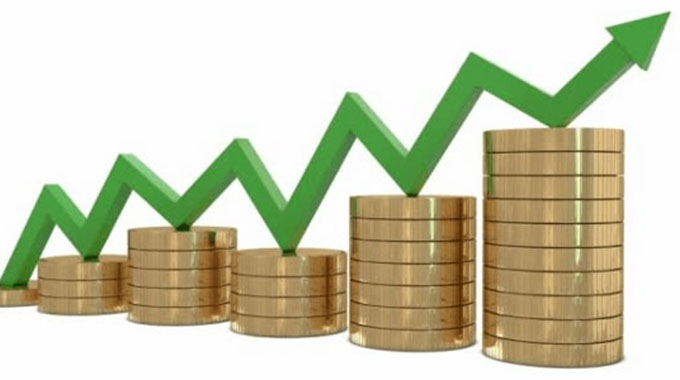
The World Bank has projected Zimbabwe’s economy to grow by 5 percent this year, placing its forecast above the expected global average at a time when world economic expansion is slowing and uncertainties remain elevated.
The forecast, contained in the Bank’s latest global estimates, suggests Zimbabwe will outperform the global economy growth rate, projected at 2,6 percent and broadly keep pace with faster-growing parts of Sub-Saharan Africa.
In its communique, the World Bank noted that the global economy had shown notable resilience to heightened trade tensions and policy uncertainty, supported last year by stockpiling of traded goods, strong risk appetite and a surge in artificial intelligence-related spending.
However, it cautions; “These temporary supports are fading and that global growth is projected to edge down to 2,6 percent this year, with risks tilted to the downside should trade barriers rise further or financial conditions tighten.”
Against this backdrop, Zimbabwe’s projected 5 percent economic expansion stands out as comparatively robust.
The bank’s country and regional projections show Zimbabwe sustaining growth at around this level into 2027, even as global and regional dynamics remain uneven.
Sub-Saharan Africa is forecast to grow by about 4,3 percent in 2026, rising modestly thereafter, while many emerging and developing economies continue to struggle to return to pre-pandemic income levels.
The World Bank warned that more than a quarter of Emerging Market and Developing Economies (EMDEs) still had per capita incomes below 2019 levels, underscoring the importance of domestic reforms and macroeconomic stability.
Zimbabwean authorities say that the 2026 outlook is anchored in improving fundamentals rather than short-term gains.
Finance, Economic Development and Investment Promotion Minister, Professor Mthuli Ncube, said the outlook remained positive across most productive sectors, which are expected to drive overall economic expansion.
“In 2026, the prognosis of the economy is on track as we expect the economy to grow by five percent. The agriculture and mining sectors are expected to lead overall growth, especially taking into account the viable global commodity prices. What is now needed is to redistribute the gains into the education, health and social programmes for the benefit of the citizenry,” he said.
The Treasury chief has repeatedly linked growth prospects to stability in prices, the exchange rate and public finances.
“Macroeconomic stability, currency and exchange rate stability and strengthened monetary-fiscal policy coordination are critical to sustaining economic growth,” Minister Ncube said in a recent interview with The Herald Finance and Business.
He noted that stability created the conditions for growth in investment, production and wider participation in the economy.