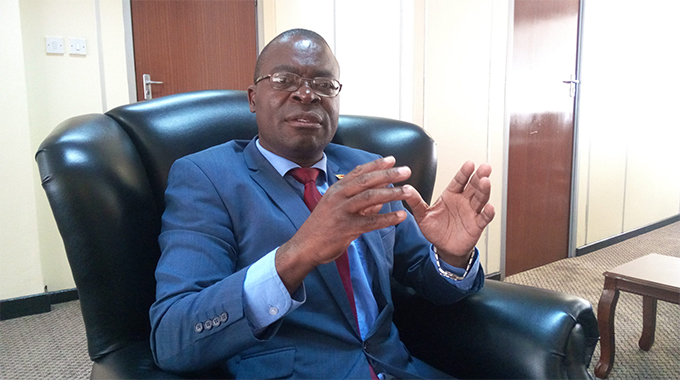
Kudzanai Sharara in Cape Town, South Africa
Zimbabwe will use its incoming chairmanship of the Common Market for Eastern and Southern Africa to push for open markets at home and across the continent, Foreign Affairs and International Trade Minister Professor Amon Murwira told delegates at the ongoing CEO Africa Annual Roundtable here.
President Mnangagwa will assume the chairmanship of the COMESA trading bloc when Zimbabwe hosts the 25th COMESA Summit in Harare later this month.
COMESA is a regional economic community of 21 sovereign member states working together to promote economic growth and regional integration.
It has a population of over 640 million people and a combined gross domestic product of roughly US$1,2 trillion.
As a free trade area. member countries strive to eliminate import tariffs and quotas on goods produced within the bloc, making it cheaper and easier tc trade across borders
In his presentation yesterday, Prof Murwira said Zimbabwe assumes the chairmanship of the Common Market for Eastern and Southern Africa within two weeks and will use the position to campaign for the dismantling of trade barriers, beginning with its own economy.
“We have the privilege of becoming the chairperson of COMESA within two weeks. When we are chairperson, we will talk about opening economies, “but open ours first, so that the rest can also open,” he said.
He was speaking on the panel “Digital Infrastructure: The Backbone of African Trade” at the roundtable, which runs from 6 to 10 October under the theme “The Future of Africa: Innovate, Trade and Grow”.

Prof Murwira said the removal of tariffs is the first item on Zimbabwe’s agenda in every bilateral engagement. “The policy of Zimbabwe, for example, is that for every binational commission that we are having, our first item is: tariffs must fall, markets must open, Zimbabwe is open for business,” he said.
He rejected the argument that tariffs shield domestic producers, describing them instead as a brake on industrial development.
“Sometimes people think that tariffs protect industry. No, tariffs kill industry,” Prof. Murwira said.
He said this conviction underpinned Zimbabwe’s determination to open itself to the Southern African economy and the wider African economy, and he addressed Zimbabwean industrialists directly, urging them to prepare for competition rather than resist it.
“I know we are also industrialists here from Zimbabwe, and I’m telling you, and I told you last time when we had a CEO Roundtable evening meeting, we are going to open (the economy) and be prepared to have an umbrella, because it’s going to rain,” he said.
“But that rain is going to make the grass grow and therefore lead to that prosperity.”
His remarks build on the framing he set out earlier in his address, in which he described Zimbabwe’s regional posture as a “neighbour first” policy anchored in pan-Africanism.
“By pan-Africanism, we say neighbour first policy — which means Southern Africa first, Africa and beyond,” he said.
Prof Murwira said African integration can only be achieved through trade, and that digital trade is the critical enabler.
He attributed the friction in intra-African trade to the historical design of African economies, which he said were oriented outwards rather than towards each other.
“Our economies, we’re looking outside of Africa by design — by design, because they had to take resources out of Africa,” he said.
Earlier in his presentation, he placed peace at the centre of Zimbabwe’s foreign policy, citing section 12 of the country’s constitution.
“Our foreign policy is basically to safeguard Zimbabwe’s national interests and pursue those national interests in peace,” he said.
“Because peace is the foundation of everything else that follows.”
He described peace as Zimbabwe’s “goal number one” and urged nations to resolve differences through dialogue.
“Wars are caused by wrong talk, and they are solved again by right talk. So why not just adopt right talk all the time?” he said.
From that foundation, he argued, prosperity follows through trade.
“Prosperity takes root through trade. Trade is the lifeline of peace,” he said.
Globally, he said, Zimbabwe pursues the doctrine of “friend to all and enemy to none”, positioning itself as a peacebuilder and “open for business as the enabler of that trend”.
He also challenged the way prosperity is often discussed, insisting it is neither abstract nor theoretical. “Sometimes prosperity is taken as an esoteric term. It’s not a theory at all. It’s very real. People can be prosperous and people can be poor,” he said, defining development as “movement from poverty to prosperity”.