admin
admin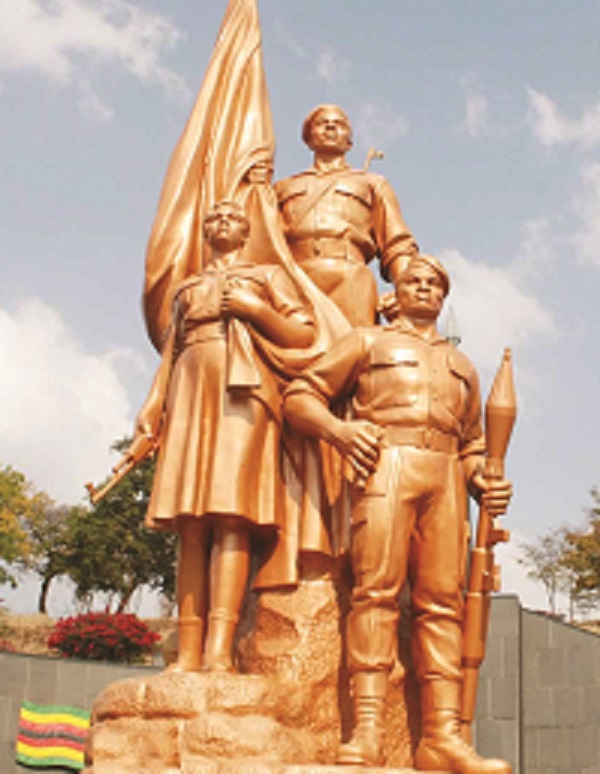

Biblically speaking seven (7) is a number which is associated with wholeness/totality/entirety and is a number of fulfilment.
The first use of the number 7 in the Bible relates to the creation week in which Musikavanhu had put to completion the architecture of the earth and those that dwell in it. Multiples of 7 also figure into the biblical narrative: the “seventy weeks” prophecy in Daniel 9 verse 24 about 490 years (7 times 7 times 10). In another biblical political context Jeremiah (29 verse 10) predicts the Babylonian Captivity and indicates that it was going to last for seventy years (7times 10).
In the Hebrew liturgy the same applies for the Year of Jubilee as indicated in Leviticus 25 verse 8. The Year of Jubilee was set to begin after the passing of every forty-ninth year (7 times 7). Apologises for my reference to the bible, I don’t pretend to be a clerical by making reference to the good book in explaining political issues.
The bible is one master piece of literature which can be used outside the confines of liturgy and theology to explain particular human realities and experiences. On that conviction, I would to believe that Zimbabwe’s current political transition can be situated in that book.
On November 21, the sun set for the gallant and illustrious governance of the motherland under Africa’s nationalist icon Cde President Robert Gabriel Mugabe. Born on the 21st of some month in the Gregorian calendar and he bids us farewell on the same.
When split into three (3) twenty-one (21) gives the number 7; the same number which biblically symbolises rest and fullness.
Therefore, one can allude to the tone of the scriptures and pronounce that after thirty seven (37) years, seven (7) months Zimbabwe rested and reached a fullness of an epoch. Some have called this the arrival of the Post Mugabe Era.
This dispensation is even made more symbolic by the fact that Cde Mugabe’s successor, the President Mngangagwa was inaugurated on 24 November, 2017, a day after the nation commemorated the 40th anniversary of the Chimoio catastrophe.
This shows that beyond the physical there is need for a more cosmic understanding of this transition; hence my allusion to the scriptures and the solemn Chimoio memory.
Cde Mnangagwa’s inauguration has a sacred attachment to our national memory because he was among the cadres who were part of the liberation fight against the colonial establishment of that time.
Therefore, his appointment to lead the nation at the behest of the party subtle confirms the former President’s request for our future to be anchored on our nation’s collective legacy of resistance.
This is the resistance which dates back to our early fight against Portuguese occupation right up to the recent push for liberation under the auspices of the nationalist generation.
This is the same legacy that has caused us to be a people whose political culture is borrowed from the past with a tremendous influence on the present.
This view is also affirmed by the title of Dr Fay Chung (2006)’s book “Re-Living the Chimurenga”. As a people whose political culture stems from such a revolutionary woven history we are bound to be “Zimbabwean” by permanent national interests.
Moreover, it is pleasing that our loyalty to these perpetual ideas has been a result of the revolutionary party’s defence of the liberation legacy. As a result, the appointment of Cde Emmerson Dambudzo Mnangagwa as President of the Republic of Zimbabwe is a reflection of that continuity and that undying adherence of our people to the values, the tenets and precedents set by our protracted armed struggle to define our future.
As we celebrate this transition we must be acknowledge that this episode calls us to adhere to perpetual values which define our unique national interests and identity.
Above all, this transition which Zimbabwe has witnessed should also serve as a reminder to all of us that we are all serving a system of perpetual succession. We all come and go, but the ideas which bind us last forever. The same applies with the Chimoio massacre which I alluded to; it’s a narrative which will never fade from our memory.
The Nhari revolt and many other points of altercations in our struggle are also reflective of how much the revolutionary process is always in a state of refining itself. These break-out points and the lasting power of reconciliation which has also guided all our processes of transition and conflict substantiates the significance of perpetual ideas defining the character of Zimbabwean nationalism.
The Chimoio massacre is a constituent part of the numerous massacres of our people in the hands of the enemies of the motherland. There are many who perished with no trace of their remains and our mass mourning of their gruesome killings is collectively symbolised by the “Tomb of the Unknown Soldier” at the National Heroes’ Acre and many other like-memorial sites.
The Heroes’ Acre is a symbol of our undying fight against imperialism.
The remains of those resting at the Heroes’ Acres are a testimony commitment to perpetual values. Nothing will compromise these values; nor will greed for power make us forget that this country was born out of principles of democracy, nationalism and deconstructing repression.
As we move into this dispensation we have a mandate to reflect on the sacred and lasting values of our revolution. We must not be blinded by temporary luxuries to crush the long-lasting vision of attaining true decolonisation.
Preoccupation with temporary interests conceives premature aspirations to succession. Premature succession aspirations are ignorant of history and its role in continuously defining the present.
Therefore, we need to be alive to understanding the broader meaning of this process of continuity.
On the other hand, the party must be focused on unity and national development. The differences which gave the outcomes to this change must be buried and be left in the past for the country to progress and advance towards high political-economy actualisation terms.
There should be less focus on fighting and targeting of individuals. Cadres must be willing to work under revolutionary instruction and remember that fights in the party destabilise the structure of the party.
Moreover, it must be noted that differences will always be there, but there is need for collective defence of the liberation legacy and that all members of the party are mandated to work in the interest of that legacy’s longevity. In his unpacking of issues around rivalry in the liberation struggle in Dr Muzenda’s autobiography, Professor Ngwabi observes:
For the book has shown how factional conflict in Zimbabwe, or among Zimbabweans, is quite close to the surface. It does not matter whether people belong to the same party. … The situation is worse when people belong to different political parties. … ZAPU and ZANU followers started killing each other when they were dumped together at Mboroma by the Zambian authorities.
The ZIPA experiment in Mozambique collapsed for just that same reason. In Libya, ZAPU and ZANU were put in the same training camps and they killed each other. The reason was very simple.
These young men and women were trained to hate each other … Thus, the cadres were brought up to hate (Bhebe 2004:254). But we changed that in the past and we can still do more.
In the same manner, Masipula Sithole (2009) argues that liberation movements had their tensions in their respective executions of the armed struggle.
However, they were united by the common value of unity. The same also applies in our case, we may have our points of divergence, but as we move on we must remember our collective mandate to national unity.
The late Father Zimbabwe and former President of the country demonstrated the power of unity in 1987 after the turmoil of 1982.
If we could transcends of divergence then is it not possible for us to unite to build a sustainable future for our country? I guess nothing is impossible.
-Richard Mahomva is an independent researcher and a literature aficionado interested in pan-Africanism, decoloniality and Afrocentricity. He is the Project Coordinator of Leaders for Africa Network; Convener of the Back to Pan-Africanism Conference and the annual Reading Pan-Africa Symposium. Feedback: [email protected]



 derick.khumalo