admin
admin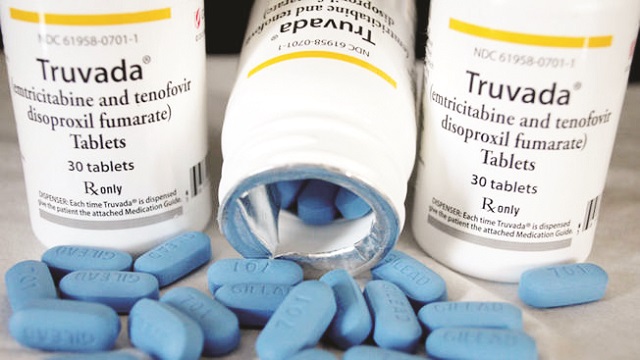
HEY sweetie! Pretty seductively hisses. She smirks, winks and waggles her tongue suggestively. “Come let’s play”, her antics imply.
Lights of passing cars illuminate her shiny short revealing red dress to expose her pumpkin-yellow thighs.
The fleeting car lights make her more seductive, enticing the eyes of passing strangers to take a lustful glance, if not two. Those fraction-of-a-second glimpses of Pretty’s “asserts” provided for by the sporadic lights of passing cars complement her gimmick.
She uses every seductive trick there is in the age-old profession’s “handbook” to woo potential clients who pass by her spot. The intersection of Robert Mugabe Way and 13th Avenue in Bulawayo is a mere junction by day, but by night rapidly mutates into an “intersexion”.
Not only roads meet at that location. This is where Pretty and her colleagues meet their clients to negotiate business. The 23 year-old mother of one claims financial challenges pushed her into the sex work as she seeks to make ends meet. Sex work, often referred to as the world’s oldest profession has its fair share of hazards.
HIV infection, Sexually Transmitted Diseases (STIs) and rape are some of the hazards Pretty and her “workmates” face every night when they parade their flesh to strangers. She is well aware of the risks, but insists circumstances won’t allow her quit sex work. Pretty confessed that she has been victim of abuse by some clients who demand unprotected sex.
“Some actually offer more money for unprotected sex and you are left with no choice but to accept. I charge between $5 and $10 for short time, but there are some clients who offer as much as $50. Such an offer is irresistible despite the obvious risks.”
An estimated 56, 4 percent of female sex workers are living with the HIV virus, according to the National Aids Council (NAC). The World Health Organisation (WHO) also estimates that female sex workers are 14 times more likely to have HIV than other women globally.
Pretty and her colleagues, daily, face this grim reality of their chosen undertaking, yet they do not relent.
Sex workers like Pretty fall under key populations who are at high risk of HIV, together with long distance truck and bus drivers, discordant couples and migrant labourers.
Zimbabwe’s HIV intervention programmes now emphasises on prevention, premised on theme “Closing the Tap of New HIV Infections”, with focus given to such high risk groups. Minister of Health and Child Care Dr David Parirenyatwa has been on record stating that closing the “tap” on new HIV infections was critical in the country’s pursuit to end Aids by 2030, in line with the global targets.
The country has since adopted Pre-Exposure Prophylaxis (PrEP), targeting high risk groups, as part of the comprehensive prevention strategies which includes other prevention methods like condoms and Voluntary Medical Male Circumcision (VMMC).
PrEP is a new HIV prevention option for HIV-negative individuals to reduce their risk of HIV infection. The option has been included in the National Guidelines for Antiretroviral Therapy for the Prevention and Treatment of HIV that were launched in December 2016.
When taken consistently, PrEP has been shown to reduce the risk of HIV infection in people who are at high risk by up to 92 percent. Pretty and many other sex workers like her whose work exposes them to high risk of contracting HIV look to benefit from the new prevention method.
Sadly for Pretty, she does not know what PrEP and where she can access such an option which can help reduce the hazards that her “profession”.
“I’ve never heard of that thing. How does it work and where can I get it. How much is it? Please explain to me how it works sweetie,” she said persuasively.
Pretty shares such worrying ignorance on PrEP with majority of her colleagues who continue to engage in risky sexual behaviour with little mitigation available. Such lack of knowledge raises a red flag on the amount of advocacy that has been done so far on PrEP as a prevention option available in Zimbabwe for such high risk populations.
The Centre for Sexual Health and HIV AIDS Research Zimbabwe CeSHHAR) Project Director-Key Populations Tendayi Mharadze acknowledged that knowledge of PrEP remained limited in the country.
“Knowledge about PrEP is still very limited. There are various communication strategies that can be used ranging from mass media to community sensitisation. CeSHHAR works with a network of Peer Educators who encourage sex workers to access health services at all CeSHHAR clinics we provided information on PrEP and encourage sex workers who test HIV negative to take it,” she said.
According to the Ministry of Health and Child Care just over 2 000 sex workers have accessed PrEP at New Start Centres across the country since August 2016. The figure is a small fraction of sex workers population across the country which is estimated at about 52 214. Nac communications director, Ms Madeline Dube said efforts were in place to increase awareness on PrEP among the high risk groups.
“We are working on demand creation in the selected districts that are offering PrEP. This will also happen in other districts after the pilot. Awareness on PrEP is also being done through the ongoing sex worker programmes and peer education programmes,” she said.
Director of the AIDS and TB Unit in the Ministry of Health and Child Care Dr Owen Mugurungi, Director said PrEP was available for free at in selected districts across the country. In Bulawayo PrEP is available at New Start Centres. Dr Mugurungi said after the pilot, PrEP will be rolled out at full scale and will be available at public health institutions.
“PrEP is available in the selected districts that we started in and is available for free. It is mostly available at New Start Centres through our partnership with Population Services International (PSI). As we make provisions and plans for rolling it out, it will then also be available at public health institutions,” he said.
He said the drug was not available over the counter in pharmacies.
“When one accesses PrEP, there are several other assessments that are done, including HIV testing and continued risk assessment and therefore PrEP is available at health facilities where these services and counselling can be provided,” Dr Mugurungi explained.
However, a pharmacist who declined to be identified for professional reasons said some pharmacies were clandestinely selling the pill (brand name Truvada). Investigations by Sunday News showed that the drug was being sold for between $20 and $30 for 30 tablets.
The cost may prove to be prohibitive to many sex workers like Pretty, should one chose to buy the drug over the counter, which is however discouraged.
Dr Mugurungi said oral PrEP should be taken correctly and consistently for it to be effective. He said the drug was not for life, but for the period when one is at substantial risk of contracting HIV. -@irielyan


 derick.khumalo