Online Reporter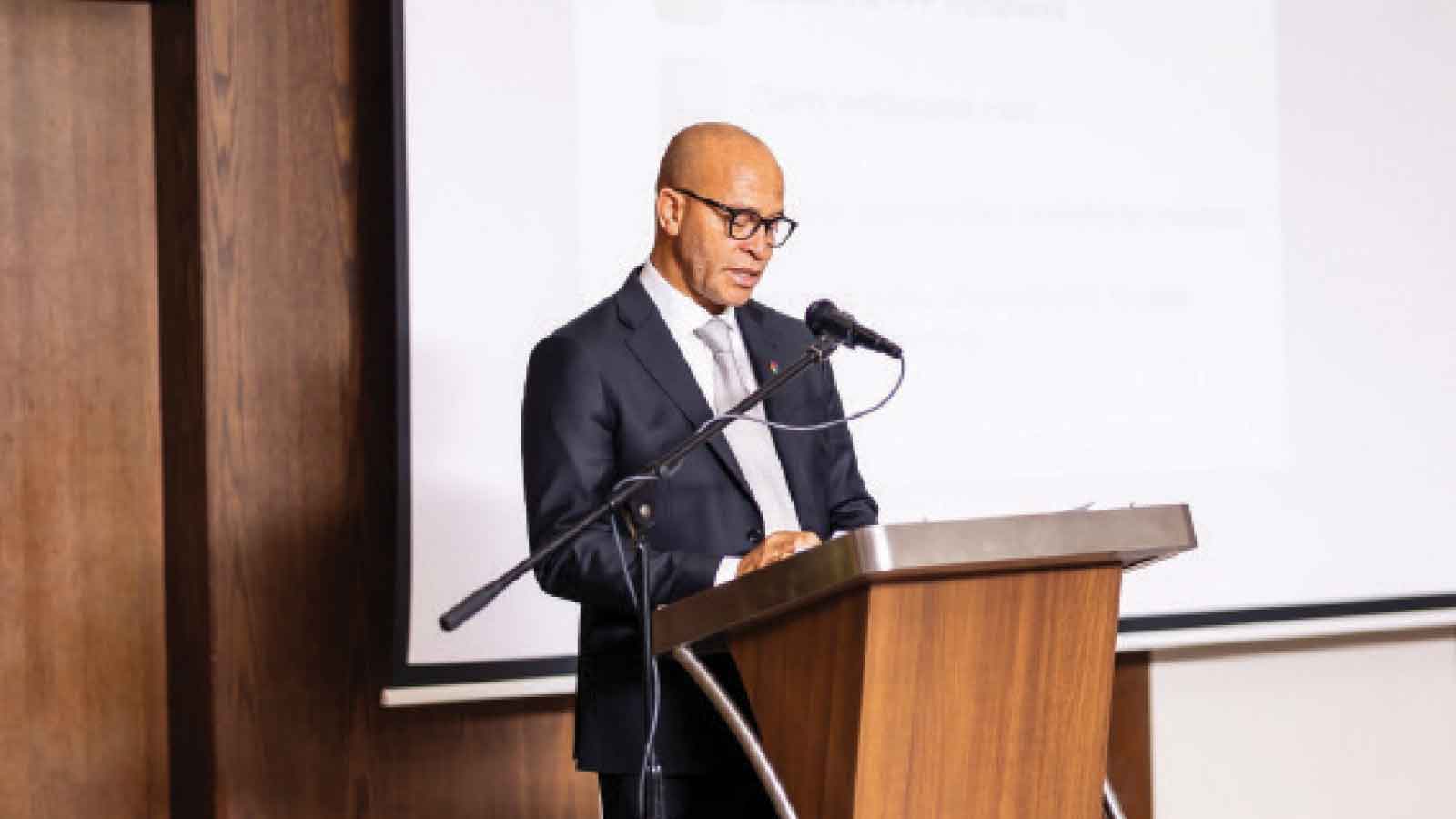
Tapiwanashe Mangwiro, Senior Business Reporter
ZIMBABWE must urgently improve the preparation and structuring of investment projects if it is to attract the vast pools of domestic and international capital searching for viable opportunities, the Zimbabwe Investment and Development Agency (Zida) has said.
Zida chief executive officer Mr Tafadzwa Chinamo said investor interest alone was not enough to drive economic growth. Instead, projects must be thoroughly prepared, transparent and commercially viable before they can successfully attract financing.

Addressing the 6th ZimReal Property Investment Forum, Mr Chinamo said Zimbabwe has significant potential to attract private capital into infrastructure, industry, property development and other productive sectors. However, he said this would depend on the country’s ability to develop a pipeline of credible, investment-ready projects.
“Zimbabwe needs to develop a stronger pipeline of investment-ready and bankable projects,” he said.
His remarks highlighted a longstanding challenge facing Zimbabwe’s investment landscape: the gap between promising ideas and projects that are sufficiently developed to secure funding.

Mr Chinamo noted that many project sponsors struggle during the early stages of development, when resources are needed for feasibility studies, environmental assessments, technical investigations, financial modelling and legal structuring.
“At the concept stage, many projects lack resources for further preparation. At the feasibility stage, sponsors face the cost of technical studies, environmental assessments, financial modelling and legal structure,” he said.
He said this project preparation gap often prevents potentially viable ventures from advancing to the financing stage, particularly where project developers are unable to demonstrate commercial viability to investors and lenders.
According to Mr Chinamo, challenges do not end once funding discussions begin. Projects also require financing structures that align with their construction timelines and operational requirements.
“At financial close, these perceptions in inappropriate financing structures can delay or prevent capital commitment. During implementation, projects require suitable financing that matches their construction and operating cycle,” he said.
He said Zimbabwe needed to rethink how it develops investment opportunities by focusing on project preparation and matching projects with the appropriate funding at every stage of development.
“The objective must therefore be to connect the right project with the right capital at the right stage of development,” Mr Chinamo said.
He emphasised that different projects require different funding models. While some may be suited to traditional commercial lending, infrastructure developments often require long-term financing, while industrial projects may need a combination of equity, debt, working capital and equipment finance.
Strategic projects, he added, may also require development finance and risk mitigation instruments before commercial investors are willing to participate on a significant scale.
This, Mr Chinamo said, creates opportunities for blended finance arrangements that combine development finance, government support, commercial funding and institutional investment while ensuring risks are appropriately shared.
“There’s obviously a case for blended finance here, which provides a practical mechanism for addressing some of these constraints,” he said.
He said blended finance could be particularly effective for infrastructure and other strategic projects that require substantial upfront investment but generate wider economic and social benefits over the longer term.
Mr Chinamo also identified public-private partnerships (PPPs) as a key vehicle for mobilising private sector investment in national development projects.
“Public-private partnerships can play an important role in mobilising private capital for infrastructure and other strategic projects,” he said.
However, he stressed that PPPs must strike a balance between public benefit and commercial viability, while being supported by transparent procurement processes, credible revenue models and appropriate risk-sharing arrangements.
“PPP projects must be structured to achieve both public value and commercial productivity,” Mr Chinamo said.
He cited Zida’s involvement in the latest approved PPP project as an example of the type of partnership capable of unlocking investment in critical infrastructure.
The project involves collaboration between the Government and a local property developer to establish a new city in the Masvingo area, where a cricket stadium is currently under construction.
Looking beyond individual projects, Mr Chinamo said Zimbabwe needed sustainable
systems that continuously generate, develop and improve investment opportunities.
He identified four key areas requiring collaboration: project pipeline development, project
preparation financing, investment data and transparency, and the creation of investable PPP structures.
The first priority, he said, is ensuring a steady pipeline of projects capable of progressing from concept stage to investment readiness, financial close and eventual implementation.
Mr Chinamo observed that many potentially transformative projects fail to advance because they do not receive adequate technical and financial support in their early stages.
“The thing that we’re always asked time and again is: what can I invest in? I’ve got money,
I’m in the Middle East, we have got so much money, what do we need?” he said.
He said such enquiries demonstrate the appetite for investment and the need for Zimbabwe to present investors with well-prepared opportunities.
The second priority, according to Mr Chinamo, is project development and preparation financing.
He noted that a significant funding gap exists before projects become investor-ready and
suggested that Government, development finance institutions, banks, corporates and development partners consider establishing project preparation facilities and development funds to bridge the gap.
Investment data and transparency, he added, are equally important in attracting capital.
“Capital follows credible information,” Mr Chinamo said.
He said investors require reliable project information, transparent structures, consistent
reporting and credible data before making investment decisions.
Improved project tracking systems would also enable Government and stakeholders to identify challenges early and intervene before projects lose momentum.
The fourth priority is the creation of robust and investable PPP frameworks.
Mr Chinamo said this would require disciplined project selection, transparent processes, sound contractual arrangements, credible revenue streams and appropriate risk allocation.
For Zida, he said, the role extends beyond investment promotion to opportunity identification, project packaging, investor targeting, matchmaking, regulatory facilitation, implementation support and aftercare services.
He added that the agency stands ready to work with institutions responsible for taxation, immigration, environmental approvals and other regulatory processes to help investors navigate Zimbabwe’s investment environment.
Mr Chinamo also called on banks and financial institutions to work closely with Zida in designing financing products that support projects throughout their lifecycle, from development and construction to long-term operations.
He urged development finance institutions and development partners to collaborate on technical assistance, project preparation, concessional financing and risk mitigation mechanisms.
Institutional investors, he said, also have a critical role to play by providing long-term funding to infrastructure, industry and other productive sectors of the economy.
Project sponsors, meanwhile, must ensure that their projects are properly prepared, transparent and governed to improve investor confidence.
“Capital is more likely to follow projects that are properly structured and investment ready,” Mr Chinamo said.
He added that both domestic and international investors should bring more than just funding, contributing expertise, technology transfer and long-term partnerships that support economic transformation.
Ultimately, he said, Zimbabwe’s investment performance should be judged by tangible economic outcomes rather than the number of investment licences issued or deals announced.
“Zimbabwe’s investment success will ultimately be measured not only by the number or projected value of investments licensed but by the capital deployed, industries established, infrastructure delivered, jobs created, exports generated and value obtained within the economy,” he said.
Mr Chinamo said such measures provide a more accurate assessment of whether
investment is translating into real economic development and improved livelihoods.
“By mobilising private capital responsibly and directing this towards productive sectors, Zimbabwe can transform financing gaps into investable opportunities and national ambitions into tangible outcomes. We believe that together we can move from potential to prosperity,” Mr Chinamo said.