Online Reporter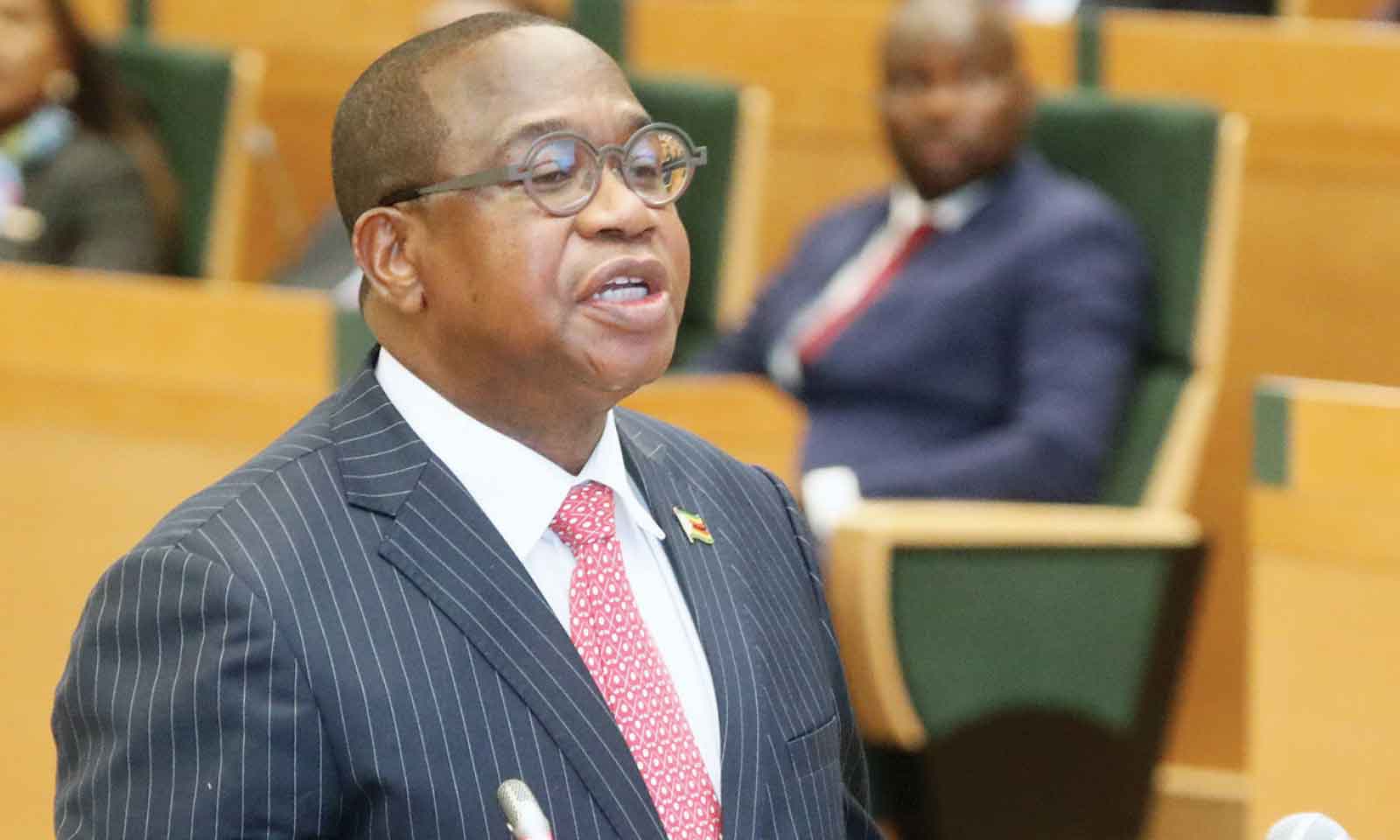
Nelson Gahadza, [email protected]
ZIMBABWE has called for urgency in operationalising the SADC Regional Development Fund (RDF), noting its critical role in mobilising capital for regional infrastructure, industrialisation, climate resilience and cross-border trade.
Finance, Economic Development and Investment Promotion Minister Professor Mthuli Ncube said this during the official opening of the SADC Meetings of Ministers of Finance and Investment, the Peer Review Panel and the Joint Meeting of Ministers of Finance and Health in Harare.
The remarks come as Southern Africa faces mounting global economic uncertainty and shrinking external development financing.
Prof Ncube said the region must move beyond policy commitments and accelerate implementation of initiatives that strengthen economic resilience and support sustainable growth.
He said the region continued to battle persistent inflationary pressures, tighter global financial conditions, climate-induced shocks, food and energy insecurity, rising public debt and heightened geopolitical tensions, making deeper regional cooperation more important than ever.
“The SADC Regional Development Fund remains one of the most important instruments for mobilising resources for regional infrastructure, industrial productivity, climate-smart development and cross-border trade.
“It is therefore appropriate that we continue to give this matter the attention, urgency and political guidance it deserves,” said Prof Ncube.
He said the success of the ministerial meetings would ultimately be measured by their ability to deliver practical outcomes that unlock investment, strengthen policy coordination and accelerate regional integration.
The meetings brought together the Committee of Ministers of Finance and Investment and the Peer Review Panel, comprising finance ministers and central bank governors, which oversee regional cooperation on macroeconomic convergence, monetary affairs, investment policy, infrastructure financing and economic surveillance.
Prof Ncube said recent global crises, including the Covid-19 pandemic, had demonstrated the importance of coordinated regional responses in protecting supply chains, strengthening industrialisation, enhancing productive value chains and improving the region’s capacity to finance its own development priorities.
He welcomed progress made in strengthening regional payment systems to facilitate cross-border settlements but said further work was needed to deepen financial inclusion, improve regulatory co-operation and promote stable, transparent and well-governed financial markets.
The Treasury chief noted that previous SADC meetings held in Kinshasa and Victoria Falls had reaffirmed the need to strengthen macroeconomic convergence, harmonise financial and investment policies and expedite the operationalisation of the Regional Development Fund.
“For Zimbabwe, hosting these meetings demonstrates our commitment to the SADC integration agenda and to the collective pursuit of regional prosperity.
“No member state can achieve its full potential in isolation. Our economies are connected through geography, infrastructure, trade corridors, financial flows and shared development aspirations,” he said.
SADC executive secretary, Mr Elias Magosi, said strengthening regional integration, improving domestic resource mobilisation and enhancing public expenditure efficiency were becoming increasingly important as traditional sources of development finance continued to come under pressure.
He said studies by the African Development Bank indicated that improving expenditure efficiency across Africa could unlock as much as US$760 billion annually, significantly expanding fiscal space, reducing dependence on external financing and supporting the continent’s target of achieving 7 percent annual economic growth needed to create jobs, reduce poverty and promote sustainable development.
Mr Magosi said that following a directive by SADC Heads of State and Government at the 2024 Global Financial Compact Summit, member states mandated engagement with the African Development Bank to mobilise resources for the Regional Development Fund.
He said significant progress had since been made with the bank’s support, including agreement on a phased implementation approach beginning with a proof of concept and the establishment of the fund as a stand-alone special purpose vehicle dedicated to financing regional development projects.
“In addition, a proposal has been submitted under the African Development Fund’s seventeenth replenishment programme to support the fund’s operationalisation, develop a pipeline of bankable regional infrastructure projects and strengthen institutional capacity,” he said.
However, Mr Magosi expressed concern over the slow pace of ratification of the agreement establishing the fund, warning that delays could undermine efforts to mobilise long-term financing for regional development.
He said to date, only 10 member states, Angola, Botswana, the Democratic Republic of Congo, Eswatini, Lesotho, Malawi, Mozambique, Tanzania, Zambia and Zimbabwe, have signed the agreement, while only Angola, Botswana, Zambia and Zimbabwe have completed ratification.
“The increase in the number of signatories and ratifications is critical at this stage as it reflects strengthened commitment, ownership and political resolve by Member States to operationalise the fund as the region’s dedicated financing mechanism,” said Mr Magosi.
He urged countries yet to ratify the agreement to expedite the process, saying continued delays risked slowing the mobilisation of resources needed to finance regional infrastructure, industrialisation and broader socio-economic transformation.
Chairperson of the Committee of Ministers of Finance and Investment and South African Finance Minister, Mr Enoch Godongwana, said the deteriorating global economic environment was presenting fresh challenges for Southern Africa, reinforcing the need for coordinated regional policy responses.
He said the conflict in the Middle East, which has disrupted global energy markets through the closure of the Strait of Hormuz and damage to key production facilities, had intensified inflationary pressures while increasing risks to energy security.
According to the International Monetary Fund, global economic growth is projected to slow to 3,1 percent in 2026 before recovering marginally to 3,2 percent in 2027.
For Sub-Saharan Africa, growth is expected to ease from an estimated 4,5 percent in 2025 to 4,3 percent in 2026 as higher oil, gas and fertiliser prices raise production costs across key sectors, including agriculture, mining, transport and tourism.
Growth is projected to improve modestly to 4,4 percent in 2027.
Mr Godongwana also warned that declining international development assistance posed an additional challenge, with IMF estimates suggesting bilateral aid to Sub-Saharan Africa could fall by between 16 and 28 percent from 2025, signalling a structural shift in global development financing rather than a temporary slowdown.
He said the changing financing landscape required SADC countries to adopt more sustainable funding models anchored on domestic resource mobilisation, blended finance, public-private partnerships and increased private sector participation.
SA’s Treasury chief said member states should also strengthen policy coordination to position SADC as a globally competitive production hub by leveraging its critical mineral resources, improving food security, deepening intra-regional trade and investing in resilient transport, logistics and digital payment infrastructure.
He said sustained political leadership, stronger institutional coordination and a decisive shift from commitments to implementation would be essential if the region was to withstand external shocks and achieve inclusive, long-term economic growth.