

 Chronicle Editor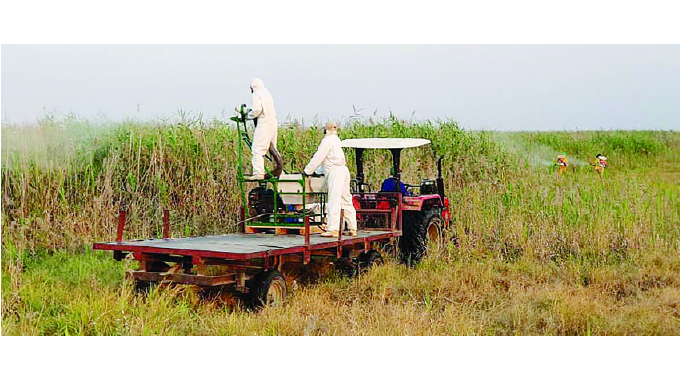
Sikhumbuzo Moyo, Senior Reporter
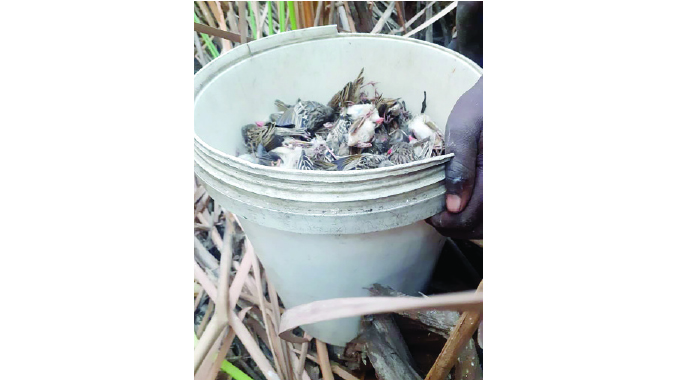
THE Government, through the Department of Migratory Pests and Biosecurity Control Unit, has managed to control the infestation of quelea birds in the country’s affected provinces where huge flocks of the pests threatened the winter wheat harvests.
The unprecedented influx of the highly destructive birds early this month were a serious threat, particularly to wheat farmers in Matabeleland North and Mashonaland West provinces.
Each tiny bird can feed on four grams of wheat per day and experts say a million birds can result in losses exceeding 40 000 tonnes when the quelea birds invade fields in large flocks.
Preparations for the harvesting of the 2022 winter wheat crop are in place with farmers working hard to ensure maximum yields.
More than 85 000 hectares were put under wheat during the 2022 winter season compared to 66 000 hectares last year, and this is expected to produce self-sufficiency with a small surplus for the first time since wheat farming started in Zimbabwe in 1966.
The country requires 360 000 tonnes of wheat each year, mainly for flour and bread.
Quelea birds have also been a threat to summer subsistence traditional grains in Zimbabwe every year and according to experts, they ravage about 10 grammes of the yield per day.
If not controlled adequately, they pose a serious threat to traditional grains, which can leave households reeling from food shortages and loss of possible incomes that come with surplus yields.
The red-billed quelea is a small weaver bird native to sub-Saharan Africa and renowned for its attacks on small-grain crops within Africa. It is the most numerous bird species in the world, with a peak post-breeding population estimated at 1,8 billion.
Nomadic super-colonies can grow to millions of birds, making quelea not only the most abundant bird in the world but also the most destructive to cereal grains, especially sorghum and millets as well as wheat, rice and barley.
The invasion saw the Agricultural Rural Development and Advisory Services deploying reaction teams in affected areas. In Matabeleland North, Umguza, Bubi, and Lupane districts were the focal districts.
In Mashonaland West, where the invasion was intense, the Department of Migratory Pests and Biosecurity Control had to activate aerial sprays as well as the use of motorised vehicle sprayers.
A quelea bird command centre was also opened to provide farmers and the Department of Migratory Pests and Biosecurity Control with real-time updates on any eventuality.
In the event of a report of the birds being sighted, deployment of manpower subsequently followed.
Government has also started procuring additional chemicals for quelea bird in anticipation of possible attacks on crops following its initiative to include traditional grains in the Pfumvudza/Intwasa package under the Presidential Inputs Scheme.
This is in response to the country’s different agro-ecological regions’ soil and climatic requirements.
Farmers have already started preparing land ahead of the 2022/23 summer cropping season. Acting director for Migratory Pests and Biosecurity Control, Mr Shingirai Nyamutukwa said in the last two weeks, they had the highest number of reports. Most reports came from Mashonaland West.
However, since intensifying the aerial sprays last week, the situation has tremendously improved.
“The last two weeks had the highest reports, but since our aerial sprays last week, the situation has now improved with a few reports coming. We are managing the control very well and harvesting has started with most crops now reaching maturity stage,” said Mr Nyamutukwa.
Acting provincial director for Agricultural Rural Development and Advisory Services in Matabeleland North and Bulawayo, Mr Dumisani Nyoni said quelea birds are the largest contributors to wheat loss annually.
He said if not controlled, the pests can wipe out the entire crop field.
Agricultural and Rural Development Authority (Arda) Jotsholo Estate project manager, Mr Obert Mhere said the damages in their fields were minimal following the deployment of teams managed to contain the quelea birds.
“We were attacked by the quelea birds, but our teams were able to manage the situation and the damage quite insignificant,” he said.–@skhumoyo2000



 Blessing Chizhande
 Online Reporter