Online Reporter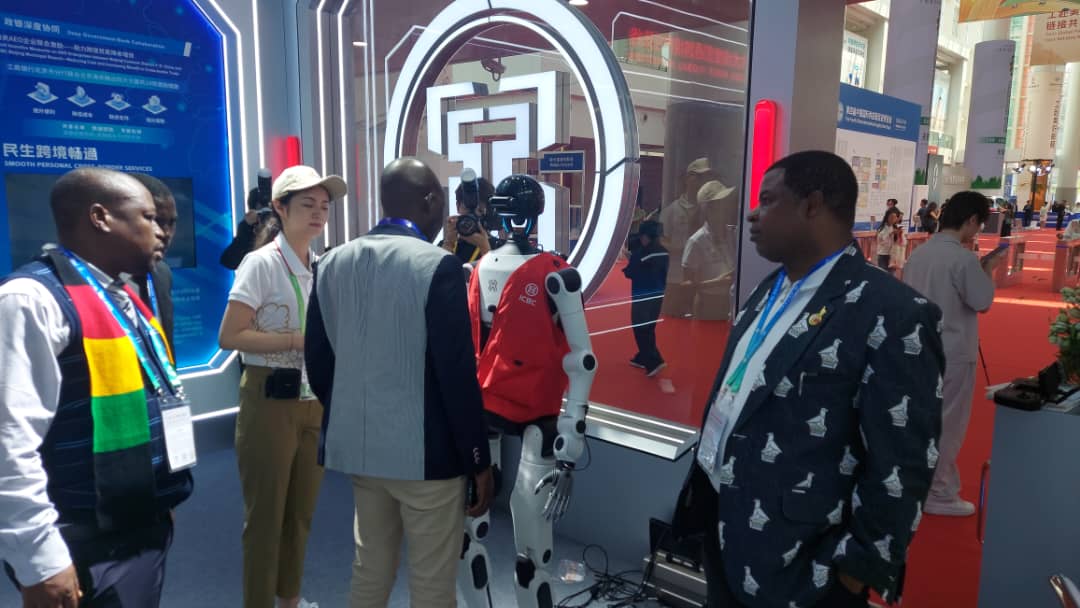
Tawanda Musarurwa in BEIJING, CHINA
ZIMBABWEAN fiscal, tax and monetary policy experts have returned home with key lessons from China’s economic transformation — among them the imperative to strengthen fiscal governance, modernise tax administration, embrace digital innovation and deepen the links between education, industry and economic growth.
The insights emerged at the conclusion of the two-week Seminar on Fiscal, Tax and Monetary Policies for Zimbabwe, held in Beijing and organised by the Central University of Finance and Economics (CUFE) with support from the Ministry of Commerce of the People’s Republic of China.
The programme wove classroom instruction in public finance, taxation, budget management and fiscal governance together with field visits to enterprises and institutions in Jiangyin, where the delegation observed how China’s policy reforms have been translated into industrial development, financial inclusion and technological advancement on the ground.
Addressing the closing ceremony, CUFE Secretary of the School of Continuing Education, Mr Li Hanjun, framed the programme as more than a knowledge transfer exercise.
“This seminar has served not only as a two-way exchange of knowledge and experience in public finance and taxation, but also as a meaningful practice of deepening cooperation between China and Zimbabwe in this field,” he said.
He expressed confidence that the learning would yield tangible results. “As key professionals in Zimbabwe’s public finance and taxation sector, the knowledge, consensus and friendship you have gained from this programme will surely turn into practical results, helping promote innovation in fiscal and tax administration and bringing new momentum to fiscal revenue growth, economic development and people’s well-being.”
Representing the participants, Mr Jambo Nyamhuri, said the seminar had equipped the delegation to strengthen Zimbabwe’s reform agenda and its Vision 2030 objective of attaining upper-middle-income status.
“Over these two weeks, we have learned invaluable lessons from China’s fiscal reforms, tax governance, technological innovations and economic transformation,” he said.
“These insights will guide Zimbabwe as we strengthen our fiscal discipline, broaden our tax base and advance our Vision 2030.”
Among the most consequential takeaways was the importance of anchoring policy reform in practical implementation.
During visits to Huaxi Village, Jiangyin Rural Commercial Bank, Jiangyin Polytechnic, CITIC Pacific Xincheng Special Steel and Machine Vision DCCK Plus, the delegation saw how local development strategies, industrial investment, skills development, financial inclusion and digital innovation have collectively underpinned China’s rise.
Huaxi Village stood out as a model of rural industrialisation. “Our visit to Huaxi Village provided a compelling example of rural industrialisation and collective prosperity, which resonates strongly with Zimbabwe’s current rural industrialisation reform agenda,” Mr Nyamhuri said.
At Jiangyin Rural Commercial Bank, attention turned to the financial architecture that sustains communities and small enterprises.
The delegation drew lessons on “the critical role of financial inclusion, digital banking and support to SMEs in driving local economic growth, as well as the importance of cultivating a savings culture from an early age, particularly among children, as a foundation for long-term financial discipline and national development,” Mr Nyamhuri said.
The education-industry nexus emerged as another defining theme. Jiangyin Polytechnic demonstrated a technical and vocational training model calibrated to the needs of industry — a connection Zimbabwe has identified as essential for economic modernisation.
In the manufacturing sector, CITIC Pacific Xincheng Special Steel illustrated “the importance of large-scale industrial investment, value addition and technological advancement in strengthening the manufacturing sector,” Mr Nyamhuri said, while exposure to automation and artificial intelligence underscored the growing role of digital transformation in driving productivity and competitiveness.
For Mr Li, the closing ceremony was less a conclusion than a point of departure. “Completion of the seminar is not an end, but a new beginning,” he said.
Mr Nyamhuri echoed that spirit, noting that the exchange had run in both directions. “We have not only learned from China’s remarkable journey but also shared Zimbabwe’s own experiences in resilience, digital transformation and governance reform.”
The delegation left Beijing with a clear message: China’s transformation was built on consistent reforms, institutional capacity and the determined conversion of ideas into action.
“We leave Beijing, Wuxi and Suzhou inspired by China’s achievements and encouraged by the bonds of friendship we have strengthened,” Mr Nyamhuri said. “As we return home, we carry with us knowledge, inspiration and a renewed commitment to apply these lessons in the service of our people.”