

 daniel chigunwe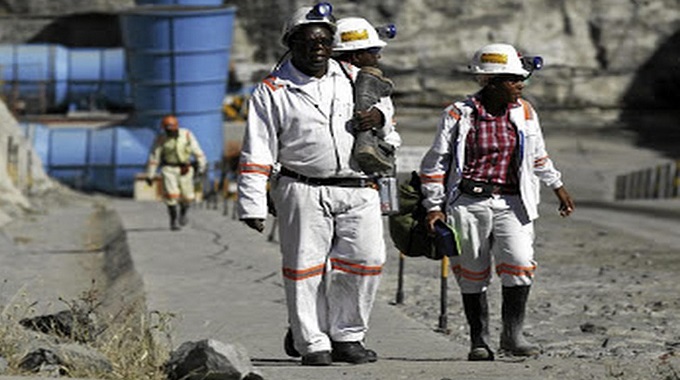
Business Writer
THE Zimbabwean Government has indicated no intention to scrap tax holidays granted to the mining sector taking into account the industry’s significance to Zimbabwe’s economy.
There have been media reports suggesting that the Treasury is considering revoking some incentives including tax holidays granted to the mining sector due to concerns over their disproportionate profits to tax contributions.
In its State of the Mining Industry Survey Report and Prospects for 2025, the Chamber of Mines of Zimbabwe (CoMZ) indicated that revenue from mining will this year improve by 2 percent to reach US$5,5 billion and next year the figure is projected to rise by 10 percent to US$6 billion.
The positive growth trajectory in revenue is driven by improved output and some anticipated commodity price recovery.
The CoMZ indicated that the distribution of the mining revenue stands as follows: procurement (excluding contractors) 21 percent) — contractors 17 percent — Government taxes (17 percent) — employment costs (21 percent) — power (15 percent) — communities (2 percent) — shareholders and others (7 percent).
In recent years, the Government granted tax holidays to the mining industry to attract Foreign Direct Investment (FDI) into the sector regarded as one of the major economic mainstays to anchor Zimbabwe towards an upper middle-income society by 2030.
Permanent Secretary in the Ministry of Mines and Mining Development, Pfungwa Kunaka, in a recent statement said: “Where I am sitting, we still need investments in the mining sector and we need to provide all the necessary incentives that we can because we are looking at a sector that is supporting the whole economy.
“We also need to be careful and take responsibility to ensure that such a sector is still ticking — I would be one person who would say we need to maintain incentives that we can afford for the mining sector.
“If there are other considerations, they can come in because as Zimbabwe we want to ensure that we get maximum value — but any changes that we need to be looking at, I think they need to be well considered so that they do not work against any performance that we have in the mining sector.”
Data from the Zimbabwe Investment and Development Agency (ZIDA) indicates that the mining sector accounts for 70 percent to FDI, 80 percent to exports — 19 percent to Government revenues, 3 percent to direct formal employment and 13,5 percent to national income.
The CoMZ has highlighted that the sector was pessimistic about the prospects for an optimal fiscal regime in 2025 on the back of a multiplicity of taxes, high royalty, beneficiation taxes, special gains tax and high fees and levies.
Kunaka said: “What I am advocating is a situation where as a country and as Government, we continue with certain basic incentives that are required in the mining sector.
“But, indeed where we need to change in order that the country gets maximum benefits, we need to look at those carefully and see how we apply those.”
The chamber anticipates that capacity utilisation in the mining industry would reach 90 percent next year from 84 percent this year driven by minerals such as gold, ferrochrome and Platinum Group Metals.
Resultantly, employment will rise to 58 700 in 2025 from 57 000 this year.


 Online Reporter