Online Reporter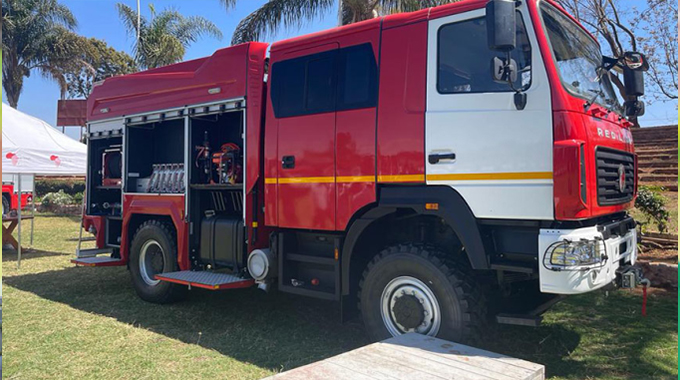
Lincoln Towindo
WHEN 17 new fire tenders left Belarus for Zimbabwe in early 2023, they were meant to be a lifeline for towns and municipalities desperately short of firefighting equipment.
Instead, the multimillion-dollar trucks never reached Harare.
Seized at the Lithuanian port of Klaipeda in March 2023, the fire engines were caught in the geopolitical crossfire of the Russia-Ukraine conflict.
Lithuania, enforcing European union (EU) sanctions on Belarus and Russia, impounded the consignment, arguing that components of the trucks originated from a sanctioned Belarusian manufacturer.
For Zimbabwe, which had paid for the trucks in full, the seizure was devastating.
The fire tenders were specially built for the country’s rugged rural terrain, where blazes routinely ravage homes, forests and farmland during the dry season.
“This was equipment meant to save lives,” Attorney-General Virginia Mabiza said at the time.
“Instead, it was taken away because of a conflict that has nothing to do with Zimbabwe. We are an innocent third party.”
Lithuania’s prosecutors and customs suspected that the vehicles or some of their components originated from a Belarusian company covered by EU sanctions – meaning they could not lawfully transit or be released under EU sanctions enforcement rules.
Diplomatic overtures
Harare’s first instinct was diplomacy.
In February 2024, Mrs Mabiza led a high-powered delegation to Lithuania, accompanied by Zimbabwe’s ambassador to Sweden, Priscilla Misihairabwi-Mushonga.
Their mission was to convince Lithuanian authorities that Zimbabwe had legally purchased the trucks and should not be punished under EU sanctions.
For days, the delegation pored over documents with their Lithuanian counterparts.
Proof of purchase, supplier details and legal arguments were all laid out.
Zimbabwe stressed the humanitarian need for the tenders and the principle of fairness in international trade.
But despite promises of follow-ups, Lithuania remained unmoved.
Later that year, reports emerged that the seized fire tenders could even be donated to Ukraine, deepening Harare’s fears that the equipment was slipping away for good.
Into the courtrooms
With diplomacy stalled, the matter moved to Lithuanian courts.
In July 2024, Lithuania’s Prosecutor-General ordered the forfeiture of the trucks and their disposal by public auction.
Zimbabwe quickly appealed.
The appeals process was lengthy and frustrating.
In November 2024, Lithuania’s Chief Prosecutor dismissed Zimbabwe’s arguments.
In January 2025, Harare filed yet another appeal before a pre-trial investigation judge, hoping at least to suspend the auction.
But in March 2025, that appeal was dismissed as well.
The ruling was final at the pre-trial stage, clearing the way for Lithuania to auction the trucks.
Zimbabwe’s last hope of recovering the actual tenders vanished.
By mid-2025, the fire engines that had been destined for Harare’s municipalities were sold off in Lithuania.
Civil suit for compensation
With the trucks gone, Zimbabwe has shifted strategy.
The next step is a civil lawsuit against the Lithuanian government, seeking compensation for the loss of the tenders.
Mrs Mabiza said the conclusion of pre-trial investigations in Lithuania has now paved the way for Harare to press ahead with a civil claim for damages.
Zimbabwe’s case will rest on Article 6.272(1) of Lithuania’s Civil Code, which provides for strict state liability where unlawful actions by the state cause damages.
Zimbabwe will argue that Lithuania’s seizure and auction of the fire tenders amounted to a violation of its property rights under both domestic and international law.
“It is important to note that not all remedies have been exhausted regarding the 17 fire tenders seized in Lithuania; only the pre-trial investigative procedures have been concluded,” said Mrs Mabiza.
“Unfortunately, the Lithuanian authorities proceeded to dispose of the 17 trucks through public tenders, despite Zimbabwe’s objections.
“The next legal step is to seek compensation for the loss suffered by the Republic of Zimbabwe.”
“The civil claim is about ensuring accountability,” Mrs Mabiza explained. “Zimbabwe lawfully purchased those trucks. We suffered financial loss and were denied equipment critical for public safety.”
In court, the Government will argue that Lithuania violated property rights enshrined in its own laws and international instruments by seizing and disposing of the fire tenders without evidence linking Zimbabwe to sanctioned companies.
Mrs Mabiza said Harare remained confident of securing redress.
“Our position has consistently been that Zimbabwe is an innocent third party and lawful owner of the fire tenders, which were procured transparently for public service delivery,” she said.
“The appeals advanced arguments against the prosecutor’s resolution to sell the vehicles, stressing that the seizure and disposal amounted to an infringement of Zimbabwe’s property rights under both Lithuanian law and international law.”
If successful, Zimbabwe could secure millions in compensation, though legal experts caution that the process will be slow and heavily contested.
Lithuania is likely to argue that its actions were justified under EU sanctions law, setting the stage for a complex legal battle.
Arbitration and international remedies
Even as it prepares for the civil suit, Zimbabwe is weighing broader international options.
If Lithuanian courts do not deliver redress, Harare could escalate the matter to multilateral forums such as the World Trade Organisation (WTO) or even pursue arbitration at the International Court of Justice (ICJ).
“At present, we are still pursuing remedies available under Lithuanian law,” said Mrs Mabiza
“If these do not yield a resolution, we may consider recourse to international fora.
“This could include the European Court of Human Rights, the World Trade Organisation, or even the United Nations Special Rapporteurs, given the humanitarian implications of depriving Zimbabwe of life-saving firefighting equipment.”
Other countries have taken similar paths.
For instance, Iran has previously challenged US and EU sanctions at the ICJ, while Russia has fought asset seizures at the WTO.
In Africa, Nigeria has pursued international arbitration cases over contractual disputes involving foreign governments and corporations.
For Zimbabwe, such a move would not only be about compensation but also about reinforcing the principle of challenging the extraterritorial reach of sanctions that punish third parties.
A costly lesson
For many, the saga has become a symbol of how sanctions, imposed thousands of kilometres away, can ripple into unexpected corners of the globe, leaving ordinary citizens vulnerable.
In Zimbabwe’s towns and villages, fires continue to claim homes and lives, while the fire tenders that were meant to help sit in someone else’s yard in Europe.
Eight months after the last appeal was dismissed, Harare is preparing to fight in yet another courtroom.
This time the goal is to secure justice and perhaps, to ensure that in future, its procurement processes are shielded from the politics of global sanctions.



 Bongani Ndlovu