

 admin
admin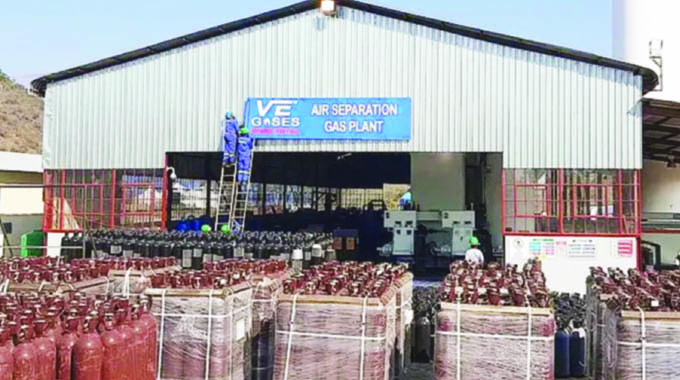
Paidamoyo Mutsvairo
Correspondent
Zimbabwe’s economy, just like other global economies, was negatively impacted by the COVID-19 pandemic. Thus, the country also experienced economic recession due to the effects of the pandemic, climate change and economic sanctions imposed by Western countries.
A Professor of Economics and Public Policy at Harvard University, United States, Kenneth Rogoff, was recently quoted in the Project Syndicate, saying the growing threat of global recession on economies, especially in Europe, and the continued COVID-19 lockdowns in China, due to the pandemic, together with on-going war in Ukraine remains a major threat to economic development of countries, especially developing nations.
However, President Mnangagwa is on record saying “Nyika inovakwa nevene vayo/ Ilizwe lakhiwa ngabanini balo.”
It is pleasing and comforting that the Second Republic has been doing all its best to revive the ailing economy.
Firstly, it is imperative to note that the Government has been putting in place a number of policy measures and programmes as a way of trying to stabilise the country’s economy.
Among other economic development projects, the Government has been rehabilitating roads, constructing dams, building schools, and modernising the agriculture sector, through installing irrigation systems, using local resources. Most sensible minds would agree that Government’s intervention to revitalise the economy is necessary as it will improve the living standards of citizens, as well as fostering the achievement of Sustainable Development Goals.
Additionally, the Second Republic’s move to fight corruption in most governmental departments and local municipalities is noble and should be implemented without fail.
Of late, corruption has been derailing economic development activities and proper execution of Government programmes. Zero tolerance to corruption in all economic sectors can drastically transform the nation and turn around its fortunes.
Currently, the Government, through the Reserve Bank of Zimbabwe (RBZ), has been putting in place measures to stabilise the local currency and foreign exchange rate.
In June 2020, the RBZ established the Foreign Exchange Auction System (FEAS). Although the Auction System has been marred by some challenges which included foreign currency shortages, as the demand for forex increased, it managed to reduce the inflation.
Previously, the country experienced cash shortages due to externalisation as well as illegal sanctions that were imposed on Zimbabwe by the US.
In that regard, there is need by Citizens Coalition for Change (CCC) leader, Nelson Chamisa and his cronies to call for the removal of these illegal sanctions that they lobbied for, as the then Movement for Democratic Change-Tsvangirai (MDC-T) party.
It should be emphasised that the effects of these economic embargoes are not only affecting people from a single political party, instead there are also pinching on other innocent Zimbabweans. After realising that the effects of sanctions were hurting the ordinary citizens, the Southern African Development Community (SADC) stood in solidarity with Zimbabwe, and declared October 25 of every year as a day to protest against the illegal embargoes.
A United Nations Special Envoy, Alena Douhan urged the United States to end sanctions that she said had worsened Zimbabwe’s humanitarian crisis.
She said the sanctions were exacerbating the pre-existing economic and humanitarian crisis, inhibiting the building of essential infrastructure and international and inter-institutional cooperation.
Thus, economic sanctions imposed on Zimbabwe by the US continue to hamper on the country’s efforts to resuscitate the economy.
At the moment there is no balance of trade. Actually, there is more of importing and less of exporting. This has a strong negative impact on the growth of our country’s economy. Imports are considered to be a drag on the economy.
They represent an outflow of funds from our country, since the payments are made outside our borders by local firms. Hence, the opposite is true. Positive exports contribute to economic growth. The receipt of export proceeds also represents an inflow of foreign currency into the country, which is currently different from our line of trading as a country.
However, it is pleasing that the Government has been putting in place measures that promote exports.
It is also inspiring that there are quite a number of companies that are opening and launching new manufacturing plants in the local industry.
For instance, in 2021, President Mnangagwa commissioned Feruka Oxygen and Nitrogen Plant in Mutare. Also, Pepsi Zimbabwe launched its third beverages plant at its Harare depot in 2021.
Moreover, in September 2021, Dairibord Holdings said it would commission a new US$1,5 million manufacturing plant in the second half of the current financial year.
Such a move depicts growth within our local industry. What is actually reflecting on the ground is that there has been progress in our local producers.
This is also shown by the presence of local products in most shops. The development will indeed revive the economy as it will promote the buy Zimbabwe policy.
Thus, farmers nationwide should consider supporting the local industries through growing variety of crops such as soya beans and sun flowers that are needed for processing of cooking oil. Zimbabwe’s manufacturing sector depends mostly on agricultural produce.
Therefore, supporting the local industry can be the best way of employment creation for the majority of Zimbabweans.
However, it is worrisome that detractors, local regime change agents and some opposition political parties particularly CCC, are always busy making noise on social media platforms, attacking efforts being made by the Government in reviving the economy.
It is known that a lot of external factors are contributing to the current economic situation in the country. However, these external factors are being ignited by the opposition, especially CCC party which is fighting a battle to lead Zimbabwe.


 Online Reporter
 dyton mupawaenda