Online Reporter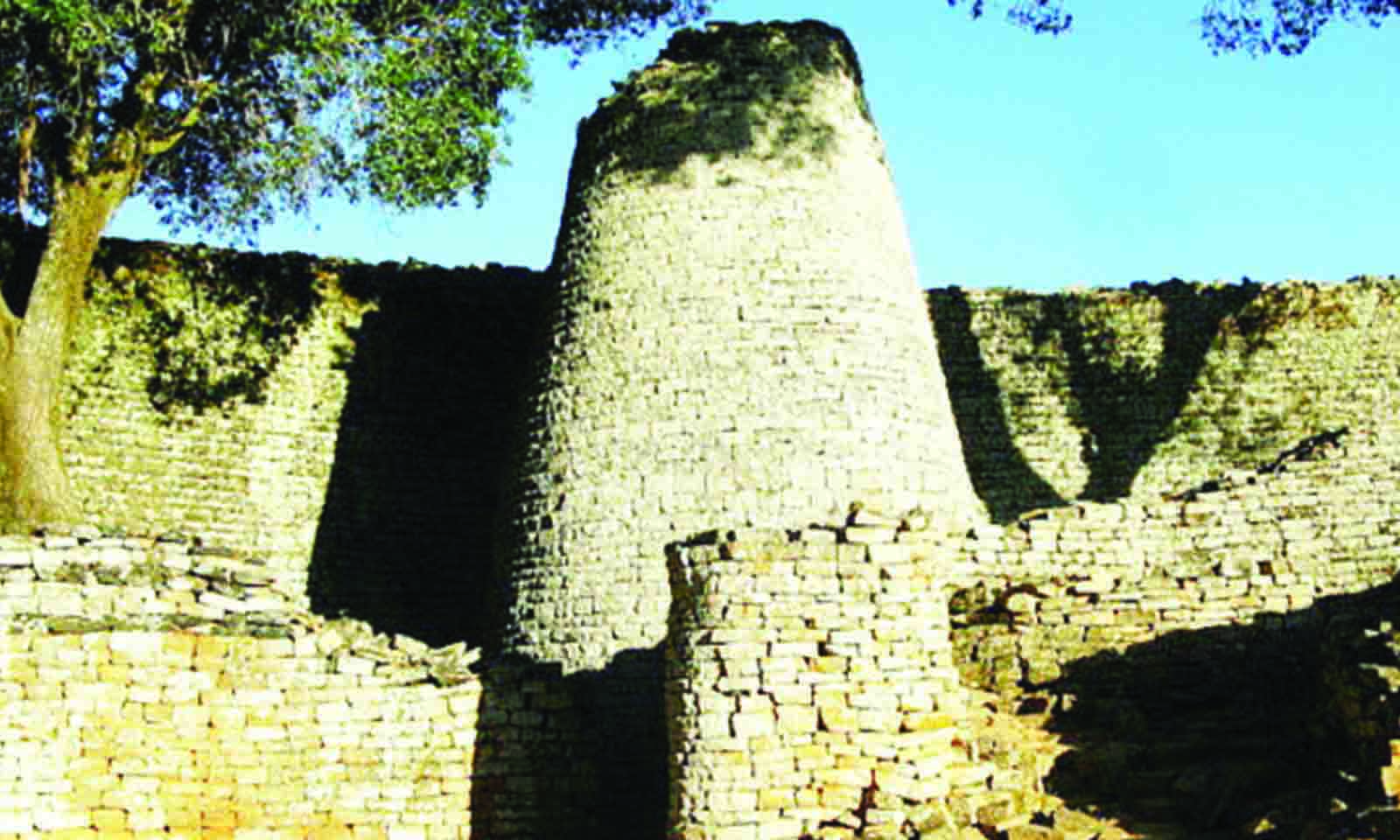
TOURISM BRANDING WITH
CHARLES MAVHUNGA
For decades, Zimbabwe`s magnificent monuments have been diminished through colonial vocabulary. Words like ruins, ancient relics, and old cults pervade tourism materials, academic texts, and international media, creating a distorted narrative that erases the brilliance of Zimbabwean civilisation.
This linguistic colonisation must stop. Our heritage sites are not ruins; they are treasures. Our traditions are not primitive cults; they are living cultural systems. Our monuments are not mysterious relics; they are testaments to engineering genius that rivals any civilisation in history.
The Violence of “Ruins”
The word “ruin” implies destruction, decay, and obsolescence. Applied to Great Zimbabwe, a masterpiece of medieval African architecture, this term suggests collapse rather than achievement, loss rather than legacy.
Great Zimbabwe remains among the most advanced stone structures of its time, built without mortar and showcasing mathematical precision that continues to impress modern architects.
Calling this architectural marvel a “ruin” isn`t a neutral description; it is ideological violence.
It transforms a functioning monument into a dead artefact, stripping it of contemporary meaning and relegating our ancestors to a primitive past.
This language serves colonialism by suggesting African civilisations were incapable of creating enduring greatness. Similarly, describing mbira music as “ancient” or spiritual practices as “old cults” positions Zimbabwean culture as trapped in time, disconnected from modernity, and irrelevant to contemporary life.
This framework denies the dynamic, evolving nature of our culture and dismisses the profound knowledge embedded in these traditions. Engineering Brilliance Disguised as Relics
Great Zimbabwe represents an extraordinary engineering achievement deserving recognition alongside any global architectural wonder.
The site spans nearly 1 800 acres with walls reaching 11 metres high and five metres thick, constructed from over one million granite blocks fitted with precision that required an advanced understanding of:
Mathematics:
The elliptical Great Enclosure demonstrates sophisticated geometry, with curved walls maintaining consistent thickness and gradient.
Builders calculated load distribution and structural integrity without modern tools, applying mathematical knowledge passed through generations.
Physics:
The dry-stone construction technique utilised friction, gravity, and weight distribution principles, keeping these structures standing seven centuries later. Each stone was carefully selected and positioned to create interlocking stability, mechanical engineering of remarkable elegance.
Architectural Innovation:
The conical tower, chevron patterns, and complex passageways reveal aesthetic sophistication and functional design. Drainage systems managed water flow whilst the site`s orientation considered solar patterns and seasonal changes.
Social Organisation:
Building Great Zimbabwe required coordinating thousands of workers, managing resource extraction and transportation, and maintaining food production, evidence of advanced economic planning and political structures.
This was not a primitive building.
This was civilisation at its peak, demonstrating knowledge systems that contemporary engineers study as examples of sustainable, climate-appropriate architecture.
Science in “Ancient” Traditions
Dismissing mbira music as merely “ancient” ignores its mathematical sophistication. Mbira tuning systems employ complex harmonic relationships, polyrhythmic structures, and cyclical patterns encoding astronomical observations and mathematical concepts.
Ethnomusicologists recognise mbira as one of Africa`s most sophisticated musical systems, requiring years to master its interlocking melodies.
Traditional agricultural practices labelled “old ways” often contain ecological knowledge accumulated over millennia, crop rotation, drought-resistant seeds, and sustainable land management, which modern agronomists now recognise as scientifically sound responses to Zimbabwe`s climate.
Spiritual practices dismissed as “cults” embody psychological insights, community mental health systems, and social cohesion mechanisms, paralleling contemporary sociology and psychology.
These are not superstitions; they are knowledge systems adapted to specific cultural contexts. Regional Success Stories
Other African nations demonstrate the power of linguistic decolonisation. Botswana markets its Tsodilo Hills as “the Louvre of the Desert,” emphasising 4 500 rock paintings as artistic achievement rather than primitive scratchings.
Namibia rebranded Twyfelfontein as a “rock art treasure,” elevating its status. South Africa transformed Robben Island from a prison to a human rights symbol.
Zimbabwe must follow these examples by systematically replacing colonial terminology with language honouring achievement and sophistication.
A New Vocabulary
Zimbabwe`s tourism industry must adopt empowering terminology:
Heritage Treasures instead of “ruins” acknowledges these sites as valuable assets requiring celebration
Cultural Monuments emphasise their status as intentional creations comparable to Angkor Wat or Machu Picchu -Living Traditions highlights continued relevance, rejecting the notion that an authentic African culture exists only in the past
Indigenous Knowledge Systems recognises a sophisticated understanding of environment, society, and technology
Sacred Sites respects spiritual practices without diminishing them as irrational superstition
Taking Action
Zimbabwe`s tourism sector must undertake comprehensive linguistic decolonisation through auditing all materials, training tourism professionals, and engaging local communities in heritage interpretation, challenging international media perpetuating colonial terminology, and reforming educational curricula.
Conclusion: Reclaiming Our Narrative
Zimbabwe`s heritage sites are not ruins awaiting foreign archaeologists. They are treasures built by sophisticated civilisations, maintained by resilient communities, deserving recognition as masterpieces of human achievement.
Our traditional knowledge isn`t ancient superstition but living wisdom. Our cultural practices are not primitive customs but complex social technologies.
The language we use shapes perception, influences tourism revenue, and determines whether young Zimbabweans see their heritage as a source of pride or embarrassment.
By rejecting colonial terminology and embracing vocabulary honouring achievement and sophistication, Zimbabwe can reclaim its narrative, attract culturally conscious travellers, and build a tourism industry that serves national dignity as much as economic development.
Great Zimbabwe is not a ruin. It is a treasure. And it is time the world recognised it as such.
Charles Mavhunga co-authored textbooks in Business Enterprising Skills and is currently studying for a Ph.D. in Management at Bindura University. He can be contacted at [email protected]. Cell:0772989816