


 Online Reporter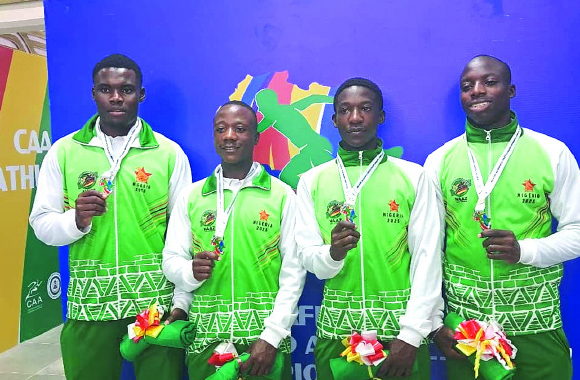
Ellina Mhlanga-Zimpapers Sports Hub
IN the sweltering heat of Abeokuta, Nigeria, 47 young Zimbabwean athletes stepped onto the track at the Confederation of African Athletics (CAA) Under-18 and Under-20 Championships. They were not just chasing medals; they were also chasing futures.
Some walked away with hardware. Others left with hard lessons. But for National Athletics Association of Zimbabwe (NAAZ) president Tendayi Tagara, this trip was about more than podium finishes.
“There is a two-fold on Team Zimbabwe,” said Tagara. “This was a young team. There is a team we sent specifically to prepare for the Youth Olympics that we got assistance from ZOC to prepare. That’s the Under-18 team.
“That team was in Nigeria specifically to prepare. They’re actually Under-17, because next year they must be Under-18 to qualify. So, they were running versus the real Under-18s.
“If you look at the medals, the reflection was on the performance of these athletes. They are still young.”
Zimbabwe returned home with five medals, including a gold, but the value of the competition stretched far beyond the medal tally.
For the younger contingent, it was a test run for the Dakar 2026 Youth Olympic Games, the first Youth Olympics to be hosted on African soil.
With Dakar still over a year away, early exposure is key. Tagara stressed that while the federation is tracking performances, competitions like the CAA championships also open doors beyond the track, namely, scholarships.
“We made a big decision to make sure we must bring as many athletes as we can,” said Tagara. “One, so they learn what it is and how others are doing it.
“Two, remember we have an objective as an organisation. Parents also have their own objective for their children. The majority of these children are pushing for good times, for scholarship times.
“This competition helps them get recognised.”
Running a delegation of nearly 50 athletes across two age groups is not cheap. With limited funds, NAAZ covered costs for only 12 athletes; the rest were self-funded, made possible through a waiver allowing parents to support their children’s participation.
“As an association, we had limited resources. So, we targeted the outstanding ones for this competition. They are very limited,” said Tagara.
“In total, the number of athletes we assisted was about 12. So, we would have come with a team of 12, but we said no, we can’t do that. We have an objective.
“Parents have an objective.
“This is the only platform where we meet the best coaches and scouts, who are looking for athletes for their universities in America.”
That exposure, said Tagara, is as valuable as any medal.
The championships, dominated by traditional powerhouses like Nigeria, South Africa and Kenya, served as a wake-up call for some Zimbabwean athletes, particularly those fresh off successful outings at the African union Sports Council Region 5 Games.
Stepping up to continental level brought stiffer competition and higher expectations.
“This is now a high level. Getting into the final, or even the semi-final, at this level is a great achievement,” said Tagara.
With some athletes set to graduate to senior levels, the lessons learned in Abeokuta will shape their development. And for those eyeing the World Athletics Under-20 Championships next August, the clock is already ticking.
“We’re now working on how we must prepare for the coming competitions,” said Tagara.
For the 47 who made the trip, Abeokuta was not just another championship; it was a step forward, and for some, the beginning of something far bigger.



