

 admin
admin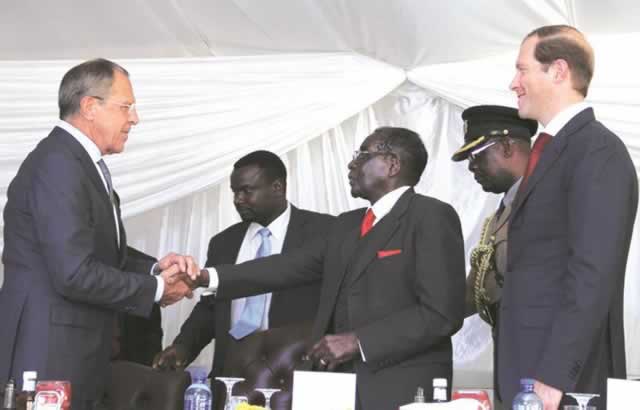
Bernard Bwoni Correspondent
The economic situation in Zimbabwe is presented as dismal and bleak judging from news headlines and recent IMF reports on the country’s economy. A recent IMF report screamed ‘Zimbabwe economy is in a tailspin and at a crossroads’.
The report is clear that ‘the main objective of the new SMP is to strengthen the country’s external position, as a prerequisite for arrears clearance, resumption of debt service and restored access to external financing’.
Zimbabwe met all the targets and structural benchmarks set by the recently expired IMF Staff Monitored Programme which expired in June 2014, leading to a third review which will run until December 2015. The workings of the IMF always leave a lot to be desired. This is a footnote on the IMF website “An SMP is an informal agreement between country authorities and Fund staff to monitor the implementation of the authorities’ economic programme. SMPs do not entail financial assistance or endorsement by the IMF Executive Board”.
Yet in the report it states; “Key risks to the new programme stem from global commodity price shocks, domestic policy slippages, gaps in policy implementation capacity and lagging progress in resolving external arrears. While Zimbabwe faces these risks with practically no buffers, the successor SMP aims to rebuild these buffers and strengthen the country’s resilience to shocks”.
So the IMF will not restore financial assistance or debt relief but instead will ‘rebuild the buffers’ they destroyed in the first place and strengthen Zimbabwe’s resilience to shocks’?
Since Zimbabwe has met all the conditions as set in the previous SMP, why not offer debt relief and a debt clearance strategy?
This makes you wonder if the Zimbabwe economy is as bleak as we make it sound or as if vultures are circling round the prey in the hope of swooping once the weakest points are identified. In as much as the situation with the economy paints a discouraging picture, Zimbabwe is on the doorsteps of a phenomenal economic recovery. The silent economic revival is due to country’s indigenisation policy, the land reform and economic empowerment programmes.
Zimbabwe has struggled economically due to sanctions imposed on it by the EU and the US and the fact that the country is still standing is testimony to the resilience and collective strength of the people.
The country is moving towards a new economic reconstruction backed by a resurgent agricultural sector, mining, the enhanced contribution of the small and medium enterprises (SMEs) and the steady rise in foreign direct investment.
The Chinese and Russians have been forthcoming with their investment into Zimbabwe. The EU and the UK have continued their carrot and stick approach to investment and the removal of sanctions on Zimbabwe, appearing to be rewarding the people of Zimbabwe by removing the economic sanctions against the country painstakingly slowly while keeping sanctions against President Mugabe.
The Chinese have concluded billion dollar projects in Zimbabwe to date and on his recent trade mission to China, President Mugabe concluded several infrastructure deals.
The Russians recently sent their Foreign Minister Mr Sergei Lavrov to Zimbabwe and signed a $3 billion platinum mining deal.
The EU have been all talk and placing conditionality after conditionality while the UK on the other hand sent a three men trade mission to ‘scoop for business opportunities in Zimbabwe’.
Zimbabwe is currently facing significant challenges economically and to get out of this mire and mud requires the collective spirit of everyone.
It requires a positive mindset, positive attitude and that patriotic desire to free the country from the economic burden we find ourselves in.
Rebasing
Rebasing of the Zimbabwean economy is a long overdue necessity and of benefit to the country.
Rebasing or reassessment of the national accounts entails replacing an old base year with a new base year. The future values of Gross Domestic Product (GDP) will be compared and contrasted with the old base year which acts as the source point.
It is imperative to rebase or re-benchmark the Zimbabwe economy to ensure that the country’s national accounts, statistics and figures present the most current and accurate assessment and indication of the economy.
The key here is to get a more accurate set of economic figures and statistics that offer an insight into the actual and current realities on the ground in the Zimbabwe economy.
Just to simplify matters, GDP is the value of the goods and services produced within the country and that is the standard measure of the size of the economy. The more developed economies reassess GDP statistics and sector priorities every five years.
Currently the national employment/unemployment and GDP figures in Zimbabwe do not reflect the country’s highly informalised economy.
The way the country’s economy is structured is such that there is a scattered informal economy existing alongside the mainstream formal economy.
The current GDP estimates in Zimbabwe have not sufficiently indicated the soaring contributions of the informal sector which has grown notably in terms of total value and ‘informal employment’ as well as formal employment generation.
Thus, through rebasing of the economy, it would be possible to obtain a more precise set of economic data indicative of the present realities and an accurate estimate of the size and structure of the economy by absorbing new and old economic activities which were not captured before. Once the country starts factoring in the informal sector and incorporating the figures into GDP and employment statistics this will reveal a much larger economy on a sound backdrop of an economically empowered indigenous population.
The trickle-down effect of an economy propped up by indigenous stakeholders is that they have a higher propensity to invest back into the country unlike former minority investors and multinationals who abandoned Zimbabwe in her time of need.
Reassessment of the Zimbabwe economy is critical to the success of the Zimbabwe Agenda for Socio-Economic Transformation (Zim-Asset) economic blueprint in that it will support government initiatives to address the challenges of a growing economy under the prevailing micro and macroeconomic conditions as this will give a clearer picture of the country’s economy — what drives the growth of each sector of the economy and identify which sectors are lagging behind and what level of support and resources to be redirected towards those ailing sectors.
It is imperative that formal studies are carried out to determine the actual size of the informal economy and GDP in nominal terms and integrate that into the national economic figures.
The statistical reassessment of the economy will more than likely see a significant increase in the size of the country’s GDP. — bernardbwoni.blogspot.com



 Online Reporter