


 malvernmugadzikwa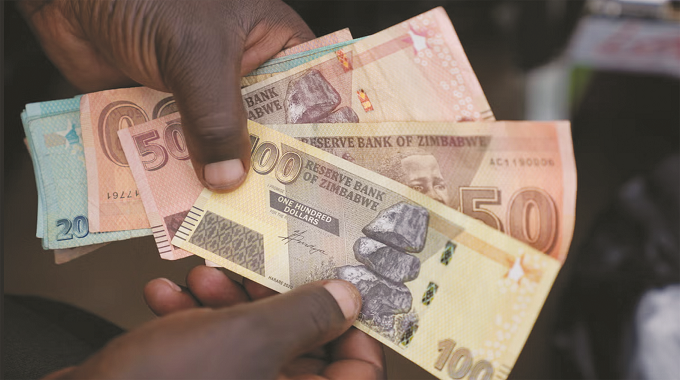
Business Reporter
THE continued strengthening of the Zimbabwe dollar is good for the economy if it is sustained, the Confederation of Zimbabwe Industries (CZI) has said.
The local unit appreciated to US$1: $5 251 on the wholesale auction market on Thursday, firming from $5 739 a week earlier.
A combination of fiscal and monetary measures has managed to mop up excess liquidity and create demand for the Zimdollar.
CZI president Mr Kurai Matsheza told The Sunday Mail Business that the stability achieved in the past three months was good for the economy.
“We need to give it time and then see what happens in the next couple of auctions and also what happens to the parallel market,” he said.
Some retailers and Government agencies have already started reducing prices, in line with the firming local currency.
Mr Matsheza said the slow movement in the downward review of prices by retailers depends on when the current stock was brought in.
“So, I will still maintain that it is a bit early to actually expect businesses to have behaved in a manner that gives direction on pricing,” he said.
Monetary authorities are eager to see convergence of formal and parallel rates, including a sustained reduction in prices.
Economist Dr Prosper Chitambara said the ability to see through reforms to stabilise the local currency was critical to ensuring macroeconomic stability and sustainability.
“That is to say, monetary reforms have to continue; fiscal reforms are also important; and other institutional reforms. If we are able to sustain that, we will be able to sustain the trend, but it is not an easy task to bring money supply growth and public spending down due to other pressures in Government,” he said.
Implementation of the right policies, he said, will be able to generate confidence in the local currency.
Some of the recent strategic interventions made by the Government to tame volatility in the market are the directive for all import duties to be paid in Zimbabwe dollars, except for luxury items; the transfer of external debt obligations from the Reserve Bank of Zimbabwe (RBZ) to Treasury; and the introduction of the wholesale foreign currency auction for banks.
Treasury has also since directed all Government institutions to collect fees and charges in the local currency.
Fifty percent of all US dollar corporate tax payments are now made strictly in the local currency, while the central bank raised its bank policy rate from 140 percent to 150 percent.



 Bongani Ndlovu
 Online Reporter