

 Online Reporter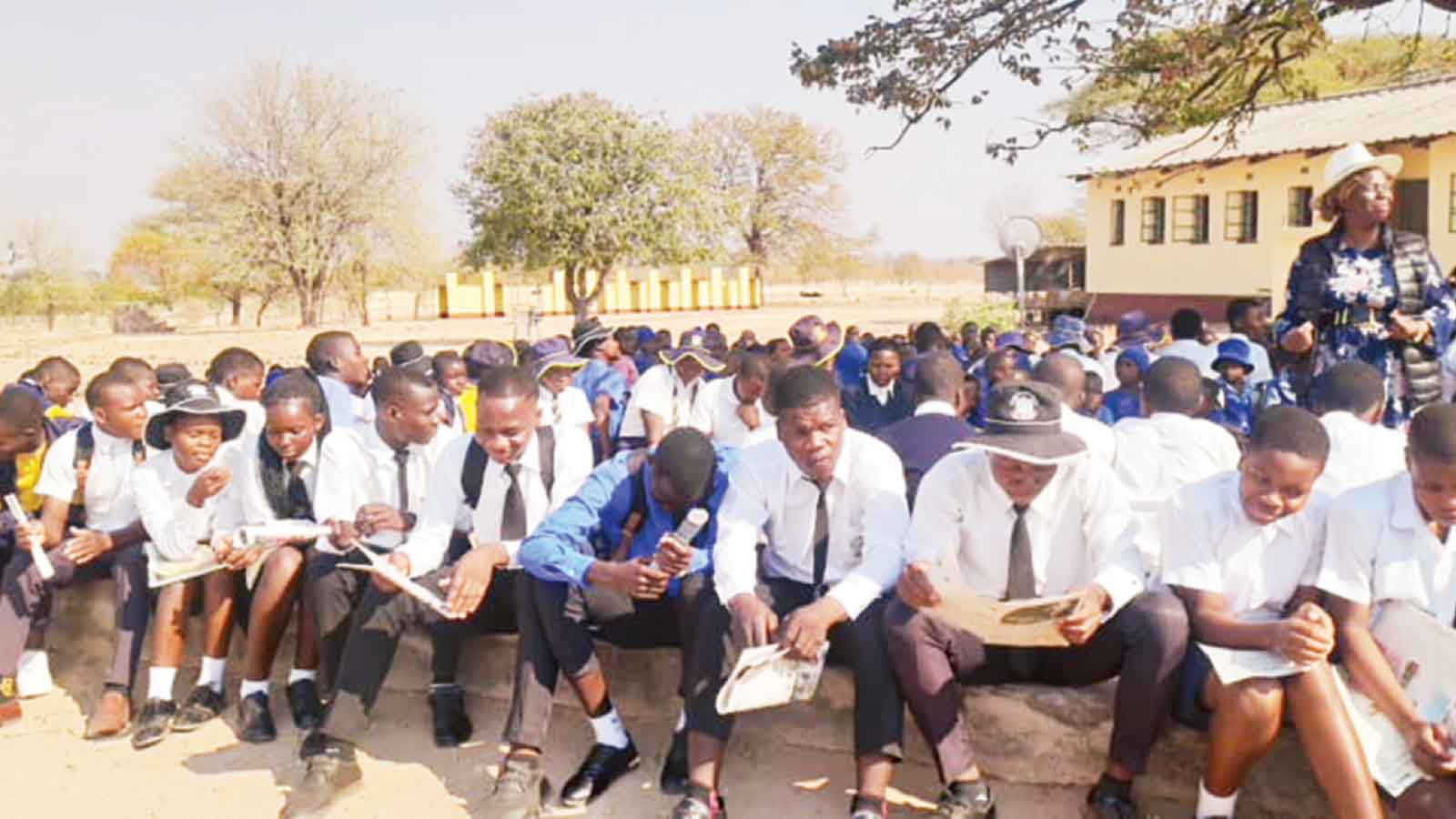
Fungai Lupande
Mashonaland Central Bureau
ZIMBABWE Newspapers (1980) Limited has taken journalism to some of the country’s most remote schools, launching junior media clubs in eight schools across Muzarabani District to empower rural learners with reporting and writing skills while giving them a platform to tell their own stories.
The programme was launched at Bore Primary and Secondary schools, Muzarabani Primary and High schools, Machaya Primary and High schools, and Museredza Primary and Secondary.
Implemented in partnership with the Ministry of Primary and Secondary Education, the initiative is part of Zimpapers’ corporate social responsibility programme and seeks to nurture future journalists while ensuring that children in marginalised communities are not left behind.
Speaking at the launch on Tuesday and Wednesday, Zimpapers corporate communications and sustainability manager Mrs Pauline Matanda said the programme had already been rolled out in Harare, Mashonaland East, Mashonaland West, Masvingo and Bulawayo.
“As we bring the programme to Mashonaland Central, we deliberately decided to move away from urban set-ups and come to marginalised schools in line with President Mnangagwa’s mantra of ‘leaving no one and no place behind’,” she said. “We have come to introduce basic journalism, information gathering and writing skills. Our chief executive officer, Mr William Chikoto, established the Junior Media Club newspaper specifically for children so that they can express themselves through writing and tell stories that matter to them.”
Mrs Matanda said the programme was Zimpapers’ way of giving back to communities while identifying and nurturing young talent. At Machaya High School, the former school of Information, Publicity and Broadcasting Services Minister Dr Zhemu Soda, learners and teachers warmly welcomed the initiative.
School head Mr Charles James said the club would help learners showcase the school’s achievements.
“We have several income-generating projects, including goats, cattle and poultry. These are the success stories that our children can now write about and share with the world,” he said.
“We are grateful for the support that Minister Soda continues to give the school through infrastructure development.”
English teacher Mr Edmond Mbavare, who now leads the Junior Media Club, described the launch as the fulfilment of a lifelong dream.
“My childhood ambition was to become a journalist. Today I have the opportunity to nurture future writers and reporters, and that is a dream come true,” he said.
“This school has produced many leaders, including Minister Soda. We want to continue producing future leaders.
“I also learnt here and have returned to serve my community.”
School headboy Tellmore Karuma pledged unwavering support for the initiative.
“You have planted the seed of journalism. Our commitment and interest will water that seed until it grows,” he said.
At Museredza Secondary School, located nearly 20 kilometres from the Mozambique border, acting head Mr Nelson Chadiwa said the launch had come at the perfect time.
“Coincidentally, I had already started teaching learners about journalism and article writing. Now they believe that journalism can become a reality for them,” he said.
“Our school is constructing a classroom block and planning to establish a poultry project. These are the stories our learners want to write so that people know what is happening in our community.”
Mr Chadiwa said many parents were struggling to pay school levies following the decline in cotton production, making it difficult to complete infrastructure projects.
At Bore Secondary School, head Mr Edmore Muguti said the club would unlock hidden talent among learners.
“We have identified pupils who are gifted speakers and others who are excellent writers. We hope some of them will pursue journalism as a career,” he said.
“They have already started reporting on our new classroom block and the challenges we face. These writing skills will also improve their academic performance.”
Bore Primary School head Mr Honest Maurukira expressed confidence that the school would become one of the best-performing clubs.
“This is the beginning of great things. Bore is not associated with failure. Soon we will witness different talents flourishing through this club,” he said.
The programme was also launched at Muzarabani High School and Muzarabani Primary School.
Muzarabani Primary School head Mr Jacob Chikaiwa said the initiative had proved that talent was not confined to urban schools.
“Today we have witnessed that indeed the President does not want anyone or any place to be left behind,” he said.
“It is impossible for journalists to be everywhere at once. This club gives our children an opportunity to document the stories of their communities and place our schools in the national spotlight.”
The Junior Media Club programme is expected to equip learners with practical communication skills, nurture future media professionals and create a platform for children in remote communities to tell their own stories, ensuring that their voices are heard alongside those from Zimbabwe’s urban centres.



