Online Reporter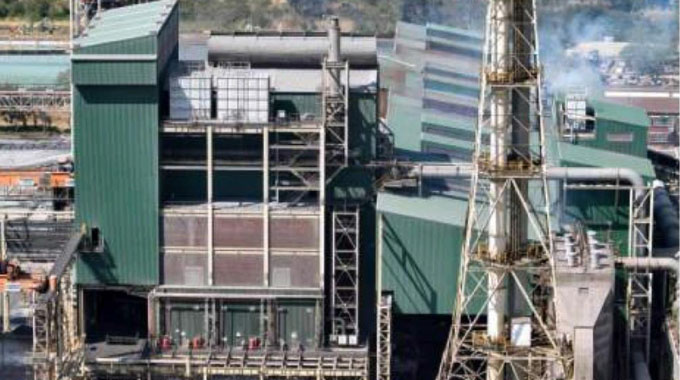
Rutendo Nyeve,[email protected]
ZIMBABWE’s platinum group metals (PGMs) sector is undergoing a transformative shift towards value addition and beneficiation, with Zimplats leading through a massive US$1,8 billion expansion programme implemented over the past five years.
This strategic investment positions the company as a key driver of industrialisation in line with the Government’s Vision 2030 agenda.
The PGMs industry remains a cornerstone of the Zimbabwean economy, accounting for over 40 percent of mineral exports over the past five years and employing approximately 18 000 people directly, representing 30 percent of total formal employment in the mining sector.
Globally, PGMs are critical to the energy transition, playing an essential role in green technologies such as fuel cells, catalytic converters, and emission-reducing technologies.
Zimplats, the country’s largest PGM producer, has invested substantially in smelting and refining infrastructure, including a new smelter commissioned in 2024 that tripled processing capacity to 380 000 tonnes of concentrate annually.
The company is also investing US$190 million to revive its Base Metal Refinery (BMR) at the Selous Metallurgical Complex, with US$36 million already spent.
Speaking at the PGMs Symposium held on the sidelines of the Annual Chamber of Mines Conference in Victoria Falls last week, Zimplats chief executive officer Engineer Alex Mhembere reaffirmed the company’s commitment to local value addition.
“We operate an integrated business model covering mining, concentration, and smelting. This ensures that multiple stages of value addition occur locally rather than offshore,” Eng Mhembere said.
“The expansion programme is not simply about increasing output. It is about creating a globally competitive, integrated and sustainable mining business.”
Eng Mhembere said the company’s investments extend beyond processing infrastructure.
Zimplats is developing an 185MW solar power project to enhance energy security and reduce carbon footprint, with
Phase 1A (35MW) already completed for US$37 million.
Phase 2A (45MW) is currently under construction.
The company has also introduced cutting-edge technologies including mine automation, a private LTE wireless
communication backbone, and a cloud-based metallurgical optimisation system.
“Mine automation is delivering improved productivity at lower operating costs,” Eng Mhembere said.
Eng Fungai Makoni, who was representing the Platinum Producers Association of Zimbabwe, emphasised the sector’s economic significance while acknowledging persistent challenges.
“The PGMs industry remains a significant contributor to the Zimbabwe economy, with output reaching a peak of US$2.2 billion in 2022,” said Eng Makoni.
“However, producers are owed more than US$228 million as of May 2026 due to delays in payments for the second portion of export proceeds, which has resulted in serious cash flow viability challenges.”
Eng Makoni also highlighted cost pressures facing the industry, including a 70 percent royalty on some metals, high electricity tariffs averaging around 14 cents per kilowatt hour, and capital shortages.
He expressed optimism about long-term prospects.
“Zimbabwe hosts the third-largest PGM reserves in the world, after South Africa and Russia, accounting for an estimated 32 million ounces. With new entrants coming into the PGM space and a supportive policy environment, the sector is set for significant growth,” said Eng Makoni.
The beneficiation push has already yielded results.
Following the Government’s export ban on non-beneficiated minerals, Zimbabwe’s mineral sector saw total sales reach US$983,85 million in the first quarter of 2026, with PGMs contributing US$543,97 million.
Zimplats’ US$36 million investment in the BMR revival is expected to further enhance domestic processing capacity once fully operational by the 2027 financial year.
Local communities are also benefiting from the sector’s growth.
Zimplats has a robust Local Enterprise Development programme supporting 23 partners and creating 2,900 jobs, while investing US$0,5 million in social initiatives focused on education, healthcare, and infrastructure in FY2025.