Online Reporter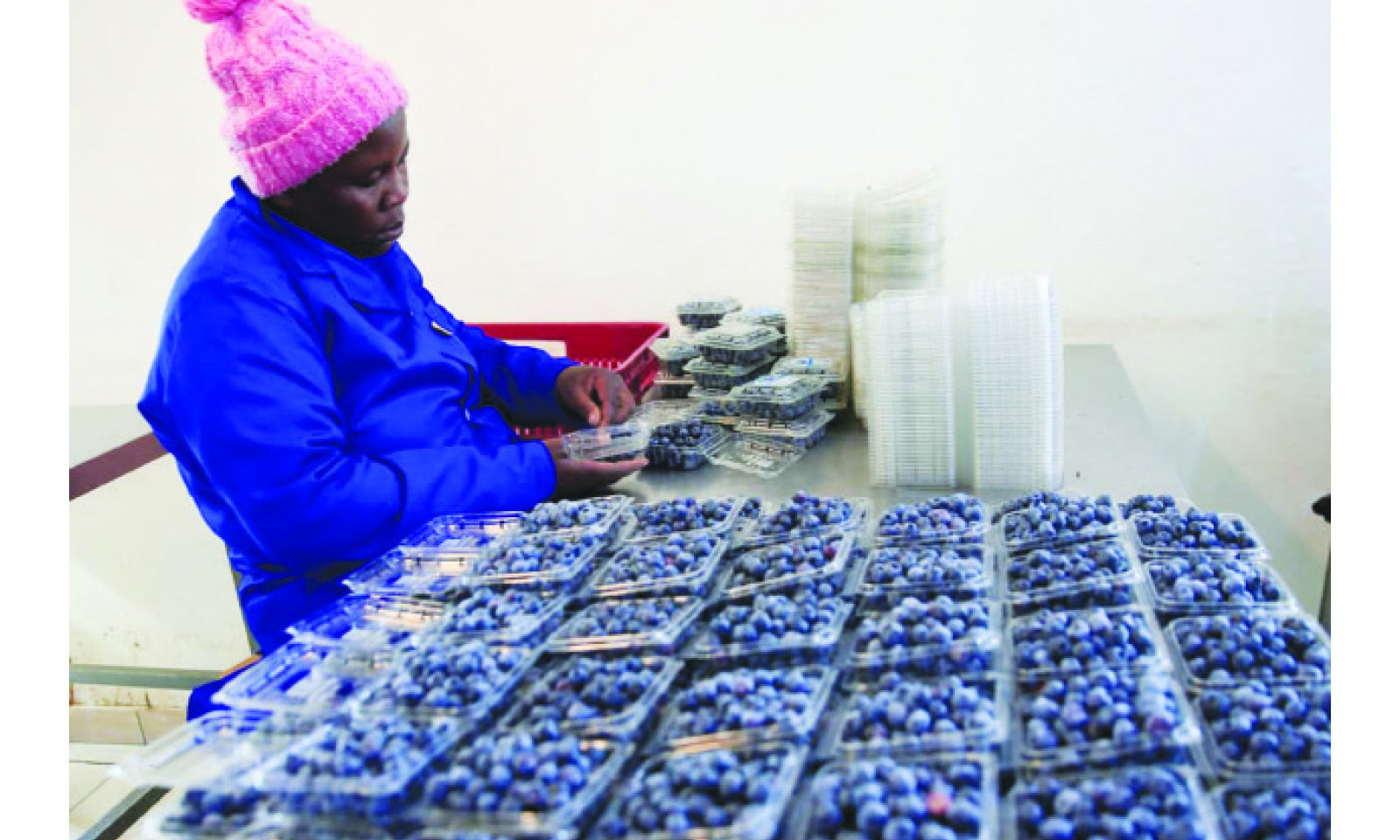
Fungai Kwaramba-National Editor
There was a time when droughts and hardships cast a long shadow over the land nestled between the Limpopo and Zambezi rivers.
The fast-track land reform programme once appeared to plunge the nation into uncertainty, as newly resettled farmers struggled to find the right formula for success.
Yet through hard work and perseverance, Zimbabwe is now rewriting its agricultural story—one of resilience and revival. The country’s remarkable turnaround has captured global attention, transforming past ridicule into admiration as the agricultural revolution gains momentum under President Mnangagwa’s administration.
Figures don’t lie
After the Land Reform, fortunes in the agriculture sector dwindled. In tobacco farming, production plummeted from over 197 000 tonnes in 1998 to around 44 000 tons in 2006, was largely due to the challenges faced by a new generation of farmers.
These farmers lacked access to traditional bank credit because they did not hold deeds to their land, making it difficult to secure the financing necessary for effective cultivation. This financial hurdle severely impacted their ability to produce tobacco, resulting in the sharp decrease in output during that time.
But now, President Mnangagwa has given title to the black farm, in a single swoop ensuring its transferability and bankability, this means uncertainties have been removed. People are united with their land.
It is little uprising then, that farm output has been on an exponential rise, creating both for security and sovereignty.
Due to multiple reforms enacted by the Second Republic tobacco sales jumped 48 percent to a record US$1,1 billion in the season that ended in July, while volumes jumped by 53 percent to 352,7 million kg, of that, small-scale farmers produced 65 percent, a remarkable feat for people who once toiled for the white man, who got all the credit.
Zimbabwe’s tobacco production has seen impressive growth from 44 million kg in 2006 to 232 million kg in 2024. This transformation has significantly boosted the economy, contributing hundreds of millions of dollars annually and representing nearly 10 percent of the nation’s GDP. On a global scale, Zimbabwe has established itself as a major player, now the third-largest tobacco exporter worldwide, following Brazil and India.
This remarkable progress highlights not only the agricultural potential of Zimbabwe but also its increasing importance in the global tobacco market.
The success story is the same in wheat production. For perspective, in 2024, the country set a record harvest of 563 tonnes, dwarfing the previous record of 465 548 tonnes set in 2023.
Even with maize, the country has been achieving records, never mind the high demand for the staple diet, in the aftermath of a biting drought last year, the country for 2024/25 had its fourth-highest maize harvest ever with an estimated 2.2 million tonnes harvested signalling bellyfuls and savings for a country that paid through the nose to cushion its citizens against the El Niño-induced drought in 2024.
At the centre of it all is President Mnangagwa, who last week, during his visit to China, opened a market of more than 1. 4 billion to Zimbabwe blueberry farmers after he oversaw an agreement that opens opportunities for local farmers.
Zimbabwe’s blueberry industry is set to export its fruit to China following a successful state visit by President Mnangagwa to Beijing. The agreement, finalised last week, opens up significant opportunities for local growers.
Now Zimbabwe is projected to produce 12 000 tonnes of blueberries this year, a 50 percent rise from last year’s figures.
Method to the bountiful
A commitment to transforming Zimbabwe into a middle-class economy through Vision 2030 and other strategies has created a more enabling policy environment and focused investment in the sector.
The National Development Strategy 1 (NDS1), whose lifespan ends at the end of the year, aims to achieve food and nutrition security, increase local input production, and foster the “Seed to Food Value Chain”.
Underpinned by key strategies of promoting small-scale agriculture and contract farming, developing nutrition-sensitive agriculture, improving access to farming inputs and machinery, and increasing irrigation to boost productivity and self-sufficiency, the sector is following a meticulous plan that was laid down by President Mnangagwa, who at his Precabe Farm in Kwekwe leads by example restoring the country to a regional food basket status and contributing to Vision 2030, a commitment to transforming Zimbabwe into a middle-class economy.
Under President Mnangagwa, Zimbabwe is seeing success in agriculture due to a renewed focus on strategic investments, the Pfumvudza conservation agriculture programme, which uses climate-smart practices like no-till farming, enhanced land tenure security, and the adoption of improved seed varieties, including drought-tolerant maize and wheat.
Government-backed initiatives like Command Agriculture and the Climate-Proofed Presidential Inputs Support Programme provide essential inputs and support to farmers, boosting overall production and contributing to food security.
In basic economic parlance, this has combined the factors of production, which include land, labour, entrepreneurship and capital, to produce goods and services, a fundamental process of production that President Mnangagwa has stridently advocated for, espousing the maxim, “Nyika Inovakwa Nevene vayo.”
Farming, the mainstay of the country’s economy, is on a rebound and not only bountiful but generating profit for entrepreneurs and providing economic rewards for the once vilified small-scale farmer, who used to coax a living on the economic fringes but now casts a huge shadow with rich pickings, thanks to a supportive Government.
You can’t hide a good story
This compelling story, which unfolds yet with footnotes of success, is hard to ignore, even the world is seeing it too, wasn’t it South African President Cyril Ramamposa who remarked thus when he officially opened this year Zimbabwe Agricultural Show, “On independence in 1980, the new democratic Government of Zimbabwe had to take on the momentous task of dismantling colonial-era patterns of land ownership.
“Most of the country’s commercially productive land and large-scale commercial farms were owned by whites. The black majority was confined to communal lands and all but completely excluded from commercial farming. This mirrored our own experience in South Africa, said Mr Ramaphosa.
“We congratulate the Government of Zimbabwe for the measures it is taking to revive the country’s agricultural sector through policy reforms, investment in irrigation and mechanisation, and empowering large- and small-scale farmers”.
The South African leader, through the Africentric perspective noted in his speech that the land reform was crucial for national food security, overall economic development and growth by empowering the black majority to participate in the productive agricultural sector, and praised the Second Republic for taking the programme a notch up through support to farmers, mechanisation and climate-proofing the sector from droughts.
Now the giant that has taken a nap, slumbers no more, and a story of success is now being told, not only in the region where Zimbabwe through, the Government’s disaster response arm, ZimAid, is making donations to countries like Mozambique, where pockets are facing humanitaran crisis due to the effects of droughts and natural disasters, but on the global scale where the World Food Programme wants to make Zimbabwe the regional food distribution hub.
The WFP is one of the largest humanitarian agencies fighting hunger worldwide. It not only provides food aid but also manages complex supply chains to get food to the right place at the right time, especially in emergencies.
Establishing a hub in Zimbabwe would mean the WFP uses the country as a central point to store large quantities of food, manage logistics and coordinate transportation for distribution to neighbouring countries facing food insecurity.
Thus, Zimbabwe no longer feeds its hungry tummies, but shares its harvest, as the once faltering farmer stands tall and proud, hands dirty and pocketful with rich pickings from the sweat of his brow, he has title to the land too.