Online Reporter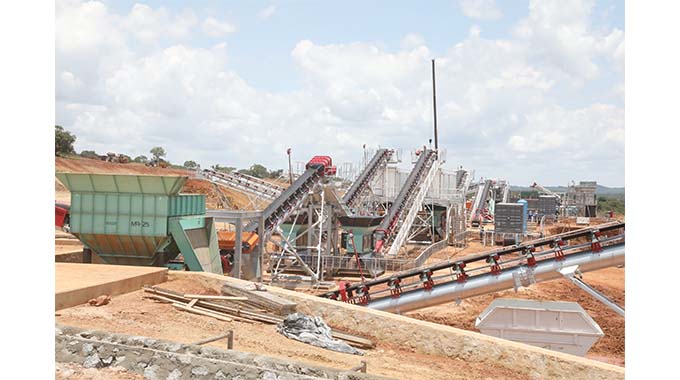
Prospect Lithium Zimbabwe (PLZ) led the pack when it, late last month, started exporting lithium sulphate, which it produces from a new $400 million facility at its Arcadia Mine near Harare.
That was the culmination of a construction project which the company launched in September last year.
But the push came from the Government, which, a few months earlier, had indicated that it would ban exportation of lithium concentrate by January next year.
We celebrated when PLZ made its, the country’s and the continent’s first shipment of lithium sulphate.
Four other companies which are mining the battery mineral are actively building or establishing partnerships for them to collaborate in the construction of lithium sulphate production facilities.
Bikita Minerals, the country’s oldest lithium mine, and at one time Africa’s biggest, is investing in a $500 million lithium sulphate processing line. Kamativi Mining Company (KMC) is also investing as much in its own complex. Both plants are expected to have been completed by the end of September.
“Max Mind (which owns Sabi Star Mine in Buhera) has reached an agreement in principle to entrust lithium salt processing to facilities located within Zimbabwe, ensuring that raw minerals will not leave the country without local beneficiation,” we cited a letter from the lithium miners as saying yesterday.
“In addition, Gwanda Lithium intends to cooperate with the Sandawana Lithium Project to jointly establish a lithium sulphate processing facility.”
Cumulatively, the five companies employ 5 000 people.
We are seeing real progress in the development of a local lithium value chain, thanks to the Government’s forward-looking policy of promoting local value addition of minerals.
In late February, authorities concretised that policy by totally banning the exportation of lithium concentrate, only to ease it a few weeks later by agreeing to grant export quotas to companies that can demonstrate that they are indeed investing in sulphate processing plants.
We are particularly encouraged by the proposed collaborations that Max Mind, Gwanda Lithium and Sandawana Lithium are pursuing.
By jointly building processing facilities, the companies share the financial obligation which they would have carried separately if they had decided to go it alone. They share technology, they share skills, they share risk, and they share growth.
We hope that the joint projects will materialise as soon as possible because January 2027 is not too far off, around eight months from today. We are saying this because we have no reason to believe that the Government will relent on its long-held drive to domesticate the lithium value chain.