Online Reporter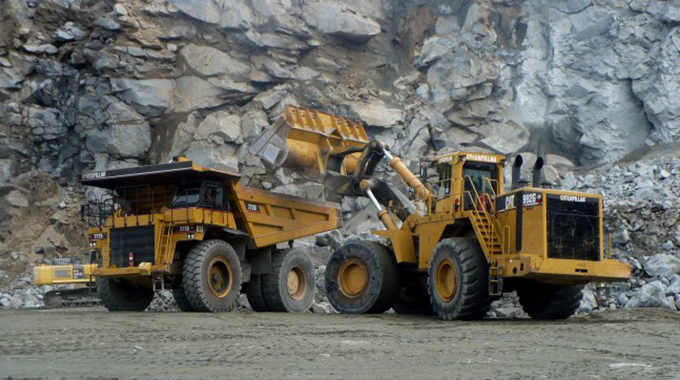
Doubt Shava
There is a fundamental problem with some of the commentary on Zimbabwe’s economy.
It views the country almost entirely through the lens of textbook economics while ignoring the lived economic and political realities that have shaped Zimbabwe’s trajectory.
Economies do not operate in a vacuum.
Currency stability is influenced not only by fiscal balances, interest rates and money supply, but also by political confidence, access to foreign currency, availability of international finance, productive capacity, export earnings and the ability of businesses to continue operating.
Zimbabwe’s experience in the late 1990s illustrates this perfectly.
The Black Friday narrative is more complicated.
For years, Zimbabweans have been given a simplified explanation of what happened on November 14, 1997 (Black Friday).
The predominant narrative claims the Government paid war veterans their gratuities and the Zimbabwe dollar consequently collapsed.
There is certainly a strong connection.
The unbudgeted Z$4,2 billion payout placed enormous pressure on foreign exchange reserves and confidence, and the Zimbabwe dollar subsequently lost approximately 72 percent of its value against the United States dollar in a single day.
But that was the trigger, not necessarily the entire story.
Zimbabwe was already operating within an increasingly difficult economic environment, with foreign exchange shortages, structural adjustment pressures, declining productive capacity and growing uncertainty surrounding investment and policy.
The deeper question, therefore, becomes: What was happening to the productive economy that was supposed to generate the foreign currency needed to defend the currency in the first place?
Mining
This is where lived economics becomes particularly important.
Gold was one of Zimbabwe’s most important foreign currency earners.
By 2000-2001, a significant number of gold mines had either closed or been placed on care and maintenance.
Gold production fell substantially between 1999 and 2000.
In 1998, Falcon Gold closed the Dalny and Venice mines, among other operational difficulties confronting the sector.
For communities such as Kwekwe and Shurugwi, the consequences were not abstract economic statistics. A mine closing meant jobs disappearing, suppliers losing business, towns losing purchasing power and the country losing export earnings.
The shutdown of the Kwekwe gold roasting plant hurt the economy big time.
That is lived economics.
And when a country simultaneously loses productive capacity in mining, manufacturing and agriculture, the consequences eventually appear in the foreign exchange market and, ultimately, in the currency.
This is exactly what we saw in Zimbabwe up to the 2008 economic crisis. It is, therefore, too simplistic to tell Zimbabwe’s economic story as though one policy decision in November 1997 created everything that followed.
The political economy matters.
Zimbabwe’s economic history needs to be understood as a political economy — where politics, policy, productive capacity, capital flows, foreign exchange and investor confidence intersect.
The same principle applies when examining the pressures around fuel procurement, foreign exchange availability and the broader deterioration of productive sectors during that period.
The economy that produces the foreign currency matters just as much as the monetary instruments used to manage it.
Reversal and recovery
This is where today’s Zimbabwe presents a very different picture.
Policy direction is increasingly towards rebuilding productive capacity, attracting capital and converting Zimbabwe’s mineral wealth into exports, foreign currency, employment and industrial development.
Mining is once again attracting serious capital. Gold production is being expanded.
Old assets are being rehabilitated.
Exploration is increasing.
New processing capacity is being developed.
International and domestic investors are looking at Zimbabwe’s mineral resource base not simply as something to extract, but increasingly as an investment opportunity.
The contrast with the late 1990s could hardly be clearer. Then, productive assets were closing.
Today, capital is looking for productive assets to finance. That is a profound economic reversal. Zimbabwe’s own investment architecture is increasingly designed to connect investors with mining opportunities.
The Zimbabwe Investment and Development Agency (ZIDA), for example, has established the Mining Matchmaking Platform specifically to connect local and international investors with holders of mining claims.
Golden cusp
The gold story is becoming central again.
There is also a powerful irony here.
The same mineral that was once part of Zimbabwe’s foreign exchange story is now becoming an important component of the country’s economic stabilisation story.
The latest assessment of Zimbabwe’s economy by America’s Citigroup Inc points to strong gold prices and rising gold export earnings among the structural factors supporting the current turnaround.
Zimbabwe’s export proceeds reached US$7,53 billion in the first half of 2026, while gold export earnings reportedly rose sharply during the first seven months of the year.
Citi’s assessment is particularly significant because this is not a Government communications department making the argument. It is one of the world’s largest financial institutions looking at Zimbabwe through the lens of international capital and investment.
Citi says Zimbabwe’s economic turnaround since 2025 may be occurring faster than many observers realise, with inflation expected to fall sharply and the cash fiscal deficit moving towards balance.
That does not mean Zimbabwe’s economic challenges have disappeared. They have not.
Debt, currency credibility, productivity, infrastructure, access to capital and the structure of the economy remain important challenges.
But serious economic analysis must acknowledge the direction of travel.
Zimbabwe, therefore, needs to be judged not merely by the economic scars of its past, but by whether the foundations are being laid for a different future.
The objective should be straightforward:
- More mines producing.
- More factories operating.
- More exports.
- More foreign currency generated domestically.
- More investment.
- More jobs.
- More value addition.
- More confidence in the productive economy.
That is the difference between analysing Zimbabwe from a textbook perspective and understanding Zimbabwe through lived economics.
The economic story is not finished. Neither is it frozen in 1997, 2000 or 2008. Zimbabwe is rebuilding productive capacity, attracting capital and positioning its mineral wealth at the centre of a broader economic transformation.
Cheap commentary will not derail that process. The real test is what happens on the ground — in Kwekwe, Shurugwi, Hwange, Zvishavane, Mutare, Bulawayo, Harare and across the country as capital, production and enterprise return.
Zimbabwe is approaching an economic golden cusp. The opportunity now is to convert stability into sustained production, investment and prosperity.
Doubt Shava is a political analyst.