Online Reporter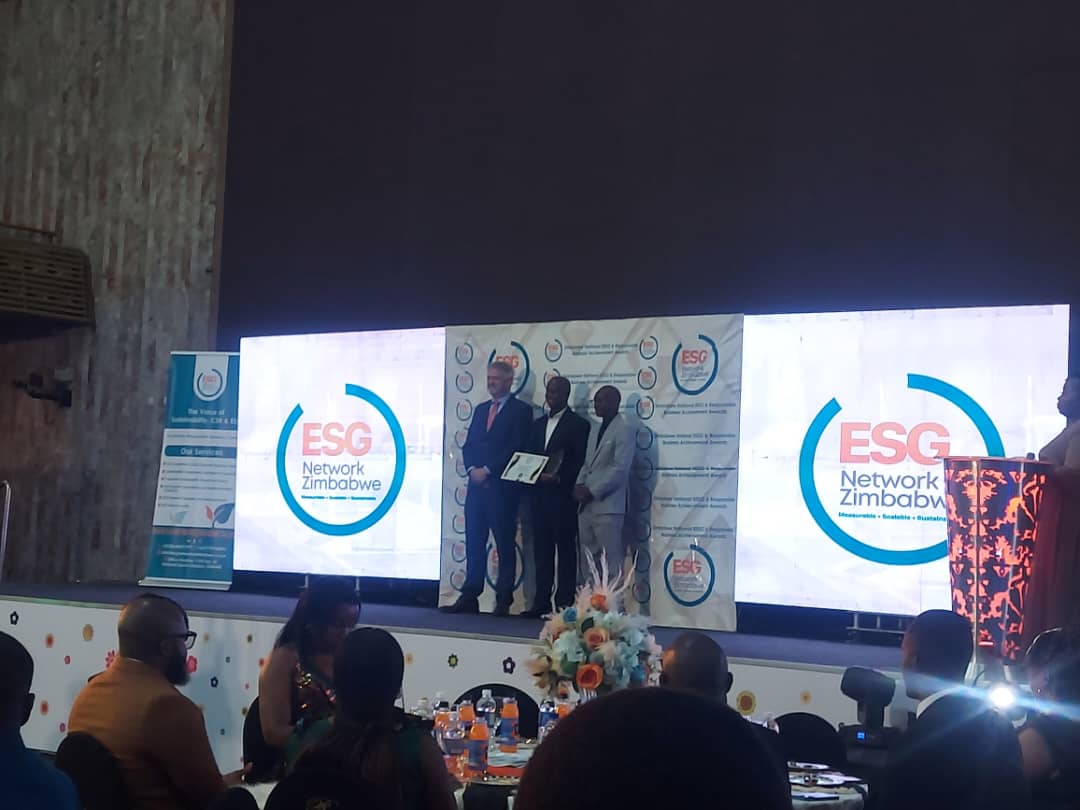
Online Reporter
ZIMPAPERS Society Editor, Prince Mushawevato, scooped the Sustainability Reporter of the Year Award at the 2025 National Annual ESG and Responsible Business Achievement Awards.
The ninth edition of the awards, organised by the Environment, Social, Governance Network Zimbabwe (ESGNZ), was held on Friday at the Harare International Conference Centre (HICC).
The awards honour diverse sectors and industries that have demonstrated outstanding ESG leadership and created a positive impact towards Zimbabwe’s sustainable socio-economic development.
This year’s edition ran under the theme: “ESG Excellence: The Key to Unlocking Zimbabwe’s Potential.”
Part of Mushawevato’s winning entries were a series of feature stories highlighting the importance of transforming the built environment in line with the country’s thrust to move towards creating a green economy.
“I would like to thank Zimpapers for prioritising ESG issues by providing a platform and resources for us to cover and report on sustainability,” said Mushawevato.
Mr Alex Warren-Rodriguez, United Nations Development Programme (UNDP) senior economist, who represented the country representative as guest of honour, applauded Zimbabwe for making strides in the sustainable development path.
“At the heart of the 2030 agenda and its 17 Sustainable Development Goals (SDGs) is a very clear recognition that sustainable development is not the responsibility of governments alone; it is not an agenda of the UN (United Nations) but an agenda for all,” he said.
“It is one that requires active participation, engagement and partnerships from all sectors in society, including the private sector.”
He added, “Zimbabwe has made great strides in embracing the sustainability value agenda and in many ways is leading the way. The country was among 193 member states adopting the 2030 agenda in 2015 and has since mainstreamed the SDGs into Vision 2030 and the National Development Strategy (NDS) 1 and hopefully NDS 2.”
Winning organisations included National Oil Infrastructure Company, Old Mutual Zimbabwe, Geo Pomona Waste Management, Econet Wireless Zimbabwe, Athens Mine, Bikita Minerals, Original Technology Gweru, Puma Energy, Livetouch Investments, Mother Touch Group of Schools, Kamativi Mining Company, Zesa, National Foods Limited and Delta Corporation.
The award categories included Best – Environmental Stewardship; Social Responsibility; Governance and Leadership; Innovation and Impact; Reporting and Transparency; Small and Medium Enterprises (SMEs); Supply Chain Management and Community Engagement.
Organisers of the event pledged to continue honouring top responsible organisations and individuals making a difference in Zimbabwe’s communities.
“The aim is to celebrate the trailblazers who have integrated ESG principles into every facet of their operations,” said ESGNZ executive director Mr Willard Razawo.
“Through their commitment to sustainability and social responsibility, these businesses, individuals and non-profits exemplify how ESG excellence can drive meaningful change in Zimbabwe.”
He acknowledged the challenges.
“The road to sustainability is not always smooth and the stakes are high. Climate change, social inequalities and good governance challenges require our immediate attention and collective action.”
Mr Razawo noted that these “early adopters have navigated the challenges of trial and error, paving the way for others to follow. Their innovative approaches not only enhance their own resilience and growth but also contribute to the broader goal of unlocking Zimbabwe’s potential for a sustainable future.”
Winners of the awards were selected by esteemed jurors.
ESGNZ is a sustainability business member organisation with a mission to promote best ESG practices in Zimbabwe and beyond, facilitate ESG education and encourage a balance between commercial and non-commercial organisations.
An ESG ecosystem is a complex network of interconnected entities and factors that influence a company’s environmental, social and governance performance.
It includes companies, investors, regulators, rating agencies and data providers, all of which interact to shape how businesses are assessed on their sustainability and ethical impact.
The ecosystem drives demand for sustainable practices, develops standards and frameworks for reporting and provides tools for managing and analysing ESG-related data.