admin
admin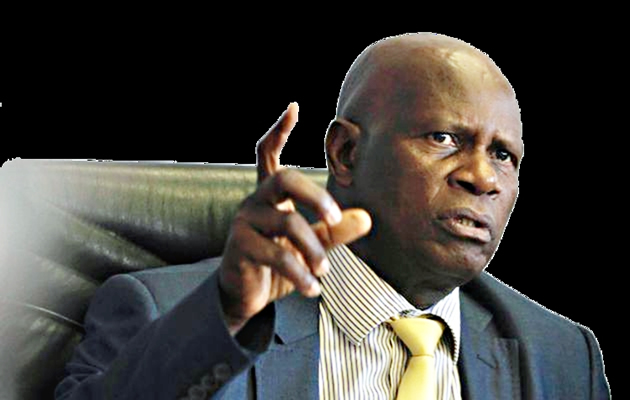
Harare Bureau
THE World Bank says Zimbabwe’s Gross Domestic Product will grow this year but only marginally as the liquidity crunch and subdued capital inflows will continue choking the economy.
In its bi-annual global economic prospects report, the Bank said it expects the economy to expand 3,2 percent this year, in line with government’s projections, and further grow by 3,7 percent next year before slowing down to 3,4 percent in 2017.
The government said this year’s growth would be achieved on the back of a stable macro-economic environment, coupled with planned investments in agriculture, mining, communication and other infrastructural projects, including power generation.
However, the growth rates are below the 6 percent annual target set under the Zimbabwe Agenda for Sustainable Socio-Economic Transformation, the country’s economic blueprint.
Economist Dr Gift Mugano said the economy will grow marginally this year and “most probably” in the coming years if there is no reverse on the liquidity crunch, choking competition from the region and the globe, subdued mineral prices and low FDIs.
“The liquidity crunch coupled with choking competition from the region is constraining any space for business to manoeuvre,” said Dr Mugano. “This situation has led to incessant company closures which has ripple effect on economic growth.”
Zimbabwe’s situation has been worsened by the fact that the national export basket is mainly constituted by minerals whose performance has been affected by low prices. “So, it is a vicious cycle. And, to break the umbilical code of this cycle we need to raise competitiveness and attract foreign direct investment,” said Dr Mugano.
Finance Minister Patrick Chinamasa said the growth levels “remain inadequate for us to begin making a dent at the prevailing levels of capacity utilisation and high unemployment.”
“It remains vital that we further strengthen our efforts towards addressing all the key constraints to rapid economic growth,” said Minister Chinamasa in the 2015 National Budget. “These relate to improving the ease and cost of doing business in our economy, guaranteeing uninterrupted supply of adequate power, among others.”
In Sub-Saharan Africa, growth picked up only moderately in 2014 to 4,5 percent, reflecting a slowdown in several of the region’s large economies, notably South Africa. Growth is expected to remain flat this year at 4,6 percent, largely due to softer commodity prices, and rise gradually to 5,1 percent by 2017, supported by infrastructure investment, increased agriculture production and buoyant services, the bank said.
The outlook is subject to significant downside risks arising from a renewed spread of the Ebola epidemic, violent insurgencies, lower commodity prices, and volatile global financial conditions.
The bank said despite a disappointing 2014, developing countries should see an uptick in growth this year, boosted in part softening oil prices, a stronger US economy, continued low global interest rates and receding domestic headwinds in large emerging markets.
Developing countries grew by 4,4 percent in 2014 and are expected to edge up to 4,8 percent in 2015.



 Online Reporter