Online Reporter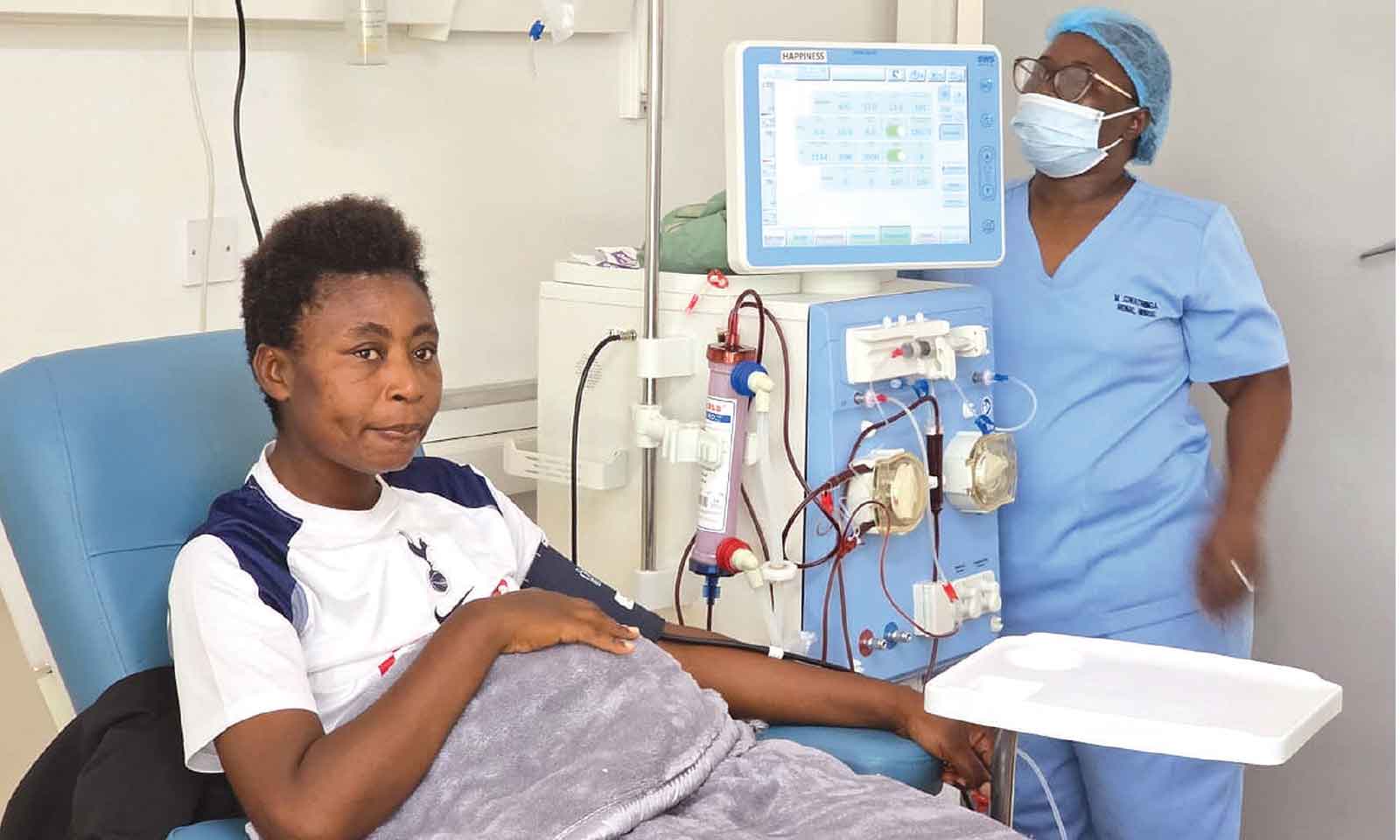
Rumbidzayi Zinyuke
Senior Health Reporter
THE recent commissioning of 21 new dialysis machines at Parirenyatwa Group of Hospitals has significantly boosted kidney care through supporting early diagnosis for patients and improving access to life-saving treatment.
This has given many a renewed lease of life.
Kidney disease is an emerging public health concern globally and across Africa, driven largely by the growing burden of non-communicable diseases such as hypertension and diabetes. Data shows that more than 700 million people worldwide are affected by chronic kidney disease, with many cases going undiagnosed until the disease has progressed to advanced stages when dialysis or a kidney transplant becomes necessary to sustain life.
Dialysis — a medical procedure that removes waste products and excess fluid from the blood when the kidneys can no longer perform this function — is often required several times a week and can last for several hours per session.
At Parirenyatwa’s renal unit, the availability of more machines has eased pressure on services and improved the quality of care for patients who depend on regular dialysis to survive.
For 39-year-old Mr Canaan Jaji of Budiriro 3, the improvement has been life-changing.
“I have been on dialysis for eight months now and I have improved greatly. When I first came here, I could not walk or even stand on my own, but now I can walk without assistance,” he said.
Mr Jaji said access to consistent dialysis had helped restore his strength and independence.
“I now come here every week on my own for dialysis and there is a great change indeed. When I started dialysis, there were only a few machines here, but when the new machines came, things greatly improved.
“If you are an early riser, you can get here at 5am and get your five-hour session, or if you prefer the afternoon, you can come at 3pm and get your session. All this is for free and we would like to thank the Government for subsidising dialysis, and the staff here are so friendly and helpful,” he said.
Ms Nester Kumonyera from Kariba, who has been undergoing dialysis for three years, said the availability of more machines had reduced disruptions to treatment.
“This is my third year on dialysis, and I come for treatment twice a week. Of late, the dialysis has been very smooth because of the machines and we no longer miss sessions owing to unavailability of machines. We really appreciate what the Government is doing,” she said.
Another patient, Mr Nigel Patsanza from Westgate, said improved services had significantly enhanced patients’ chances of survival.
“We are getting excellent services here. The service is just superb, and it has increased our lease of life. All our expenses are being covered by the Ministry of (Public Service, Labour and) Social Welfare and we are really grateful. This has helped us a lot and here we are getting world-class services. This is my second year now,” he said.
On Thursday last week, Zimbabwe joined the world in celebrating World Kidney Day, an annual global campaign dedicated to raising awareness about kidney health and reducing the burden of kidney disease worldwide.
Sister Margaret Gwatiringa, a renal nurse at Parirenyatwa Group of Hospitals, said the renal unit previously struggled to meet demand due to the shortage of dialysis machines.
“We used to have challenges with our dialysis machines because they were very few and, as a result, our patients were not getting adequate dialysis. We cater for both chronic and acute patients, so the demand is quite high. However, after the Government procured more machines, the situation has improved significantly,” she said.
She added that the unit currently had 108 chronic kidney patients receiving dialysis and was now able to adequately cater for them.
Sister Gwatiringa said many cases of kidney failure were linked to preventable conditions.
“Among the leading causes of kidney failure are high blood pressure, diabetes and malaria, so we urge members of the public to regularly check their blood pressure and blood sugar levels,” she said.
Early detection and proper management of conditions such as hypertension and diabetes can significantly reduce the risk of developing kidney disease, underscoring the importance of regular medical check-ups and lifestyle changes.